
Honey Bee Flight in the Rain: Risks, Limits, and Adaptations

Introduction
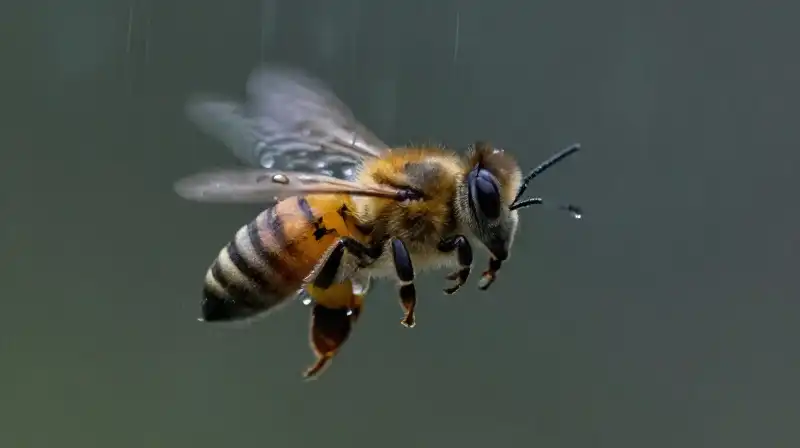
Honey bees and other pollinators do demonstrate the ability to fly and forage during light or moderate rainfall, yet their flight capacity is significantly limited by several environmental factors. The short answer to whether bees fly in the rain is yes, especially in gentle showers, but survival is a balance of speed, thermal regulation, and the overall severity of the weather. Bees are masters of adaptation, exhibiting innate behaviors that allow them to manage these hazards, though excessive dampness, cold, and high winds quickly compromise their ability to maintain flight and successfully return to the hive.
The Limits of Flight: Wind, Temperature, and Rainfall
Not all rainy conditions pose the same threat to a bee. The key distinction lies in the intensity of the weather.
Rain Intensity and Foraging
Bees generally attempt to continue their work during light drizzle or brief, gentle showers. However, the longer the rain persists, the more difficult the conditions become. Prolonged exposure to water can compromise a bee’s ability to maintain flight and, crucially, cool down. Excess moisture on their bodies slows their flight and increases the risk of hypothermia, which is a significant threat to their survival. When rain becomes steady, heavy, or sustained, most bees will prioritize seeking shelter and returning to the hive to dry off.
The Crucial Role of Wind Speed
Wind speed is often a more limiting factor than rain itself. While bees are resilient, their flight efficiency dramatically drops with increasing gusts. Most honey bees typically avoid flight when wind speeds exceed 20 mph. High winds demand immense energy, requiring the bees to constantly adjust their posture and expend extra effort to overcome the aerodynamic drag, particularly while attempting to maintain their core body temperature. Even minor wind increases require them to allocate energy that would otherwise go toward foraging.
Temperature and Thermal Regulation
Low temperatures combined with moisture are particularly dangerous. Water conducts heat away from the bee’s body rapidly. If a bee is found chilled, its ability to forage effectively is compromised, and they may need external warming or shelter to prevent freezing. Bees are constantly working to regulate their temperature, and wet, cold weather makes this biological task exponentially harder.
Honey Bee vs. Bumblebee: Different Strategies for Inclement Weather
While both types of bees exhibit foraging behavior in various conditions, they possess distinct physiological and behavioral adaptations that define their resilience.
| Feature | Honey Bees | Bumblebees |
|---|---|---|
| Water Droplets | Water exposure is a major risk, as moisture compromises flight. | Droplets pose a significant challenge, potentially weighing the insect down and forcing landing if they cannot dry off quickly. |
| Cold Weather Activity | Generally return to the hive once conditions become severe or sustained. | Can remain active and operational in colder and wetter weather. |
| Temperature Control | Primary method involves hive heat. | Can actively generate heat using wing muscles for warming in cold weather or cooling in summer. |
| Hibernation Adaptation | Not applicable in this context. | Produce natural antifreeze, glycerol, during hibernation to prevent bodily fluids from freezing. |
Behavioral Adaptations and Survival Tactics
Bees don’t just endure harsh weather; they actively react to environmental threats through sophisticated behaviors.
Pre-Storm Foraging and Anticipation
Honey bees demonstrate the ability to anticipate adverse weather. Often, they will increase their foraging activity in the days leading up to poor weather. This may be due to a heightened sensitivity to atmospheric cues, such as changes in air pressure or humidity, allowing them to complete necessary tasks before conditions deteriorate.
Seeking Shelter During Rain
When heavy rain begins to fall and flight becomes unsafe or inefficient, bees employ various survival strategies. They will often seek temporary shelter in nearby dense vegetation, such as flowers or thick foliage. Solitary bees, in particular, typically prefer to shelter immediately in burrows or hollow stems. This behavior minimizes their direct exposure to the elements until the weather clears.
Navigational Resilience
One of the remarkable aspects of bee survival is their navigational memory. Even if their primary hive location has been slightly relocated, bees demonstrate the capability to reorient themselves and successfully find the correct location. This navigational proficiency, which involves mapping complex pollen sources and orientation flights, suggests that the urge to return to the hive remains a powerful driving force even under stress.
Practical Summary for Observation and Beekeeping
Beekeepers and concerned observers can utilize the bees’ reactions to environmental changes to predict and respond to incoming weather.
- Monitoring Entrance Activity: By monitoring the ratio of bees entering versus leaving the hive, beekeepers can get an early indication of impending storms. A sudden shift in the balance often signals a change in weather that bees are reacting to.
- Understanding Limits: If you observe bees struggling excessively with dampness, cold, or extremely high winds, it indicates that the environmental stress is likely exceeding their safe flight limits.
- Flight Duration in Inclement Weather: For light showers, flight may be extended, but it is highly conditional. If the weather persists, bees prioritize survival and return to the hive as soon as conditions allow.
The resilience of bees showcases remarkable evolutionary adaptation; while they are vulnerable to severe weather—specifically sustained cold, high winds, and heavy rain—their innate ability to detect and react to environmental shifts ensures that they maximize their foraging efforts and prioritize the safety of the colony when the risks become too great.
Predicting and Responding to Weather Changes using Bee Behavior
Monitoring Entrance Activity
Monitor the ratio of bees entering versus leaving the hive, as a sudden shift in the balance can provide an early indication of impending storms.
Evaluating Environmental Stress
Observe if you see bees struggling excessively with dampness, cold, or extremely high winds, which indicates that the environmental stress is likely exceeding their safe flight limits.
Assessing Flight Duration
Understand that for light showers, flight may be extended, but if the weather persists, bees will prioritize survival and return to the hive as soon as conditions allow.
Related Articles