How Fast Can a Cockroach Run? Their Amazing Speed and Strength

Introduction
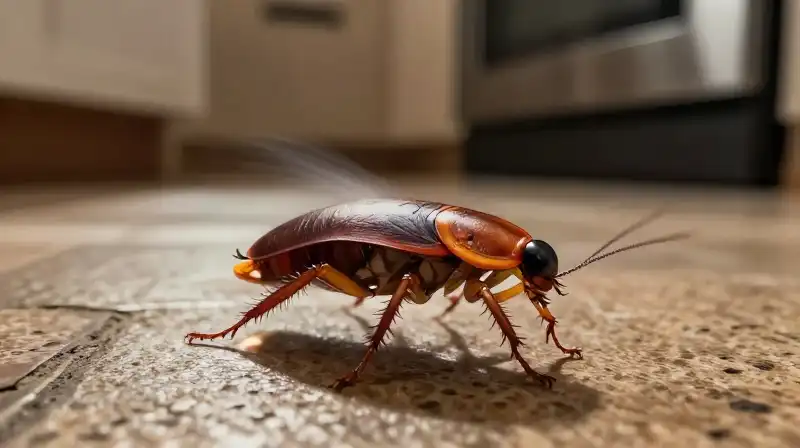
The American cockroach holds the title of one of the fastest insects on the planet, possessing remarkable speed and a physical toughness that defies typical expectations of pests. When considering the question of how fast can a cockroach run, the capabilities are truly astonishing. These insects are known not only for their rapid locomotive abilities but also for an unparalleled resilience, allowing them to survive in conditions that would kill almost any other creature.
Measuring Cockroach Speed: The 200 mph Claim
The claim regarding cockroach speed is often highly exaggerated, but the underlying metrics are scientifically derived and fascinating. In controlled settings, the American Cockroach can achieve speeds equivalent to 50 body lengths per second. To put this into a scale relatable to human movement, this translates to an impressive velocity. While the dramatic figure of 200 miles per hour is sometimes used as a vivid comparison, concrete biological data places their running speed at over 3 miles per hour. This speed is maintained through a highly efficient, flexible exoskeleton. This specialized structure allows the cockroach to maintain its incredible momentum and running speed even when the insect is physically compressed or squeezed.
Beyond Speed: The Remarkable Physical Resilience of Cockroaches
The cockroach’s ability to survive and maintain its high performance is rooted in its extreme physiological toughness. Their physical characteristics allow them to endure extreme forces and survive debilitating conditions. Key indicators of their resilience include:
- Exoskeletal Durability: Their strong exoskeletons are highly resilient, capable of enduring physical forces equivalent to 900 times their own body weight.
- Atmospheric Endurance: Cockroaches exhibit remarkable physiological toughness, often holding their breath for periods ranging from 40 to 45 minutes.
- Systemic Survival: They possess an internal tubular breathing system that runs along the sides of their body. This allows them to survive for several weeks without a head, requiring the head only for sustenance.
While they can regenerate lost limbs, it is important to note that they are incapable of growing back a missing head.
Comparing Cockroach Types and Reproductive Differences
Not all cockroaches are the same, and understanding the differences between species like the American and German cockroaches is crucial for effective management.
| Feature | American Cockroach | German Cockroach |
|---|---|---|
| Primary Habitat | More commonly found in warmer areas across the US (like Florida), often in less confined spaces. | Highly adapted to inhabit interior spaces, including homes and kitchen cabinets. |
| Reproduction | Standard reproduction cycles. | Known for a high reproductive rate. |
| Introduction Risks | Naturally occurring in certain regions. | Can be introduced via foreign items, shipped packages, or cereal boxes. |
Cockroach Vulnerabilities: Weaknesses and Survival Strategies
Addressing the question, “What is a cockroach’s biggest weakness?”, reveals that their greatest strengths—resilience and adaptability—are also their primary defenses. Cockroaches are highly effective survivors. Their ability to regenerate limbs and their hardened exoskeletons make direct confrontation difficult. Furthermore, they are social creatures; the scent produced by a deceased roach can actively attract other individuals from the colony, making simple elimination challenging. Regarding the query, “Can you outrun a cockroach?”, while humans have vastly superior overall speed and endurance, the cockroach’s bursts of speed and low-profile movement make it notoriously difficult to evade in confined indoor environments.
Effective Pest Management Strategies
Eliminating a cockroach infestation is complex and often requires consistent, targeted effort. Management must address both the pests and their entry points.
- Sealing Entry Points: Addressing potential entry points is fundamental. Inspect cracks, gaps in foundations, and utility entry points to prevent access.
- Targeted Treatments (Safe Options): For natural, eco-friendly control, two primary options are effective:
- Diatomaceous Earth (DE): A safe, natural mineral powder that damages the outer layer of pests, causing dehydration.
- Boric Acid: An odorless, potent insecticide alternative that is safe for humans and pets when used correctly.
- Understanding Lifecycle: Effective pest management requires understanding the specific behaviors and life cycles of the insect type you are fighting, as different species have different breeding patterns and hiding spots.
Synthesis: Understanding Pest Behavior and Control
The American cockroach is a biological marvel of speed and tenacity. Its ability to run at speeds over 3 mph and survive extreme physical trauma is a testament to its evolutionary success. However, its very toughness is what makes controlling an infestation highly challenging without a structured approach. When dealing with any pest situation, prioritize prevention by eliminating food sources and sealing vulnerabilities before resorting to active elimination. If infestation is severe, professional assistance is often necessary to manage the complex life cycles and ensure complete control, as these insects are highly adaptable and persistent.
Frequently Asked Questions
What is a cockroach's biggest weakness?
The article suggests that a cockroachs greatest strengths, such as resilience and adaptability, are also their primary defenses. Furthermore, because they are social creatures, the scent produced by a deceased roach can actively attract other individuals from the colony.
Is killing a cockroach easy?
Killing a cockroach is challenging because their hardened exoskeletons and ability to regenerate limbs make direct confrontation difficult. Furthermore, the scent produced by a deceased roach can actively attract other individuals from the colony, making simple elimination complex.
Can you outrun a cockroach?
While humans have vastly superior overall speed and endurance, the cockroach’s bursts of speed and low-profile movement make it notoriously difficult to evade in confined indoor environments. The American cockroach can run at a documented speed of over 3 miles per hour.
How to manage cockroach infestations
Seal Entry Points
Inspect cracks, gaps in foundations, and utility entry points to address potential access and prevent entry.
Apply Targeted Treatments
For eco-friendly control, apply natural solutions such as Diatomaceous Earth or Boric Acid to damage the pests or cause dehydration.
Understand Lifecycle and Behavior
Research the specific behaviors and life cycles of the pest type you are fighting to tailor effective management strategies.
Related Articles