Do Rhino Horns Regrow? Understanding Keratin Growth and Dehorning

Introduction
Yes, rhino horns can regrow, a fact that is both biologically fascinating and critically important in the context of anti-poaching efforts. Unlike the horns of cattle or some other large ungulates, the rhino horn is not a solid bone structure but rather an outgrowth of the skin, composed of keratin. Because this keratin grows continuously, it does not stop growing and can be stimulated to regrow even after a partial removal procedure. This unique biological property dictates how conservationists approach dehorning, making it a complex process that requires specialized care and a lengthy timeline.
The Keratin Structure: How Rhino Horns Grow
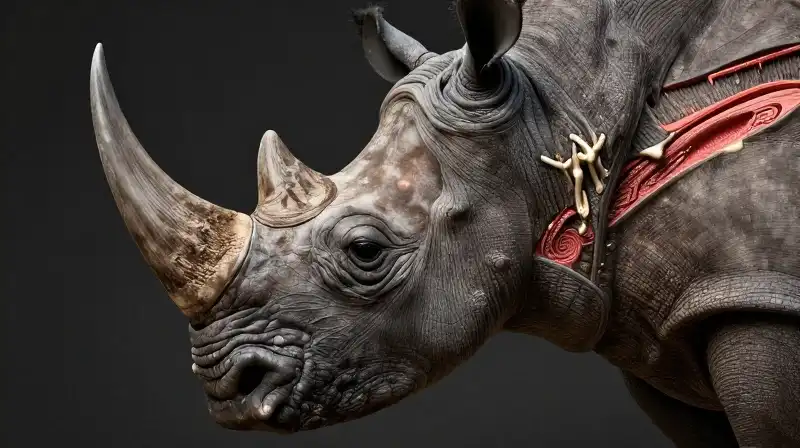
To understand rhino horn regrowth, one must first understand its composition. A rhino horn is fundamentally a massive clump of compressed keratin—the same fibrous biological material found in human hair and fingernails. It does not possess a bony core attached directly to the skull; rather, it is “posed” upon the bone structure. Because of this composition, it functions similarly to a highly durable outer covering of the skin.
The growth of the horn is continuous. It naturally sheds its outer layers due to friction and use, which maintains the apparent size of the animal without it reaching an unlimited, massive scale. White rhino horns, for example, have been documented to grow at rates of up to 7cm per year. When a horn is successfully dehorned, the critical factor for regrowth is the survival of the germinal layer—the cellular layer at the base that provides the necessary growth stimulus. Without damaging this layer, the horn’s regeneration process can begin.
The Regrowth Cycle: Dehorning and Regeneration
Dehorning is the clinical removal of the horn, a procedure that removes approximately 90-93% of the structure while deliberately preserving the underlying germinal layer. The success of regrowth depends entirely on the precision of the procedure. If the dehorning is performed correctly—meaning the horn is removed without cutting into the rhino’s skull or bone—the horn has a high probability of growing back to nearly its original size. In instances where the skull is compromised during the process, regrowth is typically halted or severely inhibited.
The regrowth process following a successful dehorning is not instantaneous. It is a slow, biological recovery that requires patience and careful management. Experts indicate that the full process of a horn regrowing to nearly its pre-dehorning size can take approximately three years.
To aid this recovery, the newly created horn stump is treated with substances like Stockholm tar. This treatment is intended to prevent the horn from cracking or drying out during the vulnerable regrowth period, offering a higher chance of a healthy, complete regrowth.
Addressing the “Can Other Animal Horns Regrow?” Question
The regenerative nature of the rhino horn is a specific biological attribute. When comparing it to other animals, the answer is not straightforward. For instance, elephant tusks are made of ivory (modified dentine) and, while they grow, they are not typically described in terms of “regrowth” after damage in the same regenerative manner as keratin. However, the general principle of keratin and bone structure dictates that most horns and antlers of ungulates are permanent fixtures of their growth cycle, not designed for regeneration after surgical removal like the rhino’s skin-based outgrowth.
Strategic Considerations for Anti-Poaching Efforts
Dehorning is a strategic tool in the fight against rhino poaching, but it is crucial to understand its limitations. Because the horn can regrow, dehorning is an effective, albeit temporary, deterrent. To maintain this deterrent, experts recommend a cycle of dehorning every 18 to 24 months, as this helps maintain effectiveness against poachers while the horn is in its most vulnerable, regrowing state.
However, dehorning is only one part of a multifaceted anti-poaching strategy. It is an intrusive, costly process (averaging around US $1,000 per animal) and requires the immobilization of the rhino using anesthesia, which carries inherent risks to the animal’s safety. Even after a horn is treated and regrows, the horn remains a highly sought-after commodity, and criminals may still target the animal for its potential horn value. Therefore, dehorning must be paired with robust security measures and sustained conservation efforts.
What Are Rhino Horns Made Of and Why Are They Valued?
As established, the rhino horn is constructed primarily from compressed keratin fibers, identical to human fingernails. While traditional medicine has historically utilized rhino horn for claims regarding fevers and convulsions, there is no scientific evidence supporting these medicinal claims, and the practice has been illegal since 1993 due to the high risk of poaching.
The value of the horn is purely economic. It has been a sought-after commodity globally for use in collectibles, dagger handles, and various markets. Interestingly, certain species vary significantly in appearance: African species often have two horns, while some Asian species like the Greater One-Horned and Javan rhinos have a single horn. Consumers and poachers sometimes favor Asian horns, believing that a smaller size indicates greater potency, regardless of the species.
Conclusion: Practical Limits of Keratin Regeneration
Rhino horn regeneration is a demonstrable biological reality, defined by its keratin structure and continuous growth. While successful dehorning allows the horn to regrow in about three years, this regenerative ability is not a guarantee. The process is contingent on the preservation of the underlying germinal layer and requires meticulous veterinary care, immobilization, and treatment of the stump. Because of its limited duration as a deterrent and the ongoing economic incentive for poaching, dehorning should be viewed not as a permanent solution, but as a specialized tool within a broader framework of sophisticated animal protection.
How to Successfully Regrow a Rhino Horn through Dehorning and Treatment
Perform precise dehorning
The clinical removal of the horn must be precise, ensuring that approximately 90-93% of the structure is removed while deliberately preserving the underlying germinal layer to stimulate regeneration.
Stabilize and Treat the Stump
To aid recovery and prevent the new horn from cracking or drying out during its vulnerable period, the newly created horn stump should be treated with substances like Stockholm tar.
Manage the Recovery Period
Allow a slow biological recovery, as the process of the horn regrowing to its pre-dehorning size typically requires approximately three years.
Maintain the Deterrent Cycle
To maintain effectiveness against poachers, experts recommend establishing a cycle of dehorning every 18 to 24 months.
Related Articles