Elephant Tusks: Do They Regrow Once Broken? The Science

Introduction
The question of whether elephant tusks regrow after being broken is a common query, often based on a misunderstanding of mammalian growth patterns. Based on the available biological evidence, the definitive answer is that a broken section of an elephant’s tusk does not restore its original shape or fully regrow the severed part. While the tusk continues to grow from its base, the fracture remains a permanent physical impairment to that specific segment of ivory.
Understanding Elephant Tusk Growth
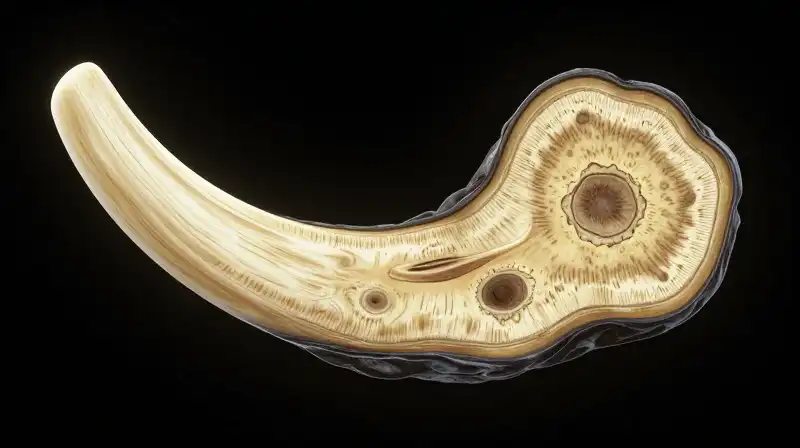
Elephants possess tusks (modified incisors) that grow continuously from the root. Unlike many skeletal structures that grow at defined endpoints, tusk development is a steady, progressive process. This growth continues throughout the animal’s life. However, this ongoing development does not equate to the ability to heal a catastrophic break or regrow a large missing segment to its pre-injury condition.
When a tusk breaks, the damage is considered a persistent state rather than a temporary injury waiting to heal. New tusk material may form distal to the break, continuing the growth process, but it will not bridge the gap or restore the original, unbroken contour of the original tusk. The area where the tusk was fractured remains permanently affected, representing a point of damage that will not undergo regeneration.
The Value Difference: Full Tusks vs. Partial Harvest
From the market perspective, the difference between a fully intact tusk and a partially harvested or damaged one is significant. The entire, complete tusk holds substantially higher value on the illegal ivory market. This value is directly tied to the tusk’s size, shape, and completeness.
Poachers are primarily motivated by maximizing immediate financial profit. They often prioritize minimal risk to themselves. Due to the massive size and aggressive nature of elephants, subduing an animal solely for the removal of a portion of its tusk is logistically difficult and inherently dangerous. Successful sedation requires specialized pharmacological knowledge and precise dosage based on the animal’s weight; incorrect dosing risks death (overdosing) or failure (underdosing). The difficulty of this process reinforces the preference for a quick, all-or-nothing removal of the entire tusk.
Addressing Common Misconceptions: Survival and Recovery
Many people ask about the survivability and physical state of elephants after tusk trauma. While the loss of tusks represents a significant part of an elephant’s biological structure, it does not typically lead to fatal consequences.
- Can male elephants survive without tusks? Yes. While tusks are primarily associated with male competition and display, both male and female elephants can survive without them.
- How fast do elephant tusks regrow if cut off? The relevant scientific clarification here is that regrowth doesn’t happen in the sense of repair; it happens as continuous development from the root, meaning the specific lost segment will not return, even if new growth appears at the base.
- Does a broken tusk have nerves? Tusks are composed of dentine and enamel, which do not contain nerves in the same way living tissue does. Therefore, they do not “hurt” in the human sense, but the stress of a break can affect the bone structure around the tusk.
Why Partial Removal is Unlikely
The theory that a partial tusk removal could provide a “renewable source” of ivory is largely theoretical and impractical. Since the fracture remains a permanent impairment, the yield of a damaged tusk segment is inherently lower and less desirable than a pristine tusk. Furthermore, the logistical hurdles of safely attempting partial harvesting—requiring high-level sedation skills, specialized equipment, and handling extremely dangerous megafauna—make it a non-viable strategy for profit-driven poachers.
Precautions and Final Assessment
When analyzing the intersection of elephant biology, market value, and illegal harvesting, the key factor is the distinction between continuous growth and anatomical repair. Elephant tusks grow, but they do not repair breakage to their original form.
For any entity considering the sustainable utilization or ethical removal of ivory, the decision hinges entirely on the tusk’s integrity. A broken segment, while still a piece of ivory, is a fundamentally impaired product that lacks the market appeal and material wholeness of an unbroken tusk. The scientific fact remains: a tusk fragment, once severed or cracked, will not revert to its complete state, regardless of subsequent tusk development.
Frequently Asked Questions
Can male elephants survive without tusks?
Yes, male elephants can survive without tusks. Although tusks are primarily associated with male competition and display, both male and female elephants can survive without them.
How long does it take for an elephant tusk to grow back?
A broken elephant tusk does not fully regrow or restore its original shape, as its growth is a continuous development from the root rather than a process of anatomical repair. The specific lost segment will not return, even if new tusk material forms distal to the fracture.
How fast do elephant tusks grow back if cut off?
Elephant tusks do not regrow a severed part to its original shape, and although new material forms through continuous development from the root, the specific lost segment will not return. The fracture remains a permanent physical impairment to that segment of ivory.
Related Articles