
Why Cats Chase Lasers and How to Satisfy Their Hunting Instinct

Introduction
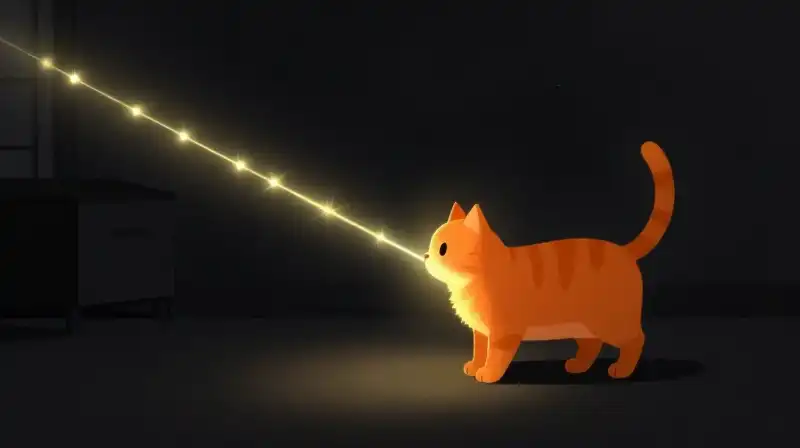
The intense focus of a cat locked onto a tiny, dancing red dot isn’t merely a quirky habit; it is a deep manifestation of their natural biology and primal instincts. Cats chase lasers because the moving light mimics the visual hallmarks of potential prey, triggering their sophisticated predatory drive. This behavior is rooted in the feline need to stalk, pounce, and attempt to capture moving stimuli, engaging the cat’s inherent curiosity and high prey drive.
However, laser play presents a nuanced situation. While it is an excellent way to provide mental and physical stimulation, the primary challenge is that a laser beam has no physical substance to catch. Successfully using laser pointers requires understanding feline behavior and ensuring that the pursuit can be meaningfully completed to prevent potential frustration or behavioral issues.
Understanding the Feline Visual System and Predatory Drive
The reason lasers are so effective is tied to a confluence of feline biology and the specific nature of the stimulus. Cats are evolutionarily geared toward detecting movement efficiently, a necessity for survival as predators. Unlike humans, felines possess a higher concentration of rods in their eyes, which are photoreceptors highly sensitive to low light and motion, making them exceptionally adept at tracking rapid visual changes.
The laser beam amplifies this natural talent by providing an intense, concentrated beam of light that is often much brighter and faster than natural illumination. This combination of intensity and speed activates the cat’s innate hunting sequence. To a cat, a fast-moving dot looks exactly like a scurrying mouse or bug—the perfect target for an ambush. The resulting stimulus is highly engaging, as it aligns perfectly with the visual cues that historically dictated the cat’s survival.
The Complete Predatory Cycle and Feline Psychology
A cat’s hunting behavior is not just about the chase; it is a multi-stage process. For a cat to feel complete satisfaction from a hunt, the entire cycle—stalk, stalk, pounce, kill, and consume—must be achieved. When a cat engages with a laser, they are naturally progressing through the initial stages: the stalking and the pouncing attempt.
The crucial behavioral distinction of laser play is that it typically stops at the “pounce” stage. The light cannot be “killed” or physically caught. If a cat spends a long time chasing an elusive light that vanishes into the wall, the cycle is incomplete. This failure to achieve the satisfying “kill” phase can lead to mounting frustration, which may manifest as destructive behaviors, unnecessary aggression, or even anxiety.
Why Frustration Occurs and How to Satisfy the Hunt
If the cat becomes distressed because the laser target is always unattainable, the solution is not to abandon the light but to redirect the activity to provide a conclusive finish. The laser should be used as a “prey simulation,” but the session must end with a tangible reward.
To ensure the cat achieves a satisfying conclusion to its hunt, always transition the play to a physical, catchable object. This fulfills the emotional need for success. Here is how to manage the play to ensure mental and physical satisfaction:
- Simulation, Not Replacement: Use the laser to stimulate the chase and activity, but ensure the game ends with a physical interaction.
- Conclude the Cycle: After the laser session, introduce a physical toy like a feather wand that can be successfully captured, or provide a small treat to represent the “kill.”
- Strategic Targeting: To prevent unsafe leaps, avoid aiming the laser at high points on walls or cabinets. Keep the play area clear of hazards.
Essential Safety and Best Practices for Laser Play
While laser play is an excellent tool for providing necessary exercise and combatting boredom in indoor cats, it requires adherence to specific safety protocols to avoid potential harm.
The following practical guidelines are vital for responsible pet ownership:
- Never Target the Eyes: Never shine the laser directly into a cat’s eyes. Because their vision is highly sensitive, direct exposure can lead to permanent vision impairment or severe discomfort.
- Monitor the Duration: Start with short, energetic play sessions, especially with sedentary cats. This prevents overexertion and maintains high engagement levels.
- Be Mindful of the Target: Avoid simply flicking the laser randomly. Move it in small, erratic, prey-like motions to effectively mimic a fast-moving animal and maintain the cat’s focus.
- Multicat Households: When introducing laser play to multiple cats, provide a separate laser pointer for each. This prevents conflict and competition for the single target.
Addressing Common Questions About Cats and Lasers
Many owners have specific concerns regarding the health and behavioral impacts of laser use. Addressing these common queries provides clarity on whether lasers are beneficial or problematic for your pet.
Why do cats chase lasers?
As detailed, they chase them because the light mimics the visual characteristics of small, fast-moving prey, triggering their deep, innate hunting instincts.
Is laser pointer play bad for cats’ mental health?
When managed correctly, laser play is highly beneficial, serving as a crucial form of mental and physical exercise. It provides necessary stimulation. However, if the sessions are repetitive, excessively long, or never conclude with a “catch,” it can lead to stress and frustration.
Making Lasers Part of a Balanced Play Routine
To avoid making laser play the cat’s sole outlet and risking over-reliance or boredom, it must be integrated into a variety of toys. A balanced play environment ensures all types of instincts—the chase, the physical handling, the pounce—are satisfied.
If your cat shows diminishing interest in laser pointers, transition to interactive wand toys or feather teasers. These toys not only provide the chase but also offer a tactile, physical object that can be “caught” and interacted with in the manner a cat truly desires. By diversifying their play options, you prevent frustration and ensure their entire behavioral repertoire is utilized, promoting overall feline contentment and healthy physical condition.
How to Manage Laser Play Responsibly and Satisfy a Cat's Predatory Instinct
Ensure Safety and Environment
Avoid aiming the laser at high points on walls or cabinets to prevent unsafe leaps, and keep the play area clear of hazards.
Execute the Stimulus Properly
Move the laser in small, erratic, prey-like motions to effectively mimic a fast-moving animal, and never shine the laser directly into the cat's eyes.
Monitor Play Duration
Start with short, energetic play sessions to prevent overexertion and maintain high engagement.
Handle Multicat Situations
When introducing laser play to multiple cats, provide a separate laser pointer for each one to prevent competition and conflict.
Conclude the Hunt
Always transition the play to a physical, catchable object, such as a feather wand or a small treat, to provide a satisfactory conclusion to the predatory cycle.
Related Articles