
Understanding Home Backup Generators: How They Work

Introduction
A home backup generator provides critical peace of mind by ensuring your essential electrical systems continue to function during power grid outages. However, there isn’t just one type of generator; the functionality of a home backup system depends heavily on whether you are using a manual portable unit or a permanently installed whole-house standby system. Understanding how a home generator works requires dissecting its primary mechanisms: the power source, the operational interface, and the safety systems designed to protect your home and the utility grid.
The primary goal of any backup system is seamless continuity. This is achieved by a sophisticated process that detects grid failure and automatically switches your home’s power to the generator’s output. The overall operation of a home generator is dictated by these mechanical and electrical components, making it crucial for homeowners to distinguish between the two major types to ensure the right solution for their specific needs.
The Core Mechanism: How Automatic Transfer Switches Function
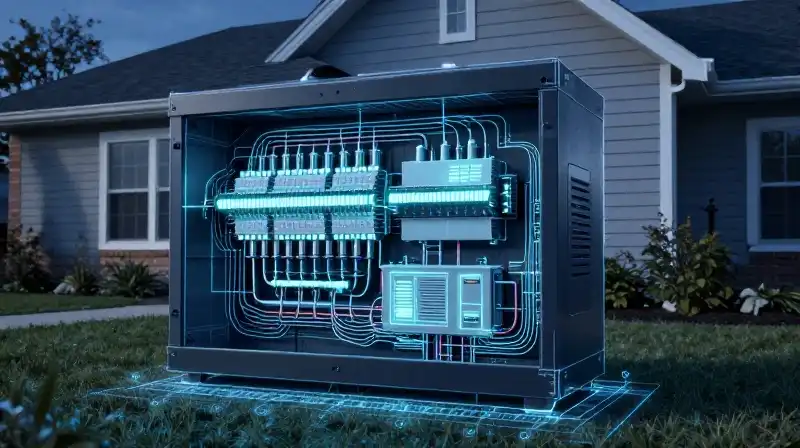
The most critical safety and functional component of a permanent home backup system is the Automatic Transfer Switch (ATS). The ATS serves as the central brain, acting as the switch between your utility provider and your backup generator.
When the main power grid fails, the ATS detects the voltage drop or the lack of current. It then initiates a specific sequence of actions:
- Generator Start: The ATS signals the generator to start up and begin producing electricity.
- Power Transfer: Once the generator reaches stable output, the ATS physically disconnect the home from the main power lines and automatically connects it to the generator. This transition typically takes between 30 seconds and one minute.
- Return to Grid: When the utility power is restored, the ATS monitors the grid. Only when it confirms the main power is stable does it automatically disconnect the generator, preventing a potentially dangerous condition known as backfeeding.
This automated process is why whole-house generators are referred to as “standby” systems—they are designed to provide continuous, long-term, hands-free power for the entire dwelling, unlike portable units that require manual intervention.
Comparing Standby vs. Portable Generator Operation
To understand the best approach for your home, it is essential to compare the two primary methods of generator operation. The differences lie in installation, power capacity, and required user input.
Standby (Whole-House) generators are permanently installed, often outside the home. They are designed with high capacity to run every essential system, including heating, cooling, refrigeration, and major appliances. Their operation is fully automated, eliminating the need for manual startup and refueling for extended periods. Standby systems typically pull power directly into the electrical panel through a transfer switch.
Portable generators, conversely, are designed for flexibility. They are manually operated, requiring the homeowner to physically start the engine and then manually move the generator to run near a specific load. To get power into the home, appliances must be connected using extension cords to a powered receptacle. This makes them ideal for smaller loads or for localized repairs but limits their utility to a specific area.
Fuel Types and Operational Limits
The choice of fuel dictates the reliability, maintenance, and operational lifespan of a backup system. Most whole-house generators utilize one of three primary fuels.
| Fuel Source | Typical Application | Key Benefits | Considerations |
|---|---|---|---|
| Natural Gas (NG) | Homes with a gas line connection. | Continuous, automated fuel supply; long-term use. | Requires existing gas infrastructure. |
| Propane | Homes without NG lines. | Easily stored in tanks; reliable for longer-duration outages. | Requires regular tank replenishment. |
| Gasoline/Diesel | Both portable and standby units. | Broad availability; easy transport. | Requires manual refilling (portable); requires fuel storage management (standby). |
It is important to note that while most home generators are designed for 24/7 backup, their runtime is always finite. A whole-house system using propane or diesel is designed for extended operation, but fuel supplies must be sized correctly based on your average home energy load (measured in kilowatts, or kW) and the expected duration of the outage.
Safety and Electrical Considerations
Operating a generator safely requires attention to both physical safety and electrical compatibility.
Carbon Monoxide Risk: Whole-house generators are designed to be installed permanently outside. This placement is a critical safety requirement to prevent the dangerous buildup of carbon monoxide inside the living space. Never operate a generator in a garage or near windows.
Power Quality: While modern whole-house generators provide stable power, some older or smaller units may not provide a perfectly clean electrical sine wave. This power quality issue means that running highly sensitive electronics, such as sophisticated computers or specialized medical equipment, may still require a separate battery backup or a “clean sine” inverter to prevent damage.
System Sizing and Installation: To avoid errors and inefficiency, the generator must be sized based on the specific energy load of the home. A professional assessment is mandatory. They ensure the generator is capable of handling the simultaneous start-up demands of large appliances like air conditioners and furnaces while operating safely within local code requirements.
Practical Steps for Choosing a Home Backup Generator
Making the correct decision involves balancing your budget with your specific needs:
- Assess Your Load: List every major appliance (HVAC, water pump, lights, etc.) and its wattage. This determines the required kW size.
- Determine Your Power Needs: Do you need power to the whole house (standby) or just a few appliances? If limited, a portable unit might suffice.
- Check Infrastructure: Determine if your property has reliable access to natural gas lines, which significantly simplifies installation and operation compared to propane or diesel setups.
- Prioritize Maintenance: Standby units require professional maintenance and fuel management; portable units require constant user attention and manual setup.
Summary of Generator Functionality
Home generators function by utilizing an external fuel source—ranging from natural gas to gasoline—to drive an engine that converts combustion into usable electricity. The sophistication of a modern whole-house system lies in the Automatic Transfer Switch, which acts as a highly reliable safety gate, ensuring the generator only powers your home when the main grid is confirmed offline. Understanding this process allows homeowners to select a system that provides uninterrupted comfort and security while adhering to all critical safety and performance limits.
Frequently Asked Questions
How does a home generator work if the power goes out?
Home generators convert fuel, such as natural gas or propane, into usable electricity via an engine. A permanent home backup system features an Automatic Transfer Switch (ATS) that detects grid failure and automatically disconnect the home from the main lines, switching the power to the generators output.
How long can backup generators run continuously?
Although most home generators are designed for 24/7 backup, their runtime is always finite. While whole-house systems using propane or diesel are designed for extended operation, fuel supplies must be appropriately sized based on the average energy load and the expected duration of the outage.
Where do backup generators get power from?
Home generators function by utilizing an external fuel source, such as natural gas, propane, gasoline, or diesel, to drive an engine that converts combustion into usable electricity. This fuel is the mechanism that provides the power to the system.
How to Choose a Home Backup Generator
Assess Your Load
List every major appliance (HVAC, water pump, lights, etc.) and its wattage to determine the required kW size.
Determine Your Power Needs
Decide whether you require power for the whole house (standby) or just a few specific appliances, as this influences the choice between standby or portable units.
Check Infrastructure
Evaluate if your property has reliable access to natural gas lines, as this greatly simplifies the installation and operation of the system compared to other fuel sources.
Prioritize Maintenance
Consider that standby units require professional maintenance and fuel management, while portable units require constant user attention and manual setup.
Related Articles