
What Is the Average Song Length? History and Modern Changes

Introduction
Determining the precise average song length is complicated because it is not a static number; it is a metric that has shifted dramatically based on both technological capability and economic incentives. While popular culture often cites a range of three to five minutes, a more detailed look reveals that the average length of a song has significantly decreased over the past several decades. As of the 2020s, the typical modern pop or chart-driven song falls around three minutes and fifteen seconds, a noticeable reduction from the roughly four minutes and 14 seconds recorded in the 1990s. The “average” is therefore an evolving concept, rooted in the physical limitations of previous media and shaped heavily by today’s digital listening habits.
How the Medium Defined Duration: The Historical Context
To understand the current average song length, one must examine the technological constraints of music distribution. Early physical records played a crucial role in standardizing duration.
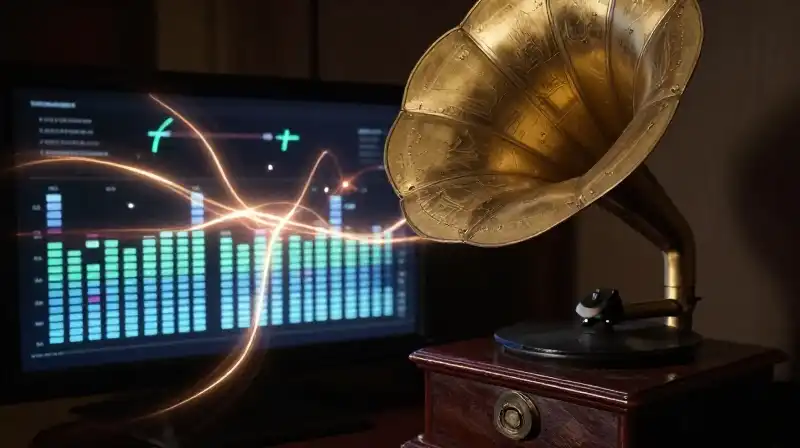
Initially, wax cylinders and 78 RPM records had very strict time limits, often restricting compositions to approximately three minutes. This technical constraint meant that early popular music was necessarily concise. The invention of the 45 RPM record and the subsequent rise of the Long-Playing (LP) vinyl format broke this mold, allowing artists to include significantly longer compositions of five minutes and more.
The standardization of song lengths was further accelerated by radio broadcasting. Because stations had finite airtime allocated for songs, artists and record labels were subtly encouraged to create tracks that fit perfectly within these commercial slots, cementing the 3-5 minute range as a temporary ideal.
The Shortening Trend: Streaming and Attention Spans
The most significant factor driving the decrease in the average song length since the LP era is the rise of digital streaming. Modern platforms and consumption habits have fundamentally changed the economics of music.
In the modern era, artists often receive payment based on per-play metrics. Shorter tracks are commercially advantageous because they increase the likelihood of repeat listens and higher listener engagement, directly benefiting revenue generation. This creates an incentive structure that favors immediate gratification.
This shift is also partially attributable to changing consumer habits and shorter average attention spans. Modern pop songs are often meticulously engineered to deliver a “hook” within the first few seconds, ensuring that listeners are immediately drawn in and encouraged to stream the entire track or return to it again.
Comparing Average Song Length Across Different Eras
The following table illustrates the general trend in how long a song typically was at various points in history:
| Era/Decade | Dominant Format | Approximate Average Duration |
|---|---|---|
| Early 1900s | 78 RPM Shellac | ~3:00 (Constrained) |
| 1970s - 1980s | Vinyl/Radio Broadcast | 3:30 – 4:00 |
| 1990s | CD/Radio Standardization | ~4:14 |
| 2020s - Present | Digital Streaming | ~3:15 (Decreasing) |
Genre Exceptions: Where the Long Form Endures
While the pop and mainstream music industries trend toward brevity, song duration is still highly subjective and depends heavily on the artist’s creative intent and the specific genre. Certain musical styles continue to challenge the standard average significantly.
For genres defined by extensive instrumental exploration and narrative complexity, long-form music remains the norm:
- Progressive Rock: Often features highly structured, multi-part suites that can easily exceed 10 minutes.
- Metal: Particularly symphonic or progressive metal, frequently employs extended instrumental sections.
- Classical Music: Compositions are inherently long, often forming pieces that run 7 to 15 minutes or even longer.
These genres represent cases where artistic freedom and thematic development supersede the commercial pressures of short, repetitive loops.
The Role of AI in Music Duration
Artificial Intelligence is introducing a new variable into the discussion of song length. Because AI music generation is not yet tied to fixed physical media constraints or rigid per-play monetization models, the output parameters for AI tracks are highly flexible.
Depending on the specific prompts and model versions, AI-generated tracks have demonstrated the capacity to exceed five or six minutes. This is an area where duration is determined more by the user’s specific creative direction than by traditional industry averages.
Practical Limits and Considerations for Modern Listening
The ideal song length depends entirely on how and why you are listening to music. Rather than seeking a single definitive answer, it is useful to consider these factors when evaluating music:
- Casual Listening: If listening in a background setting (like while commuting), shorter, three-minute tracks align best with the demand for immediate engagement.
- Album Experience: If listening to an album in its entirety, a variety of lengths is preferred, as the long-form compositions provide structural depth.
- Genre Expectation: The “average” for a progressive metal song is fundamentally different from the “average” for a modern radio hit.
In summary, the general consensus for the typical song falls into the 3 to 4-minute range. However, understanding the history of 78 RPM records, the impact of radio standardization, and the driving forces of streaming economics is necessary to grasp why this number is constantly being pushed downward for mainstream music.
Frequently Asked Questions
How long is your average song?
As of the 2020s, the typical modern pop or chart-driven song is around three minutes and fifteen seconds. The general consensus for the typical song, however, falls into the 3 to 4-minute range.
What is the average length of a song?
As of the 2020s, a typical modern pop or chart-driven song is around three minutes and fifteen seconds. The general consensus for the typical song across various eras, however, falls into the 3 to 4-minute range.
Related Articles