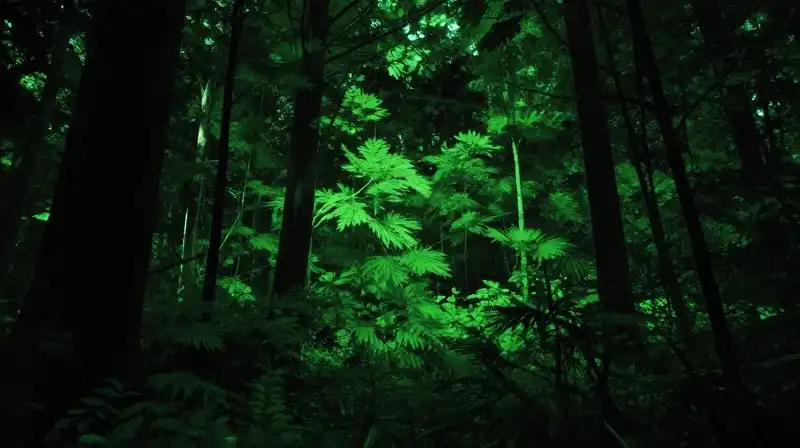

Why Do Soldiers Use Green Night Vision? Science and Tactics

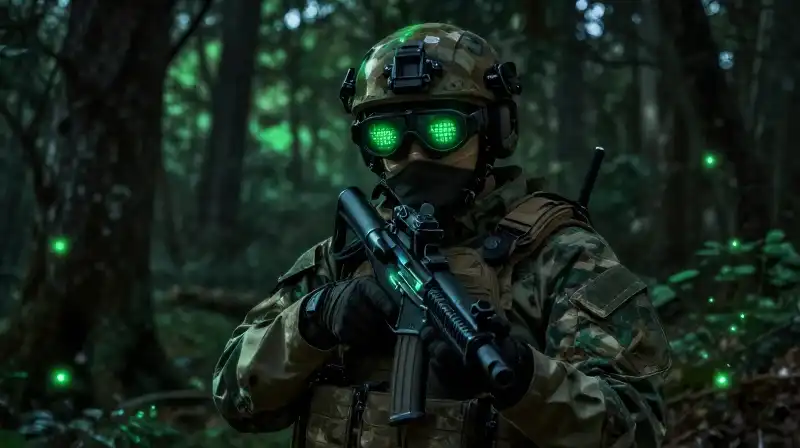
Introduction
The pervasive use of green night vision in tactical gear, such as the PS-31 BNVD and PVS-14 monocular, is rooted in a specific blend of human biological perception and the foundational physics of optical amplification. While a greener color is simply a characteristic of the phosphor material used in the optical tube, its adoption by military and tactical users is driven by a distinct and measurable advantage: it maximizes the sensitivity of the human eye to extremely low levels of light. Essentially, green night vision is not merely a choice of color, but an engineering solution optimized for the operational requirements of low-light, high-stakes environments.
The Science Behind Green Phosphor Night Vision
The green color observed in devices like green phosphor night vision is a direct result of the specialized chemistry of the image intensifier. Unlike high-end color displays, classic night vision technology utilizes photocathodes and photo-multiplier tubes, which convert incoming ambient light into electrons. These electrons are then accelerated and strike a phosphor layer, causing the emission of light. The specific green hue is determined by the chemical composition of this phosphor material.
Human Sensitivity and Wavelength Preference
The primary scientific reason for the preference is based on human photoreceptor biology. The human eye exhibits its peak sensitivity to wavelengths within the green spectrum (roughly 555 nanometers) when operating in low-light conditions. While other colors (such as white or red) can be achieved through different phosphor materials or digital filters, green provides the most efficient amplification of the minimal light available, allowing the operator to “see” more detail and longer distances than might be possible with less sensitive wavelengths.
Tactical and Operational Advantages in the Field
Beyond biological sensitivity, green night vision provides several practical benefits that enhance an operator’s situational awareness, making it a cornerstone of modern military equipment. These benefits are crucial for navigating complex, dark operational environments.
Enhanced Image Clarity and Visibility
The optimal utilization of green phosphor translates directly into a higher perceived resolution and better contrast when ambient light is extremely low. For tactical applications, where distinguishing subtle movement or terrain features is critical, this improved visibility is paramount. Systems are engineered to automatically adjust gain, ensuring the image remains visible even as lighting conditions fluctuate—a common occurrence on the battlefield.
Differentiating Configurations for Optimal Use
Advanced units offer flexibility that adapts the viewing experience to the immediate tactical need.
- Binocular Mode: Offers a stereoscopic view, providing crucial depth perception. This is vital when maneuvering through dense terrain or around obstacles.
- Monocular Mode: Facilitates a quicker and more adaptable transition between rapidly changing light levels (e.g., moving from shadows into moonlight), reducing visual fatigue.
Green vs. White Phosphor: Comparative Performance
As technology evolves, alternatives to green, such as white night vision devices, have become available. Understanding the differences helps clarify why green remains the tactical standard for many professional applications.
Phosphor Chemistry and Output
White night vision often utilizes different display technologies or modifications to the phosphor screen, attempting to achieve a broader light spectrum. However, these alternatives may not match the intense sensitivity and specific color fidelity achieved by the optimized green phosphor. While white units might offer a visually neutral or modernized look, the historical and technical preference for green stems from its superior performance in the fundamental task of capturing the faintest light.
Operational Considerations and Interference
A practical consideration in field use is the potential for visual confusion or disruption from non-tactical light sources. Some specific wavelengths of light, including certain greens, can be highly effective at rejecting environmental light pollution that does not align with the display’s optimized sensitivity, contributing to a clearer operational field of view.
Summary of Tactical Utility and Selection Criteria
The decision for operators and specialized professionals—whether government entities, tactical units, or advanced hunters—to utilize green night vision is a calculation of maximizing efficiency in the dark. It is a system optimized to leverage the peak sensitivity of the human eye.
Key Decision Criteria for Users
When evaluating green night vision equipment, consider the following criteria based on your operational requirements:
- Environmental Needs: If you operate primarily in extreme low-light conditions, the inherent sensitivity of green phosphor offers superior performance.
- System Configuration: Determine if your mission requires the depth perception of a binocular system (like the PS-31 BNVD) or the rapid adaptability of a monocular (like the PVS-14).
- Durability and Integration: Assess the system’s ruggedness, waterproof construction, and integration capabilities, such as pivot designs for secure helmet mounting.
Ultimately, choosing green night vision means selecting a technology built upon decades of optical engineering designed specifically to exploit the unique way the human visual system processes light at its weakest. It is a practical, science-driven solution to the challenge of seeing in the dark.
Frequently Asked Questions
Why do soldiers use green night vision?
Soldiers use green night vision because it maximizes the sensitivity of the human eye to extremely low levels of light. The human eye exhibits its peak sensitivity to wavelengths within the green spectrum when operating in low-light conditions.
Related Articles