Why Insects Die on Their Backs: The Science Behind the Roll of Death

Introduction
Finding an insect dead on its back—a condition often called the “roll of death”—is a common observation. While this sight can be unsettling, the phenomenon is not a single event but rather the culmination of various physiological and environmental factors. The central reason many insects end up inverted is the loss of the complex muscular coordination and physical energy required to right themselves. This process is typically a response to a fatal underlying condition, ranging from natural aging and illness to exposure to toxins or environmental entrapment.
To fully understand why bugs die on their backs, one must distinguish between two scenarios: 1) death occurring because the insect is already weak, or 2) death being triggered by the convulsive or debilitating movements that force the insect onto its back. The answer lies in the nuanced relationship between the insect’s declining strength and its nervous system’s ability to execute essential self-corrective maneuvers.
The Physiological Mechanism: Loss of Coordination and Energy
Biologically, the “position of flexion” describes a state where an insect is physically unable to execute the necessary movements to stand or right itself. The most fundamental cause of this state is a progressive loss of muscular strength or severe energy depletion. As an insect nears the end of its life or succumbs to slow-acting illnesses, its energy reserves dwindle, leaving it unable to fight against the forces that have knocked it over.
When an insect weakens, its motor control deteriorates. The muscles lose the sustained power needed to lift the weight of the body, leading to a relaxation or curling of the legs and abdomen. This shift in weight, combined with the inability to apply counter-force, causes the insect to settle onto its back. In cases of severe frailty, inadequate blood flow to the limbs can further inhibit their ability to support the body, accelerating the transition into the overturned state.
Why Top-Heavy Insects Struggle More
The difficulty of self-rightening varies significantly by species. Top-heavy insects, such as cockroaches, require a significant, sustained burst of coordinated energy to pull their body back onto their sides. When these species are already weakened by age or internal parasites, the energy cost of this self-rescue becomes prohibitively high, making them more prone to remaining in an overturned position after a minor disturbance or fall.
The Role of Toxins and Nervous System Failure
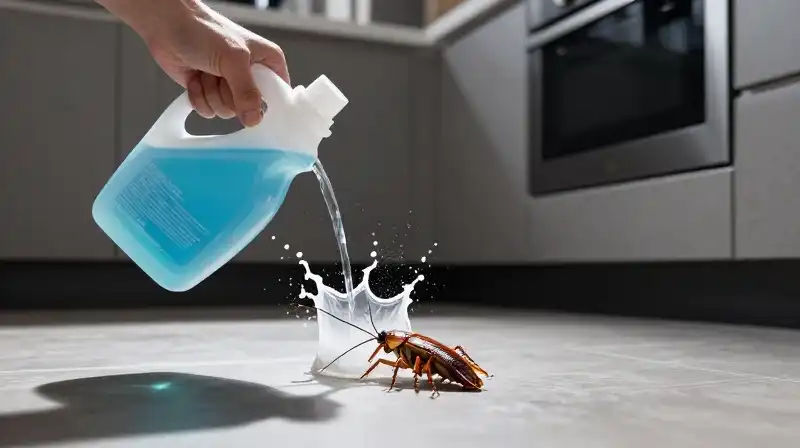
The role of external chemical agents is a primary factor in cases where the death is rapid and violent. Neurotoxic pesticides, such as organophosphate nerve poisons, directly attack the nervous system. These chemicals disrupt the insect’s communication between nerves and muscles, leading to a severe neurological cascade.
Exposure to these poisons often triggers violent muscular spasms, tremors, and convulsions. These convulsive movements are often what physically flip the insect onto its back. Similarly, other insecticides that target energy production can cause total systemic failure. The insect may simply run out of the energy required to maintain its posture, resulting in death flat on its back due to complete cellular exhaustion.
Environmental Triggers and Accidental Trapping
The environment frequently dictates the initial position of an insect before death occurs. Sometimes, the “roll of death” is a consequence of an external event rather than an internal decline. An insect may become trapped in glass, under debris, or caught in a liquid. If the insect cannot escape, it eventually succumbs to starvation or dehydration while still in the accidental, overturned position.
In these scenarios, the death is not caused by a lack of strength but by the inability to meet basic survival requirements while immobilized. The mechanism of death here is external stress; the body is found in the position of flexion because it was never given the chance to maneuver its way out of the trap.
Addressing Common Concerns: Pain and Awareness
Due to the dramatic nature of the finding, observers often wonder about the insect’s subjective experience. Addressing the related searches provides clarity on this matter.
- Do bugs feel pain? Insects lack the complex central nervous systems and pain receptors found in vertebrates. Their “response” to a noxious stimulus is a reaction to electrical or chemical disruption in the nervous system, which can be observed as convulsions, rather than the experience of suffering in a meaningful, psychological sense.
- Do insects know they are about to die? There is no evidence that insects possess the cognitive awareness of impending death. Their behavior, whether it is attempting to move or remaining stationary, is purely instinctual and reflexive based on the immediate sensory input they receive.
Synthesizing the Roll of Death: When and Why
The finding of an insect deceased on its back should be viewed as an indication of the failure of a critical life function, whether that function is muscular, neurological, or defensive. To summarize the different pathways to this state:
| Mechanism | Primary Cause | How the Roll Occurs |
|---|---|---|
| Physiological Decline | Age, Illness, Weakness | Slow loss of strength leads to inability to support weight (Position of Flexion). |
| Chemical/Toxic | Pesticide Exposure | Systemic disruption causes violent convulsions and spasms. |
| Environmental | Entrapment, Fall | Inability to execute escape or self-right maneuvers while immobilized. |
Ultimately, the “roll of death” is a reliable indicator that the insect’s ability to execute life-sustaining self-correction has been fatally compromised. By distinguishing between gradual muscular failure and sudden neurological collapse, one can better understand the diverse biological realities that lead to this common but striking sight.
Related Articles