How Pine Trees Reproduce: The Role of Male and Female Cones

Introduction
Pine trees, which belong to the gymnosperm group, reproduce through a specialized and highly structured life cycle. Unlike plants that produce fruit and enclose seeds, pine trees utilize a complex system centered around cones. The fundamental process of how pine trees reproduce involves the distinct and necessary collaboration between male and female reproductive structures. Understanding this process requires following the stages: the release of pollen by the male cones, the reception of that pollen by the female cones, and the subsequent development of seeds inside the mature cones.
The Role of Male Cones in Pollen Production
The initial stage of pine tree reproduction is driven by the male cones. These structures are responsible for producing pollen, which carries the essential genetic material needed for fertilization. Male cones are generally characterized by being smaller, soft, and having a shorter lifespan, typically appearing in the spring. They are strategically positioned on the lower branches, facilitating the release of pollen into the air. Pollen grains act as the male gametophytes, carrying the genetic payload. Since pines do not rely on animal vectors for transport, the release of this pollen is primarily dependent on natural elements, specifically wind. This is a crucial point in understanding pine reproduction: the pollen must travel from a male cone to a receptive female cone, often on a different tree, for the reproductive process to begin.
Understanding the Function of Female Cones
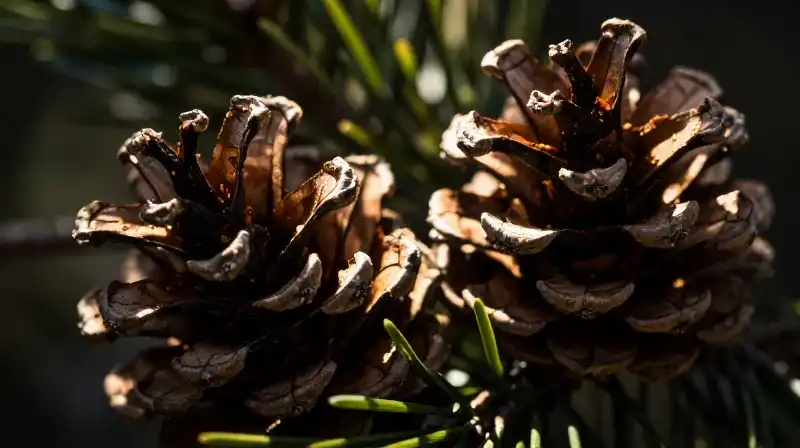
Female pine cones are the receiving structures of the reproduction cycle. These cones possess a woody, spirally scaled structure designed not only to house and protect the developing seeds but also to provide the receptive surface for pollination. Each female cone contains ovules—the structures that will ultimately become the seeds. The moment pollen from a male cone lands on a receptive part of a female cone, the process of pollination is complete. This transfer initiates a biological sequence leading to fertilization. The successful union of the male and female genetic material, occurring within the specialized structures of the female cone, is what defines the successful reproductive event for the pine tree.
How Pine Trees Reproduce: The Pollination Cycle Step-by-Step
The entire reproductive cycle can be broken down into sequential stages, illustrating the precise biological mechanism:
- Pollen Release: Male cones produce and release pollen into the environment, often in spring.
- Pollination: Wind carries the microscopic pollen from the male cone to the receptive female cone.
- Fertilization: Once the pollen lands on the female cone, the male gametophytes travel through the cone’s internal structure to achieve fertilization within the ovules.
- Seed Development: Following fertilization, the ovules begin developing into seeds, a process that takes a significant amount of time, usually two to three years.
- Dispersal: When the cones mature, they become heavy, and the mature seeds eventually detach and fall to the ground, allowing the new generation to colonize new environments.
Sexual vs. Asexual Reproduction in Pine Trees
A common question regarding pine trees is whether they reproduce sexually or asexually. Pine trees reproduce through a strictly sexual process. Unlike some plants that can reproduce through vegetative means (such as cuttings or runners), the survival of a new pine requires the successful fusion of male and female genetic material. The reliance on the male and female cones, and the transfer of genetic material via wind-borne pollen, confirms that pine tree reproduction is a sexual process. While some environmental factors may allow for survival without immediate reproduction (e.g., seed bank persistence), the creation of a viable, new plant requires this complete biological cycle.
From Cone to Seed: The Role of Cones in Seed Maturation
The cone itself is more than just a protective casing; it is an active participant in the life cycle. The journey from a soft, youthful female cone to a hard, seed-bearing structure involves several critical transitions:
| Cone Stage | Function | Characteristics |
|---|---|---|
| Youth (Post-Pollination) | Nurturing Development | Cone begins to swell; internal ovules are fertilized. |
| Maturation | Protection & Growth | The woody, spirally scaled structure fully develops, protecting the seeds during their prolonged growth period. |
| Dispersion | Seed Release | The cones dry out and eventually open or release their seeds to the ground, beginning the next cycle. |
Practical Insights on Pine Tree Reproduction
Successfully understanding how pine trees reproduce involves recognizing the environmental variables and the unique biological constraints of the process. Here are key considerations:
- Wind Dependency: Since pollen dispersal relies almost entirely on wind, factors like wind speed, direction, and frequency heavily influence reproductive success.
- Timing is Critical: The synchronicity between pollen release (male cones) and the receptive phase (female cones) is vital. If the timing is off, pollination will fail, and seed production will not occur.
- Genetic Variation: Reproduction requires genetic union. The distance between male and female trees affects pollen viability and the genetic diversity of the resulting seeds.
- Environmental Stability: The two to three-year development period for the seed requires stable environmental conditions—adequate moisture and temperature—to ensure the seeds mature before being dispersed.
Frequently Asked Questions
Do pine trees have both male and female parts?
Yes, pine trees utilize distinct male and female reproductive structures, specifically male cones that produce pollen and female cones that receive it for the reproduction cycle. The process requires the collaboration between these male and female structures for fertilization to occur.
How Pine Trees Reproduce
Pollen Release
Male cones produce and release pollen into the environment, often in spring.
Pollination
Wind carries the microscopic pollen from the male cone to the receptive female cone.
Fertilization
Once the pollen lands on the female cone, the male gametophytes travel through the cone's internal structure to achieve fertilization within the ovules.
Seed Development
Following fertilization, the ovules begin developing into seeds, a process that takes a significant amount of time, usually two to three years.
Dispersal
When the cones mature, they become heavy, and the mature seeds eventually detach and fall to the ground, allowing the new generation to colonize new environments.
Related Articles