
How Oil Pumpjack Mechanics Move Crude Oil to the Surface

Introduction
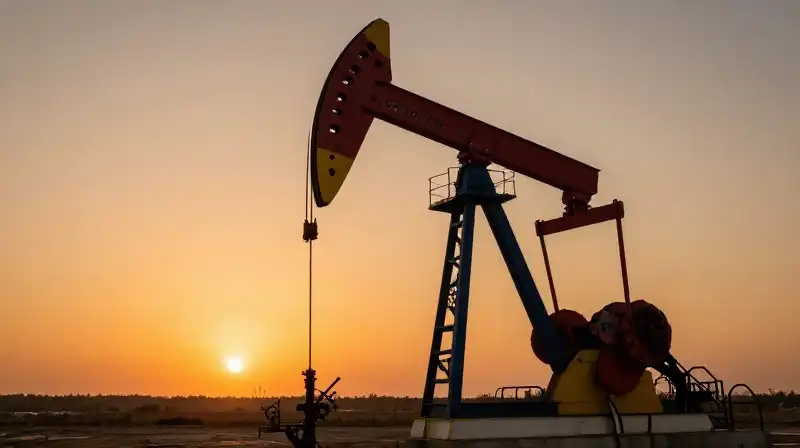
A pumpjack, often incorrectly referred to as an “oil derrick,” is specialized surface equipment designed to extract crude oil from subterranean reservoirs where the natural pressure is insufficient for self-flow. While traditional oil derricks are primarily structures designed for drilling deep into the earth, the pumpjack is a mechanical device that utilizes cyclical motion to lift liquid from an existing wellbore. Its primary function is to convert rotational energy, typically generated by an electric motor or internal combustion engine, into the powerful vertical, reciprocating force necessary to pull hydrocarbons to the surface. Understanding the mechanism is key to appreciating why this technology is the standard equipment for low-pressure onshore oil production. The device does not merely move a pipe; it drives a down-hole pump, enabling the efficient movement of oil by overcoming the inherent difficulties of extraction from a depleted or low-energy formation.
The Core Mechanism: Translating Rotation to Vertical Motion
The operational effectiveness of the pumpjack hinges on a sophisticated mechanical chain that converts smooth, rotational motion into the heavy, oscillating movement required for pumping. This process involves several interconnected components:
- The Prime Mover: An electric motor or gas engine provides the initial rotational force. Modern industry trends increasingly favor electric motors due to environmental benefits and precise control.
- The Walking Beam: This is the structural heart of the pumpjack. The prime mover drives a crank, causing the massive walking beam to swing downward and upward in a cyclical motion.
- The Bridle and Polished Rod: The downward movement of the walking beam is translated via a heavy steel bridle (cable) attached to the top of a polished rod located at the surface. This polished rod is the direct link to the down-hole apparatus.
- The Sucker Rods: The polished rod is connected to a series of sucker rods, a reinforced steel string that transfers the vertical mechanical force down the wellbore to the pump.
This entire assembly functions as a large-scale, highly engineered counterweight elevator designed to exert immense, repetitive pressure into the well structure.
The Pumping Cycle: How Oil is Drawn Up
The mechanical energy of the walking beam is focused at the bottom of the well on a down-hole pump, which is managed by a critical pair of check valves. The pump cycles between two distinct strokes, each serving a specific purpose in the extraction process:
The Downstroke (Intake Phase)
As the walking beam pulls the polished rod downward, the downward movement of the rod pushes the plunger within the down-hole pump intake. During this phase, the internal stationary check valve at the bottom of the well opens, allowing the formation fluid (crude oil) to be drawn into the chamber. The traveling check valve, which moves with the sucker rods, remains securely closed, preventing backflow and ensuring the intake is filled completely with liquid.
The Upstroke (Discharge Phase)
As the walking beam pushes the polished rod upward, the volume of the pump chamber decreases. This rising movement forces the liquid gathered during the downstroke out through a discharge port, along with any necessary gases, toward the surface. Simultaneously, the upward motion causes the traveling check valve to open, allowing the pressurized crude oil to be discharged into collection vessels or a pipeline.
Operational Challenges: Avoiding Gas Locking
While pumpjacks are robust, their efficiency is often hindered by well conditions. The primary operational complication is gas locking. When compressed gas enters the wellbore, it can displace the heavy liquid oil in the pump chamber. Since gas does not displace liquid, it prevents the chamber from building the necessary pressure to effectively move the oil during the upstroke. This mechanical lockout stops production. To mitigate this frequent issue, operators often move the well inlet for the down-hole pump to a depth below the formation’s typical gas-bearing zones. This structural decision ensures that even if gas is present above the perforations, the mechanical intake of the pump is submerged in the oil itself, allowing the necessary liquid displacement to occur.
Operational Costs and Efficiency Considerations
The question of how much an oil pumpjack “makes per hour” is not a fixed figure, but rather a function of several highly variable operational factors, including reservoir pressure, oil viscosity, and maintenance frequency.
Modern operational efficiency is driven primarily by the choice of prime mover:
- Electric Motors: These are favored in contemporary operations because they allow for precise control over stroke speed and amplitude. This optimization minimizes stress on the mechanical components and extends maintenance intervals, leading to lower long-term operating costs and better compliance with environmental regulations.
- Internal Combustion Engines: Historically used, these engines provide power but require significantly more maintenance and consume more fuel, contributing to higher operational expenses and greater emissions.
Oil extraction success relies less on brute force and more on the mechanical optimization of the pump’s cycle to match the pressure of the reservoir.
Pumpjack vs. Standard Oil Derrick
It is common for the terms to be confused, but they describe different functions. A standard vertical oil derrick is a structural tower used to facilitate the drilling process, hoisting massive drill bits and pipes deep into the earth until oil is found. A pumpjack, conversely, is used after the well has been successfully drilled and completed. It is the specific machinery deployed to lift the discovered oil. While sometimes seen adjacent to drilling operations, they fulfill distinct roles in the lifecycle of oil production.
Practical Considerations for Field Deployment
While the pumpjack is the industry standard for low-pressure extraction, it has defined limits. It is generally considered impractical for extracting high-pressure oil, as the required forces and operational complexity exceed what a reciprocating rod system can handle. Furthermore, for reservoirs with extremely high viscosity or complex horizontal formations, specialized pumping techniques or advanced drilling methods like hydraulic fracturing may be required before a pumpjack becomes viable. The structural design of a pumpjack prioritizes stability and the ability to withstand heavy industrial loads, but it is fundamentally a machine designed for moderate, continuous, cyclical force application.
How to Operate the Pumpjack Pumping Cycle
Downstroke (Intake Phase)
As the walking beam pulls the polished rod downward, the downward movement pushes the plunger within the down-hole pump intake. This causes the internal stationary check valve at the bottom of the well to open, drawing formation fluid (crude oil) into the chamber.
Upstroke (Discharge Phase)
As the walking beam pushes the polished rod upward, the volume of the pump chamber decreases. This rising movement forces the liquid gathered during the downstroke out through a discharge port. Simultaneously, the upward motion opens the traveling check valve, allowing pressurized crude oil to be discharged into collection vessels.
Related Articles