
Coyotes and Skunks: The Truth About Their Interactions and Diet

Introduction
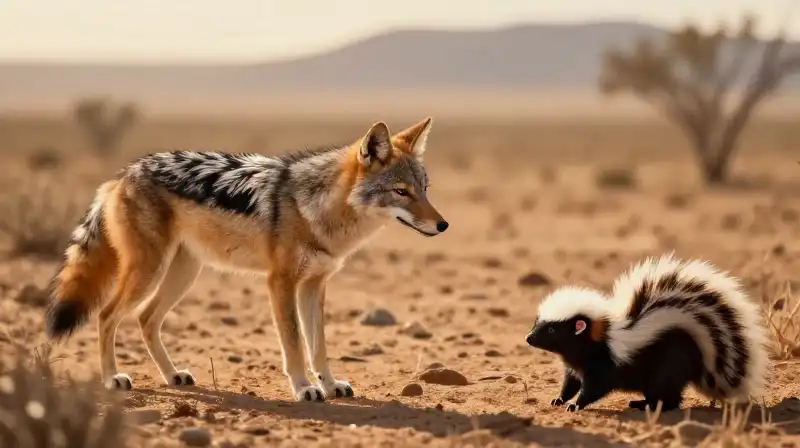
The relationship between coyotes and skunks is a complex ecological dynamic that often leads to confusion about whether these predators simply consume their quarry. While skunks are among the diverse prey of a coyote, the behavior is not always a straightforward hunt for calories. The primary function of a typical coyote-skunk encounter is often related to scent management rather than consumption. Coyotes, known for their broad ecological adaptability, engage in a behavioral interaction with skunks to acquire their potent defensive spray. This interaction serves as a tactical mechanism for the coyote, though the decision to kill and eat a skunk depends entirely on the circumstances and the coyote’s immediate hunger.
Tactical Interaction: Utilizing Skunk Spray
The majority of the time, the “attack” on a skunk is designed to acquire a resource that enhances the predator’s ability to thrive. Coyotes are highly intelligent hunters, and their ability to survive in varied environments depends on remaining undetected by rivals or other potential prey. Skunk spray, which is a potent and pungent odor, is used by coyotes to mask their own scent. By adopting the skunk’s signature smell, the coyote becomes less noticeable, which is a vital advantage for hunting success across various landscapes.
This advantageous scent is not kept solely by the adult; it is shared among a coyote’s kits, allowing the entire litter to benefit from the scent masking. It is important to note that the interaction is generally non-lethal, as the coyote’s goal is the scent, not necessarily the meat.
The Coyote’s Opportunistic Diet
While scent masking is a common motivator, the coyote’s diet is primarily defined by opportunity. Coyotes are established hunters whose primary sustenance comes from smaller mammals, birds, and various scavenging opportunities. When a situation arises—such as a hungry coyote or a skunk that has been incapacitated—the animal’s focus shifts from tactical scent gathering to caloric acquisition. Coyotes are capable of killing and consuming skunks to meet their nutritional needs. When the need for food outweighs the benefit of scent acquisition, the skunk transitions from a defensive resource to a meal.
When and Why Coyotes Consume Skunks
The decision by a coyote to eat a skunk is usually dictated by:
- Hunger: The coyote’s nutritional needs take precedence when an easy meal is available.
- Opportunity: Skunks that are isolated, injured, or otherwise neutralized become viable prey.
- Resource Availability: If smaller mammals are scarce, larger prey like skunks become a more valuable food source.
Skunks in the Ecosystem: Beyond the Coyote
Understanding the interaction requires looking at the skunk’s place in the broader environment. Skunks are solitary members of the weasel family (Mustelidae) and rely heavily on their powerful, concentrated oil spray for defense. The skunk’s diet consists of berries, insects, frogs, and eggs, and its defense system deters most predators. However, the skunk faces numerous threats, particularly when its environment changes.
When assessing a skunk’s vulnerability, other predators, including bears, bobcats, foxes, and alligators, are known to hunt them. Furthermore, Great Horned Owls are highly effective predators because their poor sense of smell makes them vulnerable to the skunk’s primary defense mechanism. Vultures do not hunt living skunks, but they readily scavenge dead specimens that have been killed by other causes.
Adapting to Survival: The Coyote’s Strategy
The coyote’s success as a modern predator is rooted in its intelligence and its ability to inhabit diverse ecological niches, including human-altered environments. This high degree of adaptability is crucial to understanding its behavior. Coyotes are not specialized hunters; they are opportunistic. Their behaviors—whether playing, scent-masking, or consuming prey—are all calculated moves designed to increase their survival rate within the local environment. This opportunistic nature explains why they engage in both non-lethal, tactical play (to gain spray) and opportunistic predation (to gain food) from the same species.
Key Takeaways
The answer to whether coyotes eat skunks is nuanced. It is not a guaranteed outcome of their encounter. The relationship is defined by two main priorities:
- Tactical Gain: The primary interaction often centers on the acquisition of skunk scent to mask the coyote’s own odor, aiding its hunting strategy.
- Caloric Necessity: The consumption of skunks occurs when the coyote’s hunger or the availability of the prey outweighs the benefits of the scent.
Ultimately, the coyote’s behavior regarding skunks reflects its identity as a highly adaptable, opportunistic predator whose actions serve its overarching goal of survival and efficient resource management.
Frequently Asked Questions
What is a skunk's worst enemy?
According to the article, skunks face numerous threats from other predators, including bears, bobcats, foxes, and alligators. Additionally, Great Horned Owls are highlighted as highly effective predators because their poor sense of smell makes them vulnerable to the skunks defense.
Will skunks keep coyotes away?
The article indicates that while a skunks spray deters most predators, coyotes frequently interact with skunks to acquire their potent scent for tactical advantage. The primary goal of this encounter is often scent management rather than avoidance or consumption.
Related Articles