
Agarwood Cost: Why This Luxury Wood Reaches $100,000/Kg

Introduction
The extreme cost of high-quality agarwood—often reaching figures exceeding 100,000 per kilogram for the finest grades—positions it among the world’s most valuable natural materials. This price tag reflects far more than just scarcity; it is a direct result of a unique and highly specific biological transformation. Agarwood is not simply a rare timber; it is a product of a singular, complex chemical reaction initiated by a fungal infection within the heartwood of *Aquilaria* trees. Understanding the agarwood cost requires examining the fundamental biological constraints of its creation, the strict criteria used to grade quality, and the intense global demand from luxury markets.
The Biological Basis of Agarwood’s Value
To grasp why agarwood commands such a premium, it is necessary to understand the process of its formation. The raw heartwood of an *Aquilaria* tree (such as *Aquilaria malaccensis*) is intrinsically pale, odorless, and commercially negligible. The transformation into valuable agarwood is entirely dependent on a specific environmental trigger: an infection by a particular type of mold or fungus. When an *Aquilaria* tree is compromised, its natural defense mechanism activates. The tree responds to the fungal intrusion by producing copious amounts of a dense, aromatic, dark resin. This resin, known as agarwood, is chemically distinct from normal wood. Because this process is unpredictable and reliant on a specific biological failure (infection), the yield from any given tree is naturally highly variable and inherently limited. This combination of a complex, slow biological process and the absolute requirement of a specific, natural infection is the root cause of the material’s extreme rarity and, consequently, its astronomical cost.
Differentiating Grades: Why Cost Varies So Widely
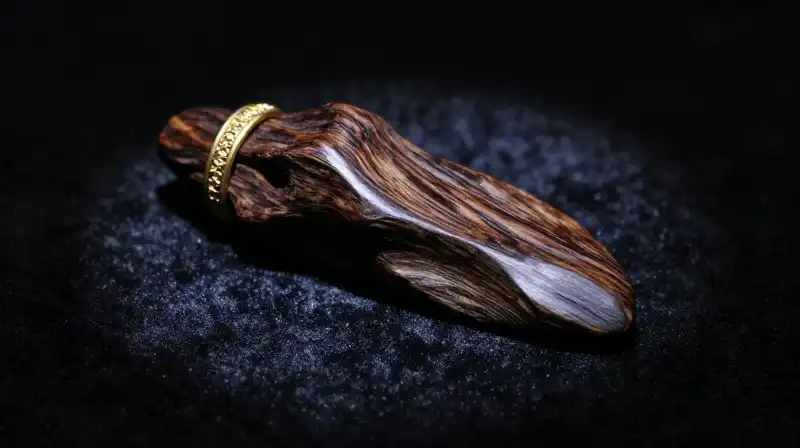
The broad price range for agarwood is not uniform; it is dictated by stringent quality grading systems. High market value is tied directly to the resin’s density, color, aroma, and the quality of the wood it permeates. Consumers seeking value must look beyond the general name and evaluate the grade. * **Low Grades (Lower Cost):** These typically represent basic resin infusion or wood with minimal, less dense resin. They are suitable for general incense or lower-tier crafting but possess a milder, less complex fragrance profile. * **Medium Grades (Mid-Range):** These exhibit a noticeable, pleasant aroma and a more uniform infusion of resin. They meet common market standards for traditional use in perfumery and smaller carvings. * **High-Grade/Premium (High Cost):** This is the “Wood of the Gods.” It features intensely fragrant, deep red or dark brown resin, is highly dense, and the fragrance is potent, complex, and lasts long after combustion or application. These top-tier specimens often reach the $100,000/kg mark. Buyers must be aware that the density and distribution of the resin are the primary indicators of true quality and worth.
Supply Constraints and the Cultivation Factor
Historically, the supply of wild agarwood was limited, driving intense competition and pricing. However, increasing sustainability concerns have pushed the industry toward cultivated agarwood. Cultivation involves techniques that mimic the natural infection process, typically through controlled inoculation of specific *Aquilaria* species. This method offers a more reliable and manageable supply compared to waiting for random natural infections in the wild. | Feature | Wild Agarwood | Cultivated Agarwood | | :--- | :--- | :--- | | **Availability** | Limited, unpredictable, subject to overharvesting risks. | Controlled, sustainable, predictable yields. | | **Source** | Natural mold infection. | Inoculation and controlled growth. | | **Market Perception** | Extremely high historical value; rarity is guaranteed. | High value; focuses on consistency and sustainability. | While cultivated agarwood addresses ethical and environmental concerns, it is still an expensive endeavor due to the time required for the resin to develop, which can span many years.
Market Drivers and Usage Beyond the Incense Market
The high market demand for agarwood is fueled by its intense, unique fragrance and its status as a luxurious commodity, giving it appeal in multiple high-end industries: * **Luxury Perfumery:** Agarwood (or its essential oils) is a signature ingredient in high-end designer and niche perfumes, valued for its deep, resinous, and long-lasting scent profile. * **Traditional Incense:** In various global markets, particularly the Middle East and Asia, it is used in high-end ceremonies and rituals due to its prestigious fragrance. * **Investment Asset:** Due to its limited natural supply and consistent demand, top-grade agarwood is increasingly viewed as a natural, appreciating commodity and a collector’s investment. * **Traditional Medicine and Crafts:** It is utilized in certain traditional medicinal practices and utilized in small, high-end carvings where its aesthetic and olfactory properties are paramount.
Navigating the Market: Authenticity and Risks
Given its extreme value, the agarwood market is unfortunately susceptible to fraud. A significant portion of the traded material is often faked or chemically adulterated to imitate the rich aroma. To mitigate risks and protect against counterfeit goods, consider these practical evaluation criteria:
- Aroma Depth: Genuine high-grade agarwood possesses a multi-layered, complex scent that evolves over time, rather than a single, harsh, manufactured perfume.
- Resin Density and Color: Look for a deep, rich red or dark brown color with a highly saturated, dense resin infusion within the wood grain.
- Traceability: Reputable suppliers should provide documentation regarding the origin (wild vs. cultivated) and the grading process, demonstrating transparency in the value chain.
It is crucial to differentiate between the raw, unprocessed wood and the finished product, as the market price fluctuates based on the level of processing (slicing, burning, oil extraction, etc.).
Summary of Key Considerations for Agarwood Cost
The final price of agarwood is a multifaceted equation governed by biology, grade, and market forces. The extreme costs (100,000 per kilogram) are not arbitrary; they reflect the specialized fungal infection that transforms ordinary heartwood into a biologically rare and highly sought-after aromatic resin. Whether you are seeking it for luxury perfumery, investment, or traditional use, focus on the internal quality—the density, the complexity of the scent, and the provenance of the wood—rather than simply the price tag.
How to Authentically Evaluate and Acquire Agarwood
Assess Aroma Depth
Genuine high-grade agarwood possesses a multi-layered, complex scent that evolves over time, rather than presenting a single, harsh, manufactured perfume.
Check Resin Density and Color
Look for a deep, rich red or dark brown color with a highly saturated, dense resin infusion within the wood grain, as density and distribution are primary indicators of quality.
Ensure Traceability
Demand documentation from the supplier regarding the wood's origin (wild vs. cultivated) and the grading process to demonstrate transparency in the value chain.
Identify Product State
Be able to differentiate between the raw, unprocessed wood and the finished product (e.g., slicing, burning, oil extraction), as the market price fluctuates based on the level of processing.
Related Articles