How Wireless Chargers Work: The Science of Magnetic Induction

Introduction
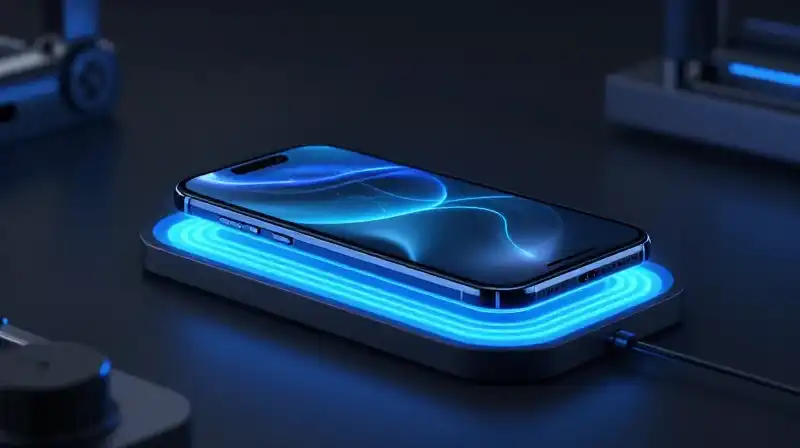
The ability to charge a phone without a physical cable is one of modern technology’s greatest conveniences, but the process hinges entirely on complex physics. Wireless chargers do not transmit electricity directly; instead, they utilize a scientific phenomenon called electromagnetic induction to transfer energy. This mechanism allows electrical energy to travel across a gap—air or other materials—without the need for a direct connection. Fundamentally, a magnetic charger works by converting electrical current into a fluctuating magnetic field, which then induces a similar electrical current inside the device’s receiving coil.
The Principle of Electromagnetic Induction
To understand how a magnetic charger works, one must first grasp the concept of induction. Every electric current generates a magnetic field around it. When this current is *alternating* (changing direction rapidly, as AC power does), the resulting magnetic field is also alternating. This alternating magnetic field is the core of the technology. The transmitting coil in the charger sends out this fluctuating field. When this powerful, oscillating field is brought into proximity with a specialized receiving coil inside the phone, the field pushes and pulls on the electrons in the receiver. This movement of electrons induces a new electrical current within the phone’s circuitry—a process that is the definition of electromagnetic induction.
Step-by-Step: The Energy Transfer Process
The charging process can be broken down into four distinct technical stages, from the charger to the phone’s battery:
1. AC Generation in the Transmitter
The process begins when an electrical current is passed through the transmitting coil in the charging pad. Because the charger uses alternating current (AC), this current creates a magnetic field that constantly reverses polarity and intensifies, effectively creating a moving magnet.
2. Magnetic Field Projection
This powerful, alternating magnetic field projects outward, traversing the air and the materials between the charger and the phone. The strength and stability of this field are key to effective charging.
3. Induction in the Receiver
When the external magnetic field sweeps across the specialized internal receiving coil inside the phone, the fluctuating field compels the electrons in the receiving coil to move. This motion generates an induced electrical current. Because the original power was AC, this induced current is also an AC.
4. Conversion to Usable DC Power
Modern mobile devices cannot run on the alternating current (AC) generated by the charging pad. Therefore, the phone’s internal circuitry must contain a component called a rectifier. This crucial component converts the incoming induced AC current into direct current (DC)—the format required by the battery—allowing the charging cycle to complete.
Limitations and Factors Influencing Charging Speed
While convenient, wireless charging is not a perfect replacement for a wired connection. The efficiency of the transfer is highly dependent on several physical and electrical variables.
Distance and Coupling
The closer the transmitting and receiving coils are, the more efficiently the energy transfers. When the gap between the charger and the device increases, the magnetic field strength dissipates rapidly, leading to a noticeable decrease in power output and charging speed. This is known as poor coupling.
Physical Obstructions
Physical materials placed between the coils can impede the magnetic field. Thick phone cases, especially those made of certain materials or incorporating large metal accessories, can increase the effective distance and block the magnetic field flow. This impedance slows down the charge.
Hardware Quality and Alignment
The overall charging performance is tied directly to the quality of the wireless charging hardware. Systems designed and tuned to a specific standard (like Qi) are more reliable. Furthermore, for maximum efficiency, the phone should be centered directly over the charging pad, ensuring the internal receiving coil aligns perfectly with the magnetic field of the transmitter.
Compatibility Across Devices
Whether you use an iPhone, a Samsung device, or an Android phone, the underlying physics of induction remains the same. Most modern, high-quality wireless charging solutions adhere to standardized protocols (such as Qi), making them universally compatible. However, while the technology is standardized, the implementation varies: * **Efficiency:** Different manufacturers optimize their receiving coils differently. The efficiency of power transfer can vary between brands, even if they follow the same standard. * **Power Output:** Not all wireless chargers provide the same power. Some are designed for basic trickle charging, while others support faster, higher-wattage induction charging, which is crucial for powering modern smartphones quickly. * **Device Implementation:** Even if a phone supports wireless charging, it relies on its own internal, proprietary circuitry to correctly receive, manage, and convert the induced AC power into stable DC power.
Optimizing Your Wireless Charging Experience
To ensure your phone charges as fast and safely as possible, focus on minimizing interference and maximizing alignment:
- Ensure Direct Contact: Always place the phone flat and centered on the charging pad. Even a slight offset can drastically reduce the magnetic coupling.
- Evaluate Your Case: If you have a thick or unusually bulky phone case, test it without the case. If the charging speed significantly increases without the case, the obstruction is the limiting factor.
- Use Quality Hardware: Investing in a reputable charging pad ensures the components are tuned correctly and can maintain a stable, efficient magnetic field without overheating or dropping power intermittently.
The effectiveness of wireless charging depends entirely on managing the magnetic field. By understanding that the energy transfer is induced through the air by an alternating magnetic field, users can better appreciate the technology and ensure optimal performance in their daily use.
Optimizing Your Wireless Charging Experience
Ensure Direct Contact
Always place the phone flat and centered on the charging pad. Even a slight offset can drastically reduce the magnetic coupling.
Evaluate Your Case
If you have a thick or unusually bulky phone case, test it without the case. If the charging speed significantly increases without the case, the obstruction is the limiting factor.
Use Quality Hardware
Invest in a reputable charging pad to ensure the components are tuned correctly and can maintain a stable, efficient magnetic field without overheating or dropping power intermittently.
Related Articles