How Ships Float: Understanding Buoyancy and Water Displacement

Introduction
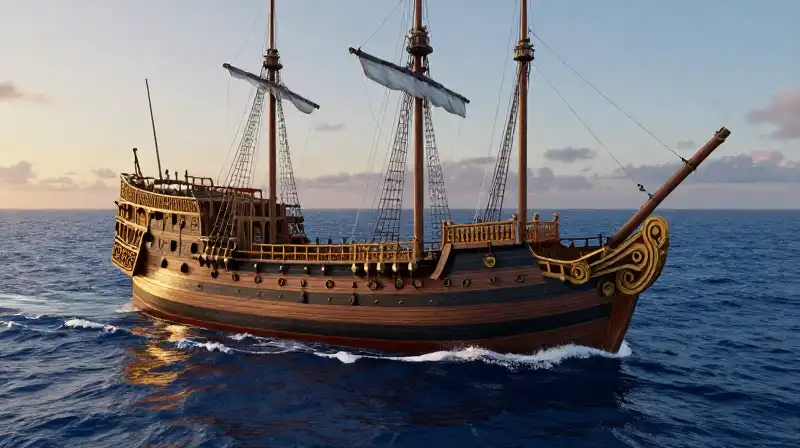
The ability of massive structures, such as warships, to remain stable and afloat in water is governed by a fundamental principle of physics known as buoyancy. It is not merely a matter of water support; it is a specific interplay between mass, volume, and density. To understand how ships stay afloat, one must look beyond the sheer amount of steel they contain and focus on the concept of displaced volume. Simply put, a ship stays afloat because its structure is designed to behave as a composite object, utilizing internal air to drastically lower its average density relative to the water it sits in.
The Physics of Buoyancy and Displacement
The scientific basis for floating is Archimedes’ Principle. This principle dictates that an object wholly or partially submerged in a fluid is buoyed up by a force that is equal to the weight of the fluid it displaces. This upward force is the buoyant force. For an object to float, the upward buoyant force must be greater than or equal to the downward force of gravity acting on the object’s total weight. In practical terms:
- The weight of the water pushed aside by the ship (the displaced volume) must be equal to or greater than the total mass of the ship plus its cargo.
- This force acts as a counter-balance to gravity, keeping the ship suspended and allowing it to sit at a stable angle.
When a ship displaces a specific volume of water, that volume of water has a weight equivalent to the ship itself. If the ship were heavier than that displaced weight, it would sink.
The Crucial Role of Average Density
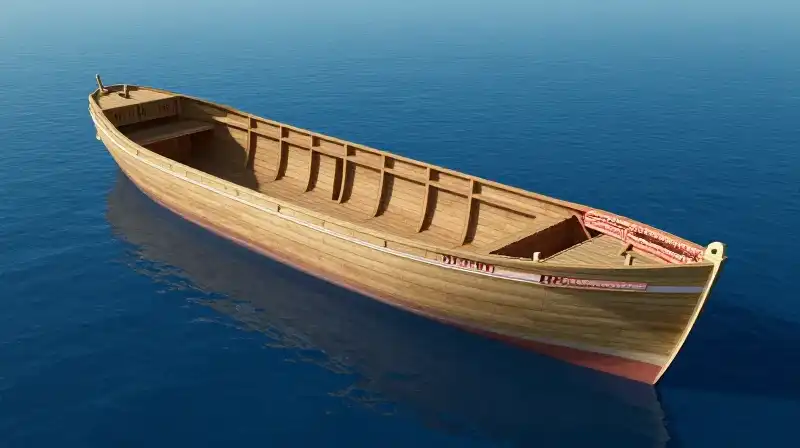
While steel itself is much denser than water (it sinks immediately if a solid block is dropped in the ocean), ships do not function as solid steel blocks. The key to flotation is the concept of average density. Density is defined as mass divided by volume (). By filling a large steel hull with air, the average density of the entire vessel—including the hull material, machinery, and air pockets—is significantly reduced. A solid block of steel has a very high average density, making it sink. A massive ship has a small amount of material (high mass) distributed within an enormous volume (the hollow hull), which results in a very low average density. Because the ship’s average density is less than the density of water, the upward buoyant force easily overcomes the downward force of gravity.
Comparing Heavy Ships and Floating Objects
The “why do ships float with so much weight” question is answered by comparing the structural integrity of a ship to a simple material.
| Object Type | Density (Average) | Why it Floats/Sinks |
|---|---|---|
| Solid Metal Cube | High (approx. 7.8 g/cm³) | Density exceeds water; insufficient volume displaced. |
| Hollow Ship Hull | Low (Significantly less than water) | The air inside occupies most of the volume, reducing average density below water’s threshold. |
| Metal Cube Floated by Foil | Highly Variable | The volume of the foil provides a massive displacement while minimizing the added mass. |
| In essence, the ship is not “floatable steel”; it is a gigantic displacement engine using air as the primary lightweight component. |
What Happens When Ships Sink?
The loss of buoyancy—the mechanism by which a ship sinks—occurs when the fundamental ratio of mass to volume shifts. When water breaches the hull, it begins to replace the vast air pockets inside the ship. This process increases the vessel’s overall mass while maintaining the same external volume (the hull remains the same size). Since the mass increases and the volume remains largely constant, the average density of the entire ship increases. Once the average density surpasses the density of the surrounding water, the ship’s weight exceeds the maximum possible buoyant force it can generate. At this point, the vessel sinks.
Scaling and Hydrodynamics: Beyond the Surface
The stability and maneuverability of a massive ship are tied to more than just simple buoyancy; they depend on hydrodynamics and structural design. While the buoyant force is indeed distributed across the entire submerged area, the structural design of the hull is optimized to ensure this force is balanced effectively. A critical distinction for large vessels is that while the total mass of the hull and cargo increases dramatically as size increases, the forces required for handling, propulsion, and maneuverability scale differently. This creates unique challenges in engineering and stability. The ship’s shape is designed to maximize the volume of water displaced while maintaining structural rigidity and preventing capsizing, ensuring that the center of buoyancy and the center of gravity remain in harmonious balance even under high-stress conditions.
Practical Synthesis: Stability and Integrity
The function of a warship or merchant vessel is a remarkable feat of applied physics. They are essentially massive, precisely engineered displacement shells. While density provides the initial answer—that the air-filled hull must be lighter on average than the water—the continued stability of the vessel relies on its perfect construction and the maintenance of its internal air spaces. The integrity of the hull is, therefore, synonymous with the preservation of the ship’s buoyancy.
Frequently Asked Questions
How do warships stay afloat?
Warships stay afloat because their structure is designed to behave as a composite object, utilizing internal air to drastically lower its average density. This low average density ensures that the upward buoyant force, equal to the weight of the displaced water, is greater than the downward force of gravity.
How are ships floating in the sea?
Ships stay afloat because their structure utilizes internal air to drastically lower its average density relative to the water it sits in. This allows the upward buoyant force—which equals the weight of the water displaced—to counteract gravity and support the ships total weight.
Related Articles