How Refrigeration Affect Bananas: Ripening Speed and Optimal Storage

Introduction
Putting bananas in the refrigerator is a common habit, especially when attempting to extend their lifespan, but for these particular fruit, cold storage often contradicts the goal of successful ripening. While refrigeration excels at slowing the decay of many vegetables and other fruits, the biology of bananas—which are “climacteric” fruits—requires specific environmental conditions to transition from green to a ripe, flavorful yellow. Simply put, refrigeration typically slows the natural ripening process for green bananas while accelerating undesirable browning in ripe ones. Understanding how cold temperatures affect bananas is essential for maintaining quality, flavor, and texture based on their current stage of ripeness.
The Science of Bananas: Why Temperature Matters
Bananas are unique because they are climacteric fruits, meaning they continue to ripen actively after being picked. This process is driven by the conversion of starches into natural sugars, a process governed by respiration and the production of the gaseous hormone ethylene. Ethylene is the key trigger that causes the change in color, texture, and flavor. The speed of this transformation is dictated primarily by two factors: the temperature and the concentration of ethylene. To encourage even ripening, bananas need warmth, while chilling disrupts the complex chemical interactions required to complete the ripening process.
The Impact of Cold on Green Bananas
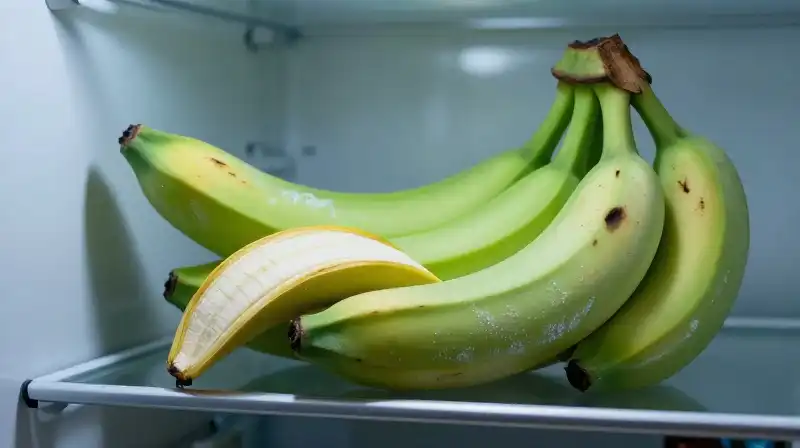
If you refrigerate a banana that is still green, the result is almost always counterproductive to your goals. Cold temperatures inhibit the metabolic processes that govern ripening. * **Stalling:** The chilling process causes the banana to stall in a pre-ripened, unripened state. It will not develop the full sweetness or characteristic flavor profile associated with a mature yellow banana. * **Enzyme Inhibition:** Cooling may temporarily suppress the ripening enzymes responsible for transforming starches into sugars, leaving the fruit firm, starchy, and less sweet than a perfectly ripening banana.
What Cold Does to Ripe Bananas
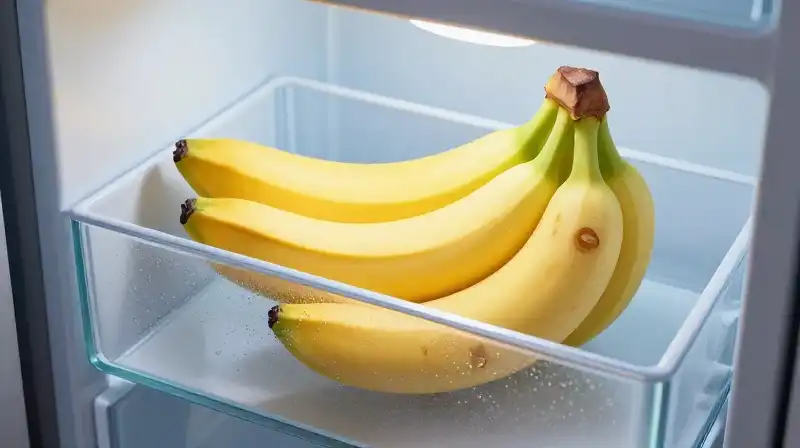
For bananas that have already begun to ripen (when they are yellow), placing them in the refrigerator has a significantly different, and often detrimental, effect. * **Accelerated Browning:** Storing ripe bananas in the refrigerator actually speeds up the degradation of the banana’s protective layers, leading to faster browning of the skin. * **Flavor and Texture Changes:** While refrigeration slows the physical processes of spoilage, the cold temperature can negatively affect the flavor and texture of the fruit if intended for raw consumption. The cold can dull the delicate notes and alter the cellular integrity.
Optimal Storage Strategies for Different Ripeness Stages
The ideal storage method depends entirely on whether the banana is still green, reaching peak ripeness, or ready for long-term preservation.
1. Green Bananas (To Speed Up Ripening)
To encourage a uniform and steady transition to yellow, bananas should be kept in a consistent, moderately warm environment. * **Temperature Range:** Store in a cool area, preferably around 65°F (18°C), rather than a standard refrigerator. * **Separation:** Keeping bananas separated can slightly reduce the concentration of localized ethylene gas, promoting more even development. * **Handling:** While not a primary driver, storing them in a paper bag can help maintain overall quality and encourage a steady ripening progression.
2. Ripe Bananas (For Immediate Consumption)
If the banana is fully yellow and ready to eat, it should be stored at room temperature. Even if browning begins, the fruit inside is typically perfect for immediate consumption.
3. Ripe Bananas (For Long-Term Preservation via Freezing)
If you have a surplus of fully ripe, soft, and sweet bananas intended for smoothies, smoothies, or “nice cream,” freezing is the superior method. * **The Procedure:** Peel the ripe bananas and slice them before freezing. * **Prevent Clumping:** To prevent the slices from clumping together in the freezer, spread them out in plastic bags laid flat. * **Function:** Freezing serves as a long-term preservation method, effectively halting deterioration once the fruit is at its peak ripeness.
Practical Tips for Slowing Ripening
When you need to significantly slow the ripening process without losing quality, use environmental controls and simple physical interventions:
- **Stem Taping:** Taping the stem end of the banana is an effective physical method that helps slow the ripening process and prevents localized brown spotting.
- **Controlled Environment:** Maintaining temperatures near 65°F (18°C) is critical, as this temperature range strikes a balance between slowing ethylene action and maintaining cellular integrity.
- **Avoid Extremes:** While high temperatures (above 75°F) speed up ripening, methods like microwaving or using an oven are only suitable for cooking or baking, not for maintaining fresh produce quality.
Decision Matrix: Refrigerate, Freeze, or Room Temp?
To make the right storage decision, evaluate the banana’s stage:
| Ripeness Stage | Optimal Temperature/Action | Expected Result | Goal |
|---|---|---|---|
| Green/Unripened | Room temperature (around 65°F/18°C) | Accelerates development of flavor and sugar | Ripening |
| Yellow/Ripe (Eating soon) | Room temperature | Maintains flavor and texture for immediate use | Consumption |
| Yellow/Ripe (Long term) | Peel, slice, and freeze in bags | Freezing preserves flavor for baking or smoothies | Preservation |
| Any Stage | Refrigeration | Stalling (green) or Accelerated browning (yellow) | General spoilage prevention (not ideal for texture) |
Summary of Storage Priorities
The goal of banana storage should always align with the intended use. If you need a quick snack, leave them on the counter. If you need a batch for smoothies, peel them and freeze them. If they are green, provide a steady, warm environment to allow the natural processes of climacteric fruit development to reach their full potential. In almost every practical scenario related to maximizing flavor and quality, the standard kitchen refrigerator should be avoided.
How to Preserve Ripe Bananas by Freezing
Prepare the Bananas
Peel the ripe bananas and slice them before freezing.
Pack for Preservation
Spread the banana slices out in plastic bags laid flat to prevent them from clumping together in the freezer.
Related Articles