
Vampira to Elvira: The History of Lola Falana and Maila Nurmi

Introduction
The character of Vampira holds a distinct place in the history of horror television, marking a pivotal transition from niche 1950s programming to the iconic late-night icon, Elvira. This shift involved more than just a change in wardrobe; it represented a fundamental clash of artistic visions, particularly concerning the integrity of the character’s legacy and its visual identity. At the center of this transformation are the figures of Maila Nurmi, the original creator and star, and Cassandra Peterson, who became the defining face of the character in its eventual revival. Furthermore, the name Lola Falana is inextricably linked to the early casting attempts during the period of decline and subsequent revival of the series.
Maila Nurmi and the Genesis of Vampira
Maila Nurmi originated the character Vampira, introducing her to Los Angeles television in 1954. Her early career featured hosting local television blocks dedicated to horror films, establishing the persona as a theatrical, gothic figure. The original Vampira concept itself drew inspiration from the visual aesthetic of Morticia Addams, lending it an immediate, macabre quality. Nurmi’s initial run, though brief, left a notable footprint in horror history, primarily through local broadcasts before her series diminished, resulting in few surviving pieces of footage.
Nurmi’s connection to the wider cinematic universe of unusual filmmaking is also notable, as she was once cast by Ed Wood in the classic cult film Plan 9 From Outer Space. The original series, a planned weekly late-night program focusing on horror movies, remains a significant historical artifact in the evolution of monster hosting.
The Quest for a Successor and the Role of Lola Falana
As the original Vampira persona began to fade, plans were made to revive the series in the 1980s. In this context, Maila Nurmi actively sought to ensure the character’s continued presence by attempting to replace herself. She initially looked towards established performers, including the American singer, dancer, and actress Lola Falana. Falana, known internationally as “Black Venus” and having achieved significant success in Italy, was viewed as a potential candidate to carry the mantle into the modern era.
However, the revival faced challenges in finding a creative agreement that satisfied the original creator. Nurmi eventually withdrew her support for the 1981 revival once Cassandra Peterson was announced as the cast, setting the stage for a long-standing dispute that highlighted the growing divergence between the original artistic vision and the contemporary production aims.
The Transition to Elvira and the 1981 Revival
When the revival launched on KHJ-TV in September 1981, the original name “Vampira” was considered a point of contention and ultimately led to the adoption of a new identity. Through a process of creative decision-making involving the production crew, the name “Elvira” was selected as the new character designation, leading to the official title Elvira’s Movie Macabre.
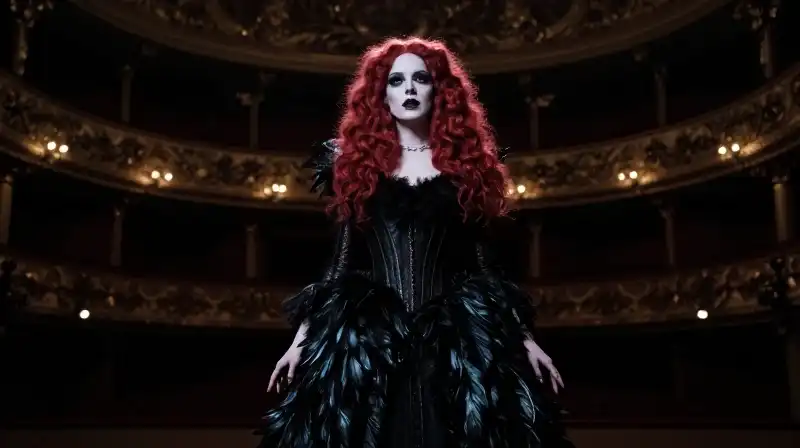
While the core concept—a horror film host in black attire—remained, the visual and thematic execution underwent a dramatic overhaul. The character’s iconic aesthetic was developed in partnership with artist Robert Redding, deliberately shifting the look from the original 1950s gothic style to an edgy, distinctive ’80s vampire persona. Key elements of this new look included:
- A characteristic plunging neckline and predominant black attire.
- The development of the “knowledge bump” hairstyle, inspired by Ronnie Spector of The Ronettes, becoming an instantly recognizable signature.
This transition represented a significant shift, moving the character away from its original Vampira identity into a persona tailored specifically for the high-energy, late-night television landscape of the 1980s.
Disputes Over Legacy: Maila Nurmi vs. Cassandra Peterson
The tension between the original Vampira and the eventual iteration of Elvira was fueled by the casting dispute. Maila Nurmi reported dissatisfaction with the casting of Cassandra Peterson, reportedly taking legal action against her regarding the use of the character’s legacy. This conflict underscores the inherent difficulty in reinterpreting a character that holds such deep connections to a specific original performance and aesthetic. The dispute clarified the limits of intellectual property usage when a character is modernized and rebranded.
For production teams, the decision to move from Vampira to Elvira was a strategic move to gain marketability and ownership, but it came at the cost of disavowing the original creator’s intent and artistic direction.
Navigating Horror Icon History: Comparison and Nuance
The story of Vampira and Elvira serves as a case study in the evolution of horror media. While the modern Elvira has become a global icon, the original Vampira embodies the specific, localized style of mid-century television horror. Analyzing this transition requires recognizing that the change was multifaceted—involving style, casting, and nomenclature.
The shift can be understood through the following contrasting elements:
| Feature | Original Vampira (Maila Nurmi) | Elvira (Cassandra Peterson) |
|---|---|---|
| Era of Origin | Mid-1950s (Local TV) | Early 1980s (National TV) |
| Aesthetic Focus | Morticia Addams inspiration (subtle) | Edgy, 1980s glamour (defined) |
| Naming History | Vampira | Elvira (Random selection/Rebranding) |
| Artistic Vision | Original creator’s intent | Modern market appeal/Revival production |
The Enduring Legacy of the Transformation
The journey from Vampira to Elvira is a complex narrative of adaptation, rebranding, and creative conflict. It demonstrates how even the most iconic characters can undergo fundamental shifts when moving between different eras of media and production budgets. For viewers, understanding this history helps clarify that the character they recognize today is not a direct continuation of Maila Nurmi’s vision, but rather a successful, modern interpretation that required a complete change in name and aesthetic to achieve widespread success in the late 20th century.
The distinction between the original creator’s intent and the subsequent producer’s necessary revision provides critical context for appreciating the unique place of both the original Vampira and the enduring popularity of Elvira in the tapestry of horror media.
Related Articles