
Washboard Roads Explained: Why Do These Surface Ripples Form?

Introduction
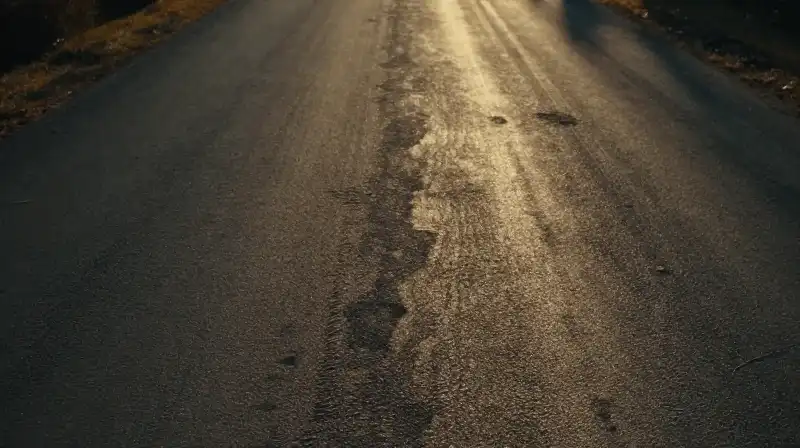
Washboard roads are the result of periodic, transverse ripples forming on dry, granular surfaces of dirt or gravel. More commonly referred to as corrugation, this phenomenon is a dynamic interaction between moving vehicle tires and loose, unconsolidated road material. It is not simply a result of potholes, but a sustained, mechanical process where the action of passing traffic repeatedly molds and reinforces the surface, creating a distinctive, uneven texture. The core cause of washboarding lies in the displacement of loose material under high-speed conditions.
The Mechanics of Washboard Formation
The formation of washboard ripples is a process rooted in physics, specifically how material behaves under sustained stress. It is a continuous cycle of creation and propagation.
Tire Displacement and the Bow Wave
When a vehicle travels over a relatively smooth, loose surface, the tire acts as a concentrated pressure point. The weight and friction of the tire push the granular material forward. This forward push creates a small mound of material in front of the tire, often described as a “bow wave.” As the tire drives over this newly formed mound, it compacts and shapes it, effectively setting the initial ripple.
The Repetitive Reinforcement Cycle
The key to washboarding is the repetition of this cycle. When the next vehicle passes, it interacts with the first ripple. The wheel compression and rebound push material out to form subsequent ridges, and the wheel subsequently creates a depression. The even spacing of these ripples is often a direct consequence of the similar wheelbase and tire sizes of successive vehicles creating predictable spacing.
Why Certain Conditions Trigger Washboard Roads
While the mechanism is mechanical, several external and operational factors determine whether washboarding occurs and how severe it becomes. The main causes can be grouped into material properties, vehicle dynamics, and infrastructure failures.
Vehicle and Driving Behavior
The speed and method of driving are major catalysts.
- Excessive Speed: High-speed travel increases the dynamic impact between the tire and the loose gravel, accelerating the formation and intensity of the ripples.
- Aggressive Maneuvers: Rapid acceleration and hard braking introduce strong lateral and forward forces that actively push and move the road material.
- Vehicle Type: Research suggests that while heavy trucks contribute, lighter vehicles are often more prone to causing consistent washboarding due to their lighter, faster movements on certain surfaces.
Poor Material Quality and Environmental Stress
The composition of the road itself dictates its resilience.
- Inadequate Blend: The ideal granular road requires a specific blend of stones, sand, and fine binder particles. If the material is too loose or lacks cohesive fines, it is highly susceptible to being reshaped.
- Arid Conditions: Prolonged dry weather conditions are a significant contributor. The crust of the gravel loosens, making it easier for tires to deform the structure rather than simply driving over it.
- Soil Structure: The natural angle of stacking in certain soils (like sand or certain clay-like mixtures) allows the material to easily adopt and sustain these rippling patterns when disturbed.
Infrastructure and Maintenance Flaws
Maintenance failures can set the stage for severe corrugation.
- Drainage Issues: Improper road construction, particularly the lack of an adequate crowned road profile, prevents proper water drainage. Accumulated water softens the material, making the surface more malleable and deepening the resulting ripples.
- Improper Grading: Mismanagement during maintenance, such as the use of road graders in a stuttering motion, can artificially intensify the ripple pattern.
Are Washboard Roads a Natural Phenomenon?
Yes, the underlying process of ripple formation is a natural phenomenon, similar to how dunes form in sand or waves develop in water. However, a critical distinction must be made: while the *physics* is natural, the *washboard road itself* is an induced phenomenon. It is created by the sustained application of energy and stress—specifically, repeated traffic exceeding low thresholds (around 5 mph) on vulnerable, unpaved materials. The traffic acts as the external force that translates natural material behavior into the observable road hazard.
Preventing and Mitigating Washboard Roads
Preventing corrugation requires a multi-layered approach focused on material science and proper engineering.
Material Selection and Composition
The most effective mitigation is ensuring the road material is stable and cohesive.
- Sieve Analysis: Professional road maintenance focuses on particle sieve analysis to determine the optimal stone sizes. The correct blend must include enough fines to act as a binder, creating a dense, cohesive mass.
- Interlocking and Density: The chosen materials must allow for good particle interlocking, forming a tight mass with minimal permeability, which inherently resists displacement.
Engineering and Maintenance Strategies
Preventative measures must address the physical structure of the road.
- Crowned Profile: Implementing and maintaining a proper road crown (an elevated center) ensures that water is channeled efficiently away from the surface, maintaining material stability.
- Grading Protocols: Maintenance machinery must be operated with smooth, continuous passes to avoid introducing the stuttering motions that aggravate washboarding.
Safety Considerations and Practical Warnings
Severe washboarding poses a significant safety hazard. The constant, unpredictable vertical movement and the vibration transmitted through the vehicle can compromise driver control and road integrity.
| Risk Factor | Impact | Mitigation Priority |
|---|---|---|
| Severe Ripples (Corrugation) | Driver loss of vehicle control, increased stopping distance. | Material Quality & Drainage |
| Loose Surface Material | Vehicle instability, increased risk of skidding. | Grading and Compaction |
| High Speed/Volume | Accelerated formation rate and intensity. | Traffic Management & Road Maintenance |
| Washboard roads are fundamentally a failure of interaction: loose material meeting too much dynamic energy. The prevention of this issue requires a commitment to specific material science—using a dense, cohesive gravel blend—and strict adherence to proper drainage and grading protocols, ensuring the road surface can withstand the necessary traffic load without being continuously reshaped. |
Frequently Asked Questions
Are washboard roads natural?
The underlying physics of ripple formation is a natural phenomenon, similar to the formation of sand dunes or water waves. However, the washboard road itself is an induced phenomenon, created by the sustained application of stress from repeated traffic on vulnerable materials.
How to Prevent and Mitigate Washboard Roads
Perform Sieve Analysis
Use professional road maintenance techniques to perform particle sieve analysis to determine the optimal stone sizes, ensuring the correct blend includes enough fines to act as a binder for a dense, cohesive mass.
Ensure Material Interlocking and Density
Select materials that allow for good particle interlocking, which helps form a tight mass with minimal permeability, inherently resisting displacement by traffic.
Implement a Crowned Profile
Maintain a proper road crown by elevating the center of the road to ensure water is efficiently channeled away from the surface, maintaining material stability.
Follow Proper Grading Protocols
Ensure maintenance machinery is operated using smooth, continuous passes rather than stuttering motions, which can artificially intensify the ripple pattern.
Related Articles