
How Trains Work: The Science of Tractive Friction and Propulsion

Introduction
The movement of a modern train is a sophisticated interplay of physics, electrical engineering, and mechanical design. When most people ask, “How do trains actually work?”, the answer lies far deeper than simply stating that wheels run on rails. Fundamentally, a train moves by generating enough pulling force—known as tractive effort—to overcome the combined inertia of the entire train and the mechanical resistance of the track. While rolling resistance (the force of steel wheels on steel tracks) is relatively low compared to rubber tires, the immense power required to accelerate tons of metal necessitates highly engineered systems for traction, propulsion, and control.
Understanding how trains function requires looking past the visible motion and examining the transformation of energy: from electrical power or stored fuel to controlled rotational force at the axle. This article details the specialized mechanics that allow modern locomotives to move massive freight and passengers efficiently, from the initial slip of the wheel to the precise stopping power of advanced braking systems.
The Physics of Motion: Tractive Friction and Adhesion
The primary challenge for any locomotive is not just rolling, but generating the initial “pull” or torque needed to begin movement. Unlike a car, which can grip the road through a combination of engine power and simple tire friction, trains rely on the mechanical properties of steel on steel. The weight of the locomotive is transferred through the flanged wheels onto the steel rails, maximizing the contact patch and generating friction.
Tractive friction is maximized by optimizing the relationship between the wheel and the rail, specifically through a concept called optimal micro-slip. For peak performance, modern locomotives allow the wheels to undergo a controlled 1–2% slip. This controlled slide converts maximum friction into forward momentum. Furthermore, the wheel design itself—featuring a conical shape where the outer wheel has a larger diameter than the inner wheel—allows the wheelset to naturally steer itself into curved sections of track without needing separate steering mechanisms.
Efficiency of Steel Wheels
Steel wheels rolling on steel rails are inherently more efficient for heavy hauling than rubber tires. Steel wheels undergo minimal deformation and wear, allowing for extremely low rolling resistance, which conserves a significant amount of energy. This low resistance is essential for moving trains with massive tonnage. However, the energy required to overcome stationary inertia—the resistance to beginning motion—is where the full force of the locomotive’s tractive friction is utilized.
Types of Propulsion Systems
Modern trains utilize several distinct methods to convert raw energy into the mechanical rotation required for propulsion. The specific system depends heavily on the operational needs and power source of the region or fleet.
Electric and High-Speed Power
Electric trains are powerful because they receive massive, concentrated energy directly from an external source, either through overhead catenary systems or a third rail. The locomotive acts as a highly efficient converter. The electrical current is passed through power converters and traction inverters, which precisely regulate the speed and torque delivered to the traction motors. These motors then drive the axles. Electric trains, particularly high-speed models, achieve incredible acceleration and stability by maintaining a constant, powerful torque output even at 0 RPM.
A highly specialized form of movement is found in Maglev trains, which operate without traditional wheels. These trains use powerful electromagnetism to achieve two goals: levitation (suspending the train over the track) and propulsion (generating forward thrust using linear motors). This eliminates all rolling resistance, allowing for extremely high speeds far beyond conventional rail limitations.
Diesel and Historical Power
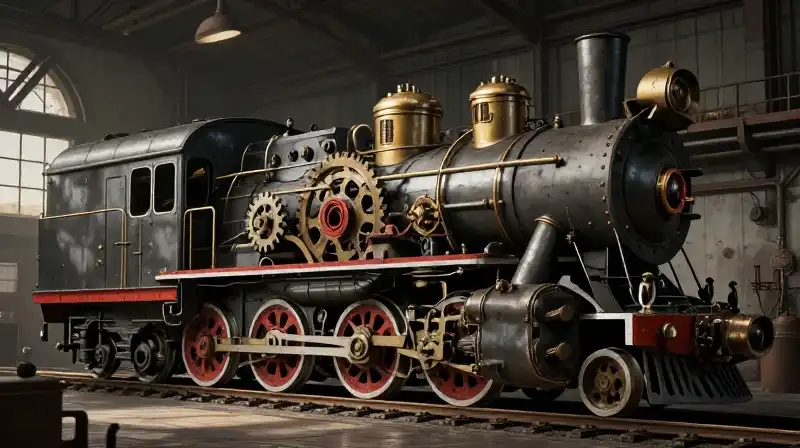
Diesel locomotives typically operate using a large internal combustion engine, which functions much like an electric generator. The diesel engine powers an alternator, which produces electricity. This generated electricity is then sent to the traction motors, effectively using a diesel engine to run an electric drivetrain. This configuration offers a blend of flexibility and immense pulling power. Historically, steam trains operated by converting fuel energy into high-pressure steam. This steam was fed into pistons, which drove a complex linkage of rods that finally rotated the wheels. While mechanically impressive, this process is less energy-efficient than modern electrical systems.
Advanced System Operation and Control
As trains become larger, faster, and heavier, their mechanical operations require advanced distributed power and control systems.
Dividing the Load
Long freight trains often employ distributed power systems, which involve placing multiple locomotives not just at the front, but throughout the train consist. These units are synchronized using radio telemetry to operate as a single, coordinated force. This method is crucial because it reduces the mechanical stress and strain on the couplers between rail cars, distributing the necessary tractive effort across the entire length of the train.
Curve Navigation and PTC
Rail track itself is engineered to manage dynamic forces. Superelevation, or banking, is applied to curved tracks. This gradient allows the train to counter the centrifugal force that would otherwise pull the train outward, ensuring the weight is distributed evenly across the rails and maintaining passenger safety at high speeds.
Safety is managed by sophisticated signaling. PTC (Positive Train Control) is a modern, mandatory safety system. Utilizing GPS and onboard computer data, PTC constantly monitors the train’s location and speed, automatically enforcing safe stopping distances. This takes the critical safety function out of the sole responsibility of the human crew, preventing collisions caused by human error or delays.
Braking and Dynamic Resistance
The ability to slow down thousands of tons of moving steel requires systems that are powerful and incredibly reliable. Unlike engine braking, train braking utilizes sophisticated methods of friction and energy conversion.
The Westinghouse Air Brake
The industry standard for train braking is the fail-safe pneumatic system, often referred to as the Westinghouse air brake. This system works by controlling the air pressure in a network of pipes running the entire length of the train. When the operator reduces the pipe pressure, the brake cylinders automatically engage on all cars, applying friction to the wheels. This “fail-safe” design means that any loss of air pressure automatically triggers the braking mechanism.
Energy Recovery
Modern locomotives, especially electric ones, use methods to recover kinetic energy that would otherwise be lost as heat. Regenerative braking reverses the connection of the traction motors. Instead of drawing power from the line to drive the wheels, the wheels drive the motor, turning the locomotive into a massive generator. This electricity is then sent back to the external power grid or reused within the locomotive’s own systems, greatly increasing energy efficiency.
Dynamic braking uses the friction and resistance inherent in the electric motors themselves to create a controlled deceleration, providing additional stopping power without relying solely on mechanical friction.
Operational Management and Design Criteria
For a train to run reliably, its fundamental design must account for the massive forces at play.
Locomotive design incorporates significant engine mass and larger wheels compared to cars, which increases the contact surface area and improves the stability and tractive power. Furthermore, the management of motion is precise. Operators utilize operational methods like slack starts—controlled “slack” between rail cars—to manage the immense starting force safely. This prevents the violent jolting that could damage the critical couplers connecting the train cars.
Every aspect of the vehicle is engineered for stability. Primary and secondary suspension systems manage the ride quality by absorbing track vibrations and maintaining level ride height despite changes in load distribution across the train. The ultimate functionality of the train rests on the harmony between these systems: low rolling resistance for efficiency, high tractive friction for acceleration, sophisticated power conversion for reliable propulsion, and robust pneumatic or regenerative braking for safe deceleration.
Practical Synthesis and Operational Limits
While the physics of train movement are governed by the interplay between tractive friction and rolling resistance, practical operation is limited by environmental and mechanical factors.
The required power to move a train is a calculated function of two main variables: the total tonnage (weight) and the incline or grade of the track. If a train encounters a steep uphill grade, the locomotive must generate exponentially more tractive friction to overcome the additional gravitational resistance. In poor weather, such as heavy rain or snow, the coefficient of adhesion can decrease drastically, potentially requiring operators to reduce speed or utilize additional mechanical traction aids (like automated systems that were historically replaced by sand under the wheels).
In summary, trains do not merely roll; they are highly controlled, energy-intensive machines that exploit the unique properties of steel on steel. Their movement is a complex, regulated process where tractive friction is the engine’s primary interface with the rails, ensuring that raw energy is translated into smooth, heavy-duty transportation.
Frequently Asked Questions
How do trains actually work?
Fundamentally, a train moves by transforming raw energy from electrical power or stored fuel into controlled rotational force at the axle. This propulsion relies on generating tractive effort through the specialized mechanics of steel wheels and rails to overcome the trains inertia and mechanical resistance.
Related Articles