
1.6L Engine: Displacement, Power, and What It Means for You

Introduction
The specification “1.6L engine” refers to the total displacement—the aggregate internal volume of all cylinders within the engine. Simply put, it indicates the maximum amount of air and fuel the engine can draw into its cylinders during each operating cycle. While displacement is a primary metric for identifying engine size, it is not the complete picture of a vehicle’s capability. In modern automotive design, the 1.6L size often represents a highly effective balance, offering a compelling blend of operational efficiency and usable power output, particularly when paired with modern technologies.
Understanding Engine Displacement: The Technical Definition
Engine displacement is the fundamental measure of an engine’s capacity. It is calculated by multiplying the bore (diameter) of the cylinder by the stroke (length of piston travel) and the number of cylinders, then dividing by 4.
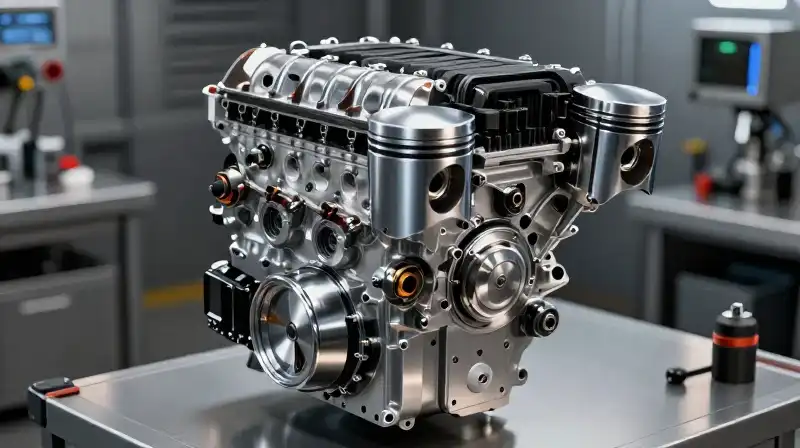
A 1.6-liter engine specifically means that the sum of the internal volume of every combustion chamber is 1,600 cubic centimeters (cc). This metric serves a functional purpose: it dictates the potential volume of air and fuel that can be mixed and compressed during the intake stroke. Historically, engine builders relied on a larger displacement to generate raw force, but modern physics has changed how this measurement impacts performance.
Displacement is measured globally in liters (L), though older American engine specifications often used cubic inches. It is crucial to remember that volume itself is a physical capacity; the power derived from that volume is determined by how efficiently the engine burns the mixture within that space.
The Performance Balance: 1.6L in the Modern Context
When evaluating the 1.6L engine, it is helpful to understand where it sits within the spectrum of engine sizes and what the practical consequences are for driving and ownership.
Generally, engine displacement correlates with power potential. Larger displacements typically yield higher potential peak horsepower, but they also require more fuel. Conversely, smaller displacements, such as a 1.2L engine, prioritize fuel economy and low-end torque but sacrifice overall top-end power.
The 1.6L engine occupies a useful middle ground. It is large enough to deliver adequate acceleration and comfortable cruising speed without requiring the massive fuel consumption of high-displacement engines. This efficiency makes it a popular choice for commuters and those prioritizing running costs while still needing reliable performance.
The Role of Technology: Turbocharging and High Efficiency
One key differentiator for the 1.6L engine today is modern engineering. In the past, generating significant power required a 2.5L or 3.0L engine. Today, technologies like turbochargers allow engineers to boost the pressure of the air drawn into the cylinders. This process, known as forced induction, allows a relatively small 1.6L engine to achieve power outputs that were previously only possible with much larger naturally aspirated engines.
Because the engine is forcing more air into a smaller volume, it can combust a higher amount of energy per stroke, dramatically increasing both power and torque without requiring a major increase in physical size or weight.
Addressing Common 1.6L Engine Queries
Users often have specific questions regarding engine architecture and relative size. Here are direct clarifications on the common points of confusion:
Is a 1.6 liter engine a V6?
No. Engine displacement (1.6L) is a measure of volume, not configuration. A 1.6L engine could be a four-cylinder inline setup (I4), a V6, or even a complex V8 configuration (like a highly modified 1.6L racing engine, though this is rare). The V6 configuration describes how the cylinders are physically arranged in relation to each other, while 1.6L describes the total volume.
Is a 1.6 liter engine small?
Whether 1.6L is “small” depends on the context of the vehicle. In the world of modern supercars, it is small. However, in the context of a daily driver, a 1.6L is considered a mid-sized, efficient engine. It is significantly larger and more powerful than entry-level engines (like 1.0L or 1.2L), but remains smaller and generally more economical than typical full-sized luxury car engines (often 3.0L+).
Practical Buyer’s Criteria for Evaluating a 1.6L Engine
If you are evaluating a vehicle with a 1.6L engine, it is vital to look beyond the displacement number itself. The performance and reliability of the engine depend heavily on how it is managed and what complementary systems it utilizes.
Consider these key factors when assessing a 1.6L engine:
- Architecture and Layout: A 4-cylinder inline setup is typically lighter and more fuel-efficient than a V6 of the same displacement, though the V6 may offer smoother power delivery.
- Fuel System: Does the engine utilize direct injection? Modern direct injection systems are far more efficient at utilizing the compressed volume of a 1.6L engine compared to older port injection systems.
- Turbocharging: If the engine is turbocharged, the listed horsepower figures are often significantly higher than those of a non-turbo counterpart, reflecting how the modern engine maximizes the 1.6L volume.
- Torque Curve: Some smaller, naturally aspirated engines may produce a sharp burst of power at high RPM, while many 1.6L engines (especially turbocharged ones) provide consistent, accessible torque across a broader range of engine speeds.
Summary of the 1.6L Engine’s Role
The 1.6L engine is a functional metric describing capacity, but its real value lies in its optimized output. It represents a mature engineering solution—a displacement that balances the demands of daily driving and efficiency with the need for responsive performance. When encountering this specification, understand that you are looking at an engine designed for practicality and versatility. The power it delivers comes not just from its volume, but from the advanced internal mechanics that allow it to extract maximum work from every cubic centimeter of that 1.6-liter capacity.
Frequently Asked Questions
Is a 1.6 liter engine a V6?
No, a 1.6L engine is not inherently a V6. Engine displacement (1.6L) measures volume, while the V6 configuration describes how the cylinders are physically arranged in relation to each other.
Is a 1.6 liter engine small?
Whether a 1.6L engine is small depends on the context of the vehicle; it is considered small in the world of modern supercars. However, in the context of a daily driver, it is a mid-sized, efficient engine that is significantly larger than entry-level models but remains smaller and more economical than typical full-sized luxury car engines.
How to Evaluate a 1.6L Engine
Examine Architecture and Layout
A 4-cylinder inline setup is typically lighter and more fuel-efficient than a V6 of the same displacement, though the V6 may offer smoother power delivery.
Check the Fuel System
Determine if the engine utilizes direct injection, as modern direct injection systems are far more efficient at utilizing the compressed volume.
Assess Turbocharging
If the engine is turbocharged, the listed horsepower figures are often significantly higher than those of a non-turbo counterpart.
Analyze the Torque Curve
Evaluate whether the engine provides a consistent, accessible torque across a broader range of engine speeds, or if it only produces a sharp burst of power at high RPM.
Related Articles