
Why Do Mice Like Cheese? Fact, Myth, and Their Real Diet

Introduction
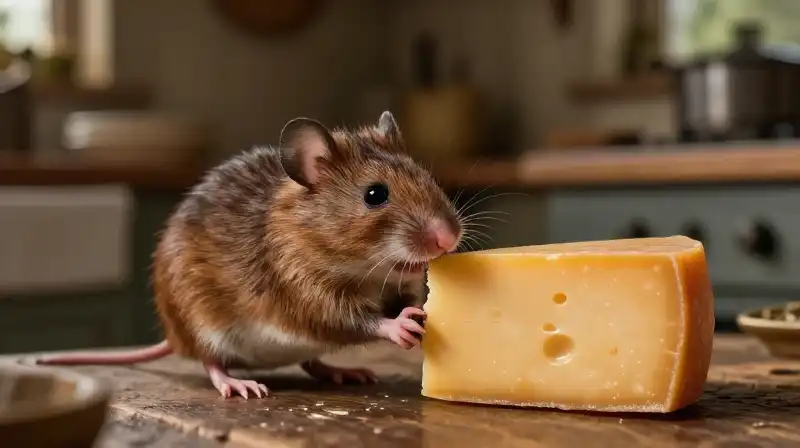
The popular image of a mischievous mouse obsessively devouring a wedge of cheese is a cultural trope, not a biological certainty. While rodents, including the common house mouse (*Mus musculus*), will certainly consume cheese if available, the idea that cheese is their preferred or signature food is largely a myth amplified by popular media. To answer the question, “Why do mice like cheese,” it is necessary to look past the folklore and understand the creature’s actual dietary habits: they are highly opportunistic generalists.
The Origin of the “Cheese-Loving Mouse” Stereotype
The widely accepted fascination with the mouse and cheese has deeper roots in popular storytelling and visual media than in rodent biology. The stereotype likely originated from animated cartoons, where characters like mice were frequently paired with cheese for comedic or visual effect. This popular media influence may have cemented the perception globally. Furthermore, the visual similarity between certain forms of mouse droppings and melted cheese, combined with early observations of mice scavenging accessible human food, may have sparked initial local rumors. The strong association became solidified and globally recognized through the pervasive nature of these classic cartoon portrayals.
Why Do Mice Eat What They Eat? Understanding Their Diet
House mice do not possess a specific, innate craving for dairy. Instead, their consumption of any specific food is driven by one primary factor: **accessibility and availability**. As generalist scavengers, they are adapted to exploit virtually any nutrient source left in their environment, including grains, insects, human trash, nuts, and yes, cheese. When attempting to determine why they are observed eating cheese, consider these biological factors:
- Opportunistic Nature: Mice are survivalists. If a source of energy is present, they will take it. Their diet is dictated by what is present, not by a predetermined biological preference.
- Sensory Attraction: Mice are highly sensitive to strong odors. Pungent or strong-smelling foods—which include aged cheeses—are easier for them to locate and attract from a distance, making them appear drawn to the food even if they don’t prefer its texture or taste.
- Opportunistic Scavenging: In domestic settings, mice are often responding to human food left exposed. The cheese is simply another available calorie source within their typical scavenging range.
Cheese vs. Peanut Butter: What Do Mice Actually Prefer?
If the stereotype suggests a strong preference for cheese, a comparison with other popular rodent baits reveals a different truth. Research and pest control data generally suggest that mice actually prefer specific foods based on density and odor. | Food Type | Attractant Factors | General Preference | | :--- | :--- | :--- | | **Peanut Butter** | Strong, distinct aroma; High in protein and fat (high energy density). | Generally preferred bait; Highly effective for trapping. | | **Cheese** | Strong odor; Highly appealing to certain appetites. | Consumed opportunistically; Not necessarily the “favorite” food. | | **Grains/Seeds** | High caloric density; Easily found. | Primary natural diet component. | The preference for peanut butter is often cited by experts because its high nutritional value and powerful, persistent scent make it a superior attractant for pest management. While cheese is certainly consumed, peanut butter’s combination of strong odor and concentrated energy makes it a more consistently reliable lure.
Why Are Mice Attracted to Strong Odors?
The high sense of smell is a critical evolutionary trait for mice. Unlike humans, their olfactory sense allows them to detect chemical signals and odors from significant distances. This capability means that strong-smelling foods—whether that is the sharp aroma of aged cheese, the distinct scent of peanut butter, or the smell of human garbage—are not just tasty, but *findable*. This highly sensitive nose is the primary reason mice seem “drawn” to certain items, even if they don’t consciously *prefer* them in the way a human would.
Practical Pest Control: Using Mouse Attractants Effectively
Understanding that mice are generalist eaters changes how one approaches pest management. Instead of trying to eliminate all potential food sources, the focus must be on strategic bait placement. When managing a mouse problem, consider these practical approaches:
- Focus on Accessibility: Since mice are opportunistic, sealing entry points and removing *all* accessible food (even small scraps) is the primary preventative measure.
- Use High-Value Bait: For active infestations, baits rich in fats and proteins, such as peanut butter, are often more reliable than dairy-based options, as they are more consistently attractive and nutritionally dense.
- Distinguish Hunger from Craving: If you catch a mouse eating cheese, it simply means they were hungry and the cheese was available, not that they are specifically seeking dairy.
Conclusion: Myth vs. Biological Reality
The enduring notion that mice love cheese is a colorful piece of cultural folklore. Biologically, however, the reality is much simpler: mice are extremely resourceful and will consume any food source that is convenient, accessible, and meets their nutritional needs. The key takeaway is to separate the media-driven myth from the actual biological behavior. While cheese is part of their scavenging repertoire, their diet is flexible. For effective control, recognize that their attraction is driven by opportunity and scent, not an unwavering preference for dairy.
Related Articles