
Iron Gas: The Conditions for Iron Vaporization and Plasma

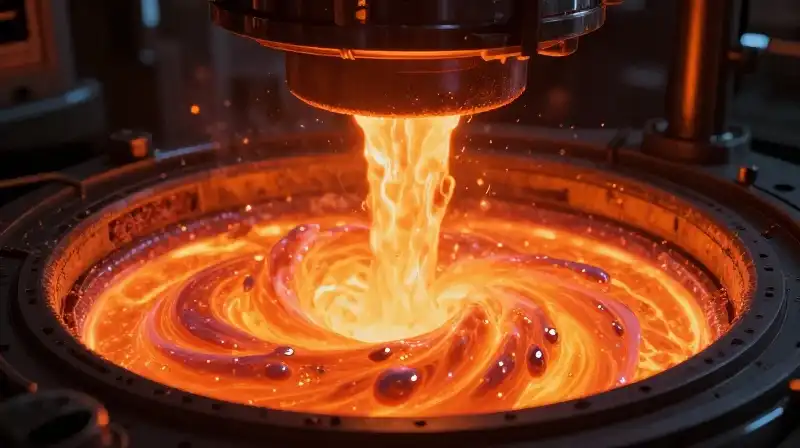
Introduction
The existence of iron in a gaseous state is a topic defined by extreme physics and chemistry. While iron () is typically encountered as a solid transition metal, transforming it into a pure gas requires the input of massive amounts of energy and adherence to very specific environmental conditions. Simply put, while vaporization is possible, achieving a stable, pure iron gas on Earth is virtually impossible due to its high reactivity. The material must be subjected to conditions found only in the most intense natural or industrial events, such as stellar cores or powerful electrical arcs, and often requires the surrounding atmosphere to be a vacuum or highly controlled.
The Temperature and Energy Requirements for Vaporization
To transition iron from its common metallic solid state to a gaseous state, its chemical bonds must be completely overcome through intense heat. This process requires overcoming the binding energy of the metal’s atoms. The temperature required for initial phase changes is substantial:
- Solid to Liquid Transition: Iron melts at approximately 1538^\\circ\\text{C}.
- Vaporization Onset: Significant vaporization begins at much higher temperatures.
- Complete Vaporization: Achieving a state of pure iron gas requires temperatures and energy inputs far exceeding simple boiling points, approaching thousands of degrees Celsius, depending on the pressure of the environment.
Crucially, the transition does not stop at a simple gas. At the highest temperatures, the atoms do not just vaporize; they begin to ionize, transitioning from a neutral gas into a highly charged plasma.
The Critical Role of the Chemical Environment
The most significant barrier to observing pure iron gas in a natural setting is its chemical nature. Iron is highly reactive. When iron is heated in the presence of oxygen (the typical atmosphere on Earth), it does not simply turn into an iron gas; it immediately reacts with the oxygen. This reaction produces iron oxides, such as rust (). This rapid oxidation means that for iron to exist as a pure gas, the environment must be meticulously controlled, typically involving:
- A vacuum: Removing ambient air to prevent reaction.
- An inert atmosphere: Utilizing gases that do not react with iron, if atmospheric pressure is maintained.
Without these extremely controlled conditions, the heated iron will invariably transition into a volatile, highly reactive iron compound rather than a metallic gas.
Gaseous Iron vs. Plasma: Defining the State of Matter
When discussing iron under extreme heat, it is necessary to distinguish between two distinct, high-energy states of matter:
1. Gaseous Iron (Atomic Vapor)
This state occurs when iron atoms () have been stripped of their metallic structure but still retain their neutral atomic state. It behaves like a traditional gas, although it is extremely dense and reactive.
2. Iron Plasma
When the temperature becomes so extreme that the atoms lose their electrons entirely, the gas becomes ionized, forming plasma. In this state, the iron exists as a soup of free electrons and positively charged iron ions. Plasma is the dominant state of iron in natural, high-energy environments, such as the sun’s corona and the inner workings of stars. Therefore, in the context of “iron gas,” the resulting substance at peak temperatures is often technically a plasma.
Scenarios Where Iron Vaporization Occurs
Because pure, controlled iron gas is rare, its occurrence is usually tied to catastrophic energy events:
- Stellar Cores: At the immense pressures and temperatures of stars, iron exists predominantly as plasma, representing the ultimate gaseous form.
- Electrical Arc Flashes: Extremely powerful electrical energy can instantaneously vaporize metals like iron and steel, creating a dense, high-temperature metallic vapor.
- Meteor Impacts: When a meteor strikes Earth, the immense kinetic energy and friction vaporize iron components of the asteroid, which then form high-temperature metallic droplets as they cool.
Practical Constraints and Synthesis
To summarize the conditions for iron vaporization, a practical view reveals several limits that must be managed:
| Variable | Requirement for Pure Iron Gas | Reason |
|---|---|---|
| Temperature | Extremely High (TABLEPLACEHOLDER0ENDgt;> 1538^\circ\text{C}$) | Must overcome metallic bond strength. |
| Environment | Vacuum or Inert Gas | Prevents immediate oxidation (rust formation). |
| Energy Input | Massive (Arc flash, Stellar heat) | Necessary for ionization and complete vaporization. |
| The primary takeaway is that the quest for “iron gas” is a quest for extreme physics. On Earth, the only practical method of producing iron vapor is through highly energetic industrial processes, which always risk interaction with environmental oxygen and will ultimately produce oxidized iron compounds. |
Frequently Asked Questions
At what point does iron turn into a gas?
Significant vaporization of iron begins at temperatures far exceeding its $1538^\circ\text{C}$ melting point, often approaching thousands of degrees Celsius. For iron to exist as a pure gas, the process must occur in a vacuum or an inert atmosphere to prevent it from reacting with oxygen.
Can iron exist in gaseous form?
Iron can exist in a gaseous form, either as neutral atomic vapor or highly charged plasma, but it requires massive energy input and extreme environmental control. To achieve a stable, pure iron gas, the environment must be a vacuum or inert atmosphere to prevent the material from reacting with oxygen.
Related Articles