Lab Grown Diamonds: Why They Pass the Diamond Tester

Introduction
When considering a lab-grown diamond (LGD), a primary question for any buyer is whether it can be identified as synthetic using a standard diamond tester. The short answer is yes: lab-grown diamonds pass the diamond tester. This result is not a fluke; it is due to the fundamental fact that chemically and physically, a lab-grown diamond is indistinguishable from a natural one when examined by these specialized devices.
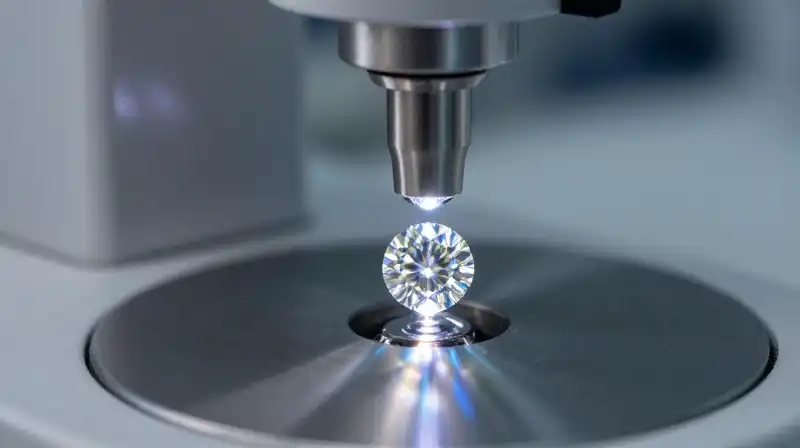
The diamond tester is a tool designed to confirm the presence of carbon atoms bonded in a crystalline lattice. It verifies if a stone possesses the physical properties of a diamond—namely, its ability to be hard and its specific electrical or thermal conductivity. Since LGDs and natural diamonds share these identical atomic and molecular characteristics, the tester’s function remains consistent: it confirms the stone is a diamond, regardless of its origin.
Understanding How Diamond Testers Function
To understand why LGDs pass, one must first understand what the tester measures. Unlike a simple “fake detector,” a quality diamond tester is a sophisticated piece of technology that analyzes the distinct physical properties of a gemstone to determine its composition.
The two primary methods employed by these handheld devices are thermal and electrical conductivity:
- Thermal Conductivity: This test measures how quickly heat dissipates through the stone. Because diamonds possess exceptionally high thermal conductivity—a characteristic linked directly to their pure carbon structure—they appear to be a positive match.
- Electrical Conductivity: This function measures a stone’s electrical resistance. Both natural and lab-grown diamonds are excellent insulators when cut and polished correctly, exhibiting specific patterns of resistance that the machine interprets as characteristic of a diamond.
In essence, the machine is asking, “Does this stone behave like a diamond?” Because lab-grown diamonds are grown under controlled conditions to replicate the lattice of a natural diamond, they answer “yes” to that question completely.
The Chemical Identity: Why Origin Doesn’t Matter to the Tester
The reason LGDs test as real diamonds lies in their composition. Both natural and lab-grown diamonds are made of pure carbon (). Whether this carbon was formed over billions of years under immense pressure in the Earth’s mantle or engineered in a high-tech facility, the resulting crystalline structure is chemically identical.
Crucially, the parameters measured by the tester—such as hardness (Mohs scale), refractive index, and conductivity—are intrinsic properties determined by this carbon structure, not by the growth environment. Furthermore, factors like color or fluorescence, which are caused by trace elements like boron or nitrogen, can vary in either type, but they do not provide a mechanism for the standard tester to distinguish between natural and synthetic origins.
Why Advanced Testing is Required for Origin Verification
While a diamond tester is perfectly suited to confirm a stone is diamond, it is fundamentally incapable of determining its provenance. The determination of whether a diamond is natural or lab-grown requires specialized, high-level analytical techniques that go far beyond handheld consumer devices.
These professional methods include:
- High-Resolution Spectroscopic Analysis: Examining specific light absorption patterns that can reveal subtle differences in chemical makeup or trace isotopes.
- Inclusion Analysis: Natural diamonds often contain “inclusions”—internal defects caused by geological processes. While lab-grown diamonds aim for clarity, they often lack the specific types of natural geological inclusions.
- Advanced Microscopy: Looking for specific growth markers or structural irregularities that are characteristic of high-pressure natural formation versus laboratory growth.
These methods are typically conducted in certified gemological laboratories and form the basis of professional certification, not handheld tests.
Lab Grown Diamonds vs. Moissanite: Avoiding Common Confusion
Another common fear is that LGDs might be confused with simulants, such as moissanite. However, while some moissanite materials exhibit high conductivity, they do not function identically to diamonds on a diamond tester.
Moissanite and lab-grown diamonds require different evaluations. Because moissanite has a distinct chemical structure and often reacts differently in electrical resistance, specialized testers (and professionals) can differentiate the two. While a generic, lower-quality tester might give ambiguous results with certain materials, high-precision testing confirms that the physical and chemical signature of a diamond—whether natural or grown in a lab—is consistent with the properties registered by the machine.
What Truly Matters for Diamond Value and Quality
If the diamond tester confirms the stone is a diamond, the next steps for a serious buyer involve looking beyond the origin to the stone’s quality and value. The characteristics that determine a diamond’s worth are universally applied, regardless of whether it is natural or lab-grown:
The 4 Cs: Diamond quality is defined by Cut, Color, Clarity, and Carat weight. High quality is defined by the optimal balance and grading of these factors.
Certification: The most practical and reliable method to validate a diamond’s quality is through certification by a recognized authority, such as the Gemological Institute of America (GIA). A GIA report provides a definitive grading of the diamond and is the industry standard for quality assurance.
Choosing a Diamond: Practical Decision Criteria
For consumers looking to purchase a diamond, the decision hinges not on what a handheld device says, but on your personal preferences and priorities. Lab-grown diamonds are a valid, high-quality investment that compete with natural stones on every metric of physical quality.
When making your decision, consider the following criteria:
- Budget and Accessibility: Lab-grown diamonds typically offer greater value per carat compared to naturally mined stones.
- Ethical and Environmental Choice: LGDs bypass the complex, often debated mining supply chains.
- Future Investment: While the physical diamond maintains its brilliance, the long-term financial resale value is influenced by market trends and perceived brand “prestige” associated with its origin.
In summary, the diamond tester is a successful tool for verifying the material itself, providing a clear confirmation that the stone is diamond. However, the quest to determine its specific origin or precise geological history must be handled by expert gemologists and advanced, specialized analytical equipment.
Frequently Asked Questions
Are lab grown diamonds considered fake?
Chemically and physically, lab-grown diamonds are indistinguishable from natural ones when examined by standard diamond testers. While these specialized devices confirm a lab-grown diamond possesses the physical properties of a diamond, determining its exact origin requires advanced, high-level analytical techniques.
What diamonds do not pass the diamond tester?
While lab-grown diamonds pass the diamond tester because they share identical properties with natural stones, moissanite does not function identically to diamonds on the device due to its distinct chemical structure. The article also notes that certain materials may provide ambiguous results if a generic, lower-quality tester is used.
Do luxury brands use lab grown diamonds?
The provided article discusses the quality and value of lab-grown diamonds and their suitability as high-quality investments, but it does not mention whether luxury brands use them.
Do brilliance lab grown diamonds pass diamond tester?
Yes, lab-grown diamonds pass the diamond tester because they are chemically and physically indistinguishable from natural diamonds when examined by these specialized devices. This is due to their shared identical atomic and molecular characteristics.
Does a lab grown diamond beep on a diamond tester?
The article states that lab-grown diamonds pass the diamond tester because they share the same identical atomic and molecular characteristics as natural diamonds. While it confirms the stone is a diamond, the text does not mention whether the machine makes a specific sound.
How to Choose a Diamond for Purchase
Evaluate Personal Priorities
Determine your personal preferences and priorities, as the decision to purchase a diamond should hinge on these factors rather than the handheld tester.
Assess Budget and Accessibility
Compare the cost and accessibility of lab-grown diamonds versus naturally mined stones, noting that LGDs often offer greater value per carat.
Evaluate Ethical and Environmental Choices
Consider the ethical and environmental impact, recognizing that LGDs bypass complex, debated mining supply chains.
Analyze Future Investment Potential
Consider how market trends and perceived brand prestige might influence the long-term financial resale value of the stone.
Check Physical Quality (The 4 Cs)
Assess the diamond's quality by looking at the Cut, Color, Clarity, and Carat weight, as these characteristics determine the stone's worth regardless of its origin.
Obtain Professional Certification
Use a recognized authority, such as the Gemological Institute of America (GIA), to provide a definitive grade of the diamond's quality.
Related Articles