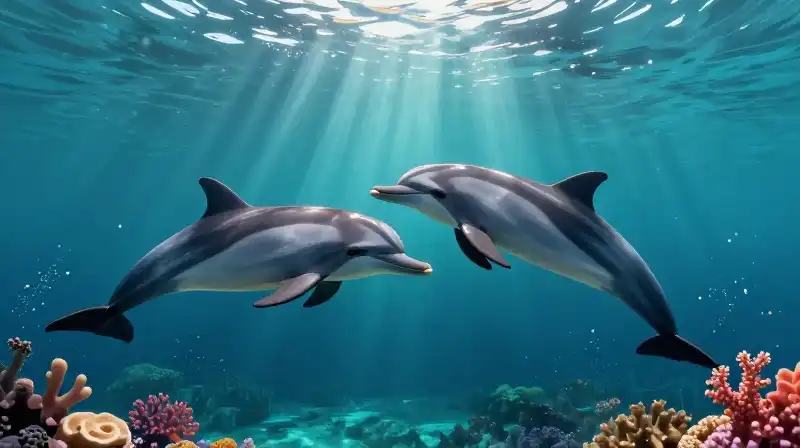
Dolphins and Humans: Why Their Relationship Is Not Always Friendly

Introduction
The relationship between dolphins and humans is one of fascinating complexity, often overshadowed by romanticized media depictions of friendly interaction. When examining whether dolphins “like” people, the answer is not a simple yes or no. Because dolphins are highly intelligent, social, and naturally curious animals, they perceive humans as a novel and significant presence in their marine environment. They are drawn to subjects that provide reciprocal engagement, but this curiosity is fundamentally rooted in their sophisticated social ecology, not necessarily affection in the human sense. Understanding this distinction is vital to grasping why their behavior, while often appearing friendly, is not universally benign, and why responsible observation is critical.
Dolphins’ Cognitive Perception of Humans
Dolphins possess advanced cognitive abilities that allow them to process the world far beyond simple sight. Echolocation enables them to identify humans as complex, large mammals rather than merely potential prey. Their social intelligence allows them to recognize complex social dynamics, making us unique among the subjects they encounter in the ocean.
They are drawn to interaction based on shared social parameters. Dolphins exhibit strong individual personalities and long-term bonds within their fission-fusion society (groups called pods). When a human provides an engaging, predictable reaction, the dolphin may participate in playful activities. This willingness to engage is a display of social capability, not a guarantee of friendship. They show protective instincts toward humans—a complex behavior indicating the ability to assess and respond to distress—but this is a survival mechanism tied to group welfare, not a sign of personal warmth.
Curiosity vs. Affection: Defining the Interaction
The question of whether dolphins have “feelings” for humans is difficult to answer from a human perspective. What they demonstrate is a highly developed ability to assess stimuli and engage in patterned behavior. While they are often seen as “friendly,” it is more accurate to describe them as “curious and socially responsive.”
Unlike less responsive species like many fish, dolphins thrive on social dynamics. When we interact with them, we are providing a new social element. If that interaction is positive and reciprocal, they will engage. However, because their behavior is dictated by deep-seated instinct and social needs, their response can shift dramatically. What appears to be playfulness can rapidly transition into aggression if their social boundaries are violated, they feel threatened, or they are habituated and become frustrated by lack of expected reward.
- Social Intelligence: They recognize and respond to social cues (like whistles and body language).
- Play: They engage in play when the activity provides a stimulating social response.
- Novelty: Humans are a unique, unpredictable social subject in the marine world.
The Hazards of Interacting with Wild Dolphins
The most critical factor in understanding dolphin-human relationships is recognizing that dolphins are wild animals whose behavior is easily altered by human activity. Interacting with them, particularly feeding or persistent harassment, poses serious risks to both the animal and the observer. These negative impacts are frequently misunderstood by those who believe in universal friendliness.
Consequences of Feeding and Habituation
Attempting to feed wild dolphins is strictly prohibited and poses numerous health and behavioral risks:
- Reliance and Aggression: Feeding trains dolphins to expect handouts. This disrupts their natural wariness and can lead to pushy or aggressive behaviors when expectations are not met.
- Health Risks: Human food, bait, and chemicals are not suited to a dolphin’s complex digestive system and can cause severe illness.
- Ecological Disruption: Frequent human interaction and feeding interfere with a dolphin’s natural foraging behaviors and the integrity of its social pod.
Vulnerability to Injury
When wild dolphins become accustomed to human presence, they become more vulnerable to dangers like boat propellers, entanglement in fishing gear, or aggressive bites from unpredictable individuals. Altering their natural fear and caution makes them less equipped to defend themselves against environmental threats.
Guidelines for Responsible Observation
If you wish to observe dolphins, it is paramount that you respect their wild nature and maintain a safe distance. Proper observation ensures that you are witnessing genuine dolphin behavior without stressing or endangering the animal.
The legal and ethical standard for observing wild marine mammals requires distance and non-interference. Following these guidelines protects the animal, maintains the integrity of the ecosystem, and adheres to federal laws like the Marine Mammal Protection Act (MMPA).
To ensure safety and prevent negative behavioral changes, adhere to these criteria:
- Minimum Distance: Always maintain a minimum viewing distance of 50 yards (150 feet). This allows the dolphins to maintain their natural state and movement patterns without feeling pursued or pressured.
- Non-Interference: Never attempt to feed, touch, or harass wild dolphins.
- Observation Only: Observe from a distance and avoid actions that mimic or mimic distress, as this can trigger unpredictable defensive reactions.
Synthesis: Respect Over Interaction
Ultimately, the relationship between humans and dolphins should be one of profound respect rather than casual friendship. Dolphins are highly intelligent, complex beings capable of profound social bonds and sophisticated behaviors. While they may display curiosity toward humans, their perception is one of an unusual social entity, not necessarily a personal friend.
The crucial takeaway is that our goal should be to allow their wild nature to remain untainted. By respecting their boundaries, maintaining appropriate distances, and understanding the profound cognitive and social complexity of these animals, we ensure that our presence is an observation, not an intrusion that alters their lives or endangers them.
Frequently Asked Questions
Can dolphins have feelings for humans?
Dolphins do not necessarily possess affection for humans; instead, they are described as highly curious and socially responsive, perceiving humans as a novel and significant social entity. While they may engage in playful behavior, this is rooted in social dynamics and sophisticated instinct rather than a personal friendship.
Are dolphins very friendly to humans?
The article states that dolphins are not simply friendly but are instead highly intelligent, curious, and socially responsive creatures. While they may engage in play when interaction is positive, their behavior is driven by deep-seated instinct and social needs rather than a personal sense of affection.
How to Observe Wild Dolphins Responsibly
Maintain Minimum Distance
Always maintain a minimum viewing distance of 50 yards (150 feet) to allow dolphins to remain in their natural state and movement patterns.
Avoid Interference
Never attempt to feed, touch, or harass wild dolphins, as these actions pose serious risks and disrupt their natural ecology.
Observe Only
Observe from a distance and avoid actions that mimic or mimic distress, as this can trigger unpredictable defensive reactions from the animals.
Related Articles