Pearl Formation: Can a Clam Produce a Shiny, Gem-Quality Pearl?

Introduction
While the concept of finding a gem-quality pearl inside a common clam is a persistent notion, the reality is far more complex than a simple “yes.” Clams, like many bivalve mollusks, possess the biological machinery to form objects within their shells as a protective response to irritation. However, the odds of a common, edible clam yielding a valuable, highly reflective, gem-quality pearl—the kind sought after in jewelry—are extremely low. Most clams that form internal structures produce dull, matte, and calcified minerals that resemble stone rather than iridescent nacre. The primary difference lies in the specific chemical layering required to create nacre, the crystalline mother-of-pearl that provides luster.
The Biology of Pearl Formation: Understanding Nacre
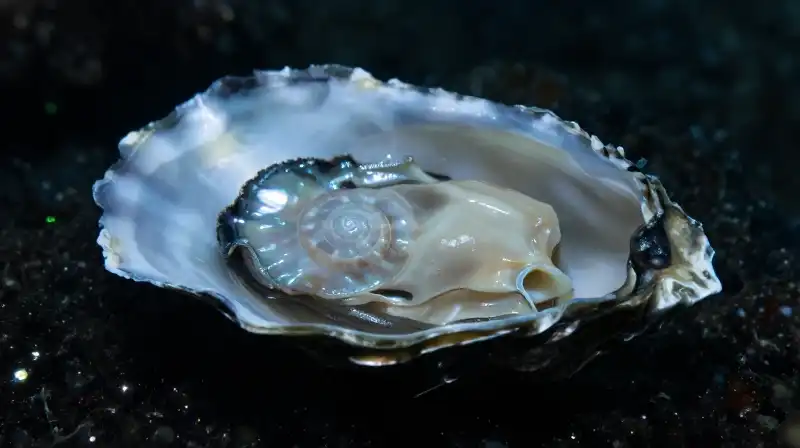
A pearl is not a random calcification; it is a biological response. The process begins when an irritant—such as sand, a sharp shell fragment, or, in cultivation, a synthetic seed—enters the mollusk’s soft tissues. The mollusk’s mantle, a layer of specialized tissue, responds by secreting a substance called nacre to encase and protect the intrusion. Nacre is chemically composed of microscopically thin layers of calcium carbonate interspersed with organic proteins.
The high aesthetic value of a pearl depends entirely on the regularity of these layered deposits. A truly high-quality pearl must achieve a highly uniform, crystalline structure that allows light to scatter, resulting in the characteristic opalescence or luster. If a clam fails to achieve this precise crystalline structure, the resulting object will be solid and dull, lacking the specific, high-grade iridescence associated with traditional pearls.
Clams Versus Specialized Pearl Producers
When discussing gem-quality pearls, it is important to differentiate between what a clam *can* form and what specific, recognized pearl-producing species are known for. While some clams may form large, unusual, or intriguing internal objects, they are typically prized by collectors for their unique shape or rarity, not their traditional beauty.
The Primary Producers
True, high-value pearls are most reliably produced by mollusks known for their robust and predictable nacreous structures. These include:
- Oysters: Widely recognized as primary producers of traditional natural and cultured pearls.
- Specific Freshwater Mussels: Species like the Triangle Sail Mussel are highly valued for their solid nacre and the diverse range of shapes they produce.
- Abalone and Queen Conch: Certain exotic and marine species are known for creating unique, vividly colored, and visually stunning natural pearls.
The general consensus in the industry is that to successfully produce a valuable, highly lustrous pearl, the host mollusk must be a specialized species, and the probability of a common, edible clam succeeding is infinitesimally small.
Natural vs. Cultured Pearls: Value and Rarity
When people ask, “Do clams make pearls naturally?”, the answer is technically yes, but this natural process is largely accidental and rare. Natural pearls form spontaneously when an irritant is encountered in the wild. However, the widespread commercial availability of cultivated (farmed) pearls has dramatically altered the market.
Understanding Cultivation
Modern pearling involves intentionally introducing a stimulus (a seed or grit) into the mollusk. This controlled environment maximizes the chances of uniform, high-quality nacre production. While natural pearls hold a historical and aesthetic premium due to their accidental origin, cultured pearls are mass-produced and far more consistent in quality and availability.
Consequently, while a random clam may produce a “pearl-like” object, it lacks the guaranteed quality and consistent value of a farmed pearl, making its commercial utility extremely limited.
How to Judge the Quality of a Mollusk Object
If you encounter a bivalve that has produced an internal object, determining its value requires looking past its mere presence. The assessment should focus on three specific criteria:
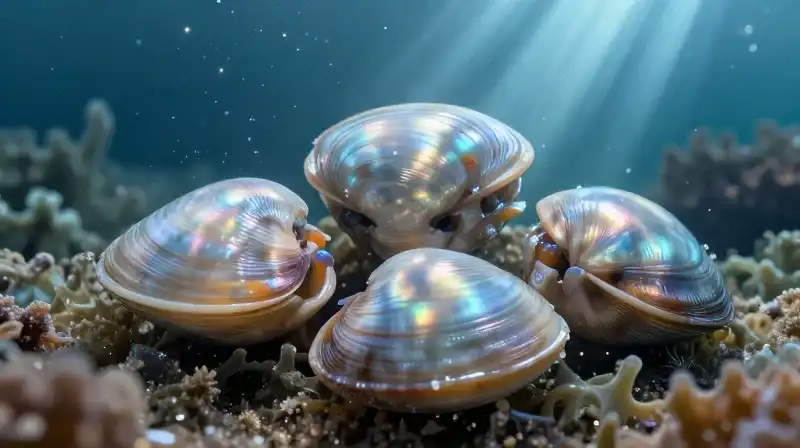
- Luster and Iridescence: Does the object possess a strong, shimmering sheen (iridescence) or is it flat and dull? High-quality nacre is characterized by this reflective quality.
- Nacre Quality: Is the structure consistent and smooth, or are there irregularities and pits? The regularity of the layers dictates the pearl’s final smoothness and polish.
- Shape and Form: Pearls are categorized as round, baroque (irregular), or highly specific. The shape, combined with the material quality, contributes to its overall market appeal.
Summary of Expectations
The ability of a clam to produce a shiny, gem-quality pearl is a biological possibility, but statistically improbable in common varieties. The successful formation of true nacre—the crystalline material needed for gem quality—requires specific chemical conditions and a host mollusk genetically predisposed to layer that material perfectly. Therefore, rather than viewing a clam as a viable source for high-value pearls, it is more accurate to view it as a potential source of unique, calcified biological curios. For commercially valuable, lustrous pearls, specialized species like oysters, freshwater mussels, and those under human cultivation remain the definitive sources.
How to Judge the Quality of a Mollusk Object
Assess Luster and Iridescence
Observe whether the object possesses a strong, shimmering sheen (iridescence) or if it appears flat and dull, as high-quality nacre is characterized by its reflective quality.
Evaluate Nacre Quality
Examine the structure to see if it is consistent and smooth, or if it contains noticeable irregularities and pits, since the regularity of the layers dictates the final smoothness of the object.
Analyze Shape and Form
Categorize the shape of the pearl (round, baroque, or a highly specific type), as this shape, combined with material quality, contributes significantly to its market appeal.
Related Articles