Where Do Wasps Go in Winter? A Guide to Their Dormancy and Shelter

Introduction
When the weather turns cold and temperatures drop, many homeowners wonder, “Where do wasps go in the winter?” The reality is that most wasps do not perform a true hibernation like a bear; instead, they enter a state of reduced activity known as diapause and actively seek protected shelter to survive the cold months. Unlike some other insects, the majority of worker wasps generally perish as food sources dwindle and winter conditions set in. However, the surviving individuals—typically the queen and potential future queens—are highly specialized in finding microclimates that provide necessary insulation and warmth. Understanding their dormancy, where they retreat, and the risks associated with removal is crucial for homeowners.
Understanding Wasp Survival: Diapause vs. Hibernation
To accurately predict where and how wasps spend the winter, it is essential to differentiate between common buzzwords. “Hibernation” generally refers to a deep, extended sleep where metabolism drops significantly. For wasps, the process is more accurately described as diapause.
Diapause is a physiological state where an insect’s metabolic rate slows down dramatically, allowing it to survive harsh conditions without energy-intensive activity. While the survival mechanisms of social wasps (like certain members of the Vespidae family) involve the surviving queen entering this dormant state, many smaller, solitary wasps simply overwinter in protected, pre-built chambers. It is important to note that this dormancy is not guaranteed; the ability to achieve diapause depends heavily on the species, the quality of the colony, and the severity of the cold.
For the worker population, the harsh reality is often death. Since wasps do not typically store sufficient food reserves to bridge the winter, the vast majority of the colony succumbs to starvation or freezing. The surviving wasps, such as the queen, are the only ones that continue to seek and utilize sheltered locations.
Common Winter Retreat Locations
The primary driver for where a wasp goes in winter is finding a stable, warm microclimate. Wasps are highly efficient at utilizing existing structural elements in human environments to protect themselves from freezing temperatures. These locations are often overlooked by residents:
- Structural Voids: Cracks in siding, beneath eaves, and within wall voids provide the necessary insulation and protection from direct wind and rain.
- Insulation and Attics: The spaces inside attics, specifically near insulation, offer relatively stable, warmer temperatures, making them prime overwintering sites for surviving queens.
- Ground-Level Shelter: Solitary wasps and queen wasps may seek refuge in the ground, utilizing burrows, deep crevices in soil, or under leaf litter to exploit the consistent temperature found several inches below the surface.
- Man-Made Shelters: Areas like under sheds, inside circuit boxes, behind utility panels, and within the gaps of cluttered wood piles provide the dense, sheltered environment they require.
How Wasp Dormancy Differs Between Social and Solitary Wasps
The strategy employed by a wasp during winter often depends on its social structure. The approach taken by a large, social colony differs significantly from that of a solitary individual.
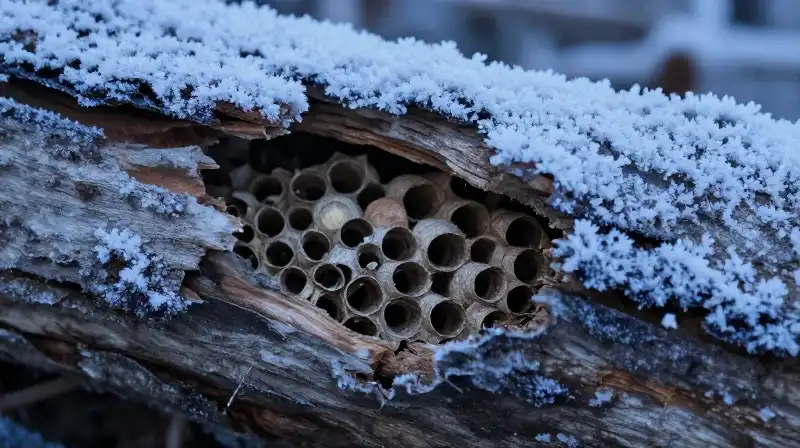
Social Wasps (e.g., Vespidae): In a robust social colony, the surviving queen typically attempts to sustain a minimal population or, more commonly, seeks a highly insulated, secure spot to hibernate. These surviving social wasps rely on the collective effort of the colony’s final resources to transition into diapause. They will often utilize well-constructed, protected nests that offer maximum thermal retention.
Solitary Wasps: Solitary wasps do not build massive colonies; instead, each individual (or reproductive female) survives the winter by overwintering within a protected, individual egg chamber or larval burrow. Their survival is entirely dependent on their ability to seal and insulate their personal hiding spot until spring.
Removing Wasp Nests in Cold Weather: Safety and Practical Guidance
Given that wasps are in a dormant state, many homeowners ask, “Is it safe to remove a wasp nest in winter?” The answer involves significant caution. Because the surviving queen and potential future queens are in diapause, attempting to dismantle a nest can trigger an unpredictable and aggressive response, even if the workers are dead.
Safety Precautions:
- Never Attempt DIY Removal: Due to the unpredictable nature of dormant survivors, attempts to remove nests can lead to stings and defensive aggression. It is highly recommended to hire a professional pest control service experienced in cold-weather removals.
- Environmental Readiness: If you must address a nest, the time is most critical when the insects are completely dormant, usually during the dead of winter, but professional guidance is paramount.
- Preventative Measures: To minimize wasp attraction and future nesting, consistently secure trash bins tightly, and proactively address potential nesting sites like cracks in siding or areas with excessive debris (overgrown bushes or fallen logs).
The Transition to Spring and New Life
The state of diapause is temporary. When environmental cues, such as rising temperatures and increased daylight, signal the arrival of spring, the surviving wasps begin to emerge from their dormancy. These survivors are focused on establishing a new presence.
New nests constructed in the spring are typically sought in dark, sheltered areas that provide easy access to food sources, such as chimneys, vents, or sheltered eaves. These new colonies are rapidly constructed as the temperature becomes favorable, utilizing the warmth of the season to begin their reproductive and foraging cycles once more.
Summary: Prioritizing Winter Survival and Home Safety
Wasps do not migrate or simply vanish; they strategically retreat to specific, sheltered microclimates to enter a state of dormancy. Their location—whether under bark, in wall voids, or beneath the soil—is dictated by the need for stable temperature and protection. While the worker population usually does not survive the cold, the surviving reproductive individuals are highly resilient and will seek out the safest possible spot to initiate the next spring’s cycle. If you encounter a dormant nest, treating it with professional caution and prioritizing proactive prevention of new nest sites are the most effective strategies for mitigating winter risks and preparing for the next season.
Frequently Asked Questions
Should you remove wasp nests in winter?
Due to the unpredictable and aggressive response of surviving dormant queens, attempting to dismantle a nest carries risks like stings. It is highly recommended that you hire a professional pest control service to handle winter nest removal.
Is it safe to remove wasps nest in winter?
Removing a wasp nest in winter requires significant caution because the surviving queen can trigger an unpredictable and aggressive response. Due to this unpredictable nature, it is highly recommended that homeowners never attempt DIY removal and instead hire a professional pest control service.
How do wasps come back if they die in winter?
Surviving individuals enter a dormant state called diapause during the winter, but they begin to emerge once environmental cues, such as rising temperatures and increased daylight, signal the arrival of spring. Once emerged, these survivors focus on establishing new colonies by constructing nests in dark, sheltered areas.
How to Safely Remove Dormant Wasp Nests in Cold Weather
Prioritize Professional Removal
Due to the unpredictable nature of dormant survivors (queen and potential future queens), never attempt DIY removal. It is highly recommended to hire a professional pest control service experienced in cold-weather removals to minimize the risk of stings.
Determine Optimal Timing
Ensure the insects are completely dormant; the most critical time for any necessary intervention is during the dead of winter when wasps are in diapause and least likely to react aggressively.
Implement Preventative Measures
Secure trash bins tightly and proactively address potential future nesting sites, such as cracks in siding, areas with excessive debris, overgrown bushes, or fallen logs.
Related Articles