
Sway Bar Link Function: Why They Are Critical for Car Handling

Introduction
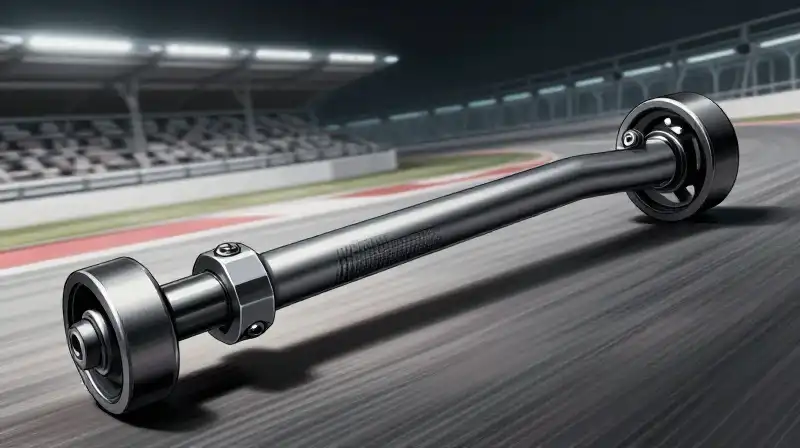
The stability of a vehicle during cornering is heavily reliant on a chain of precision components, chief among them being the sway bar (or anti-roll bar) and its connecting pieces. The stabilizer bar link, often referred to as a stabilizer bar link, is a critical yet often overlooked piece of suspension hardware. Its primary function is not simply to hold pieces together, but to serve as the vital pivot that allows the larger sway bar to perform its essential duty. Without these links, the sway bar cannot articulate correctly within the suspension assembly, rendering its ability to manage weight transfer ineffective. If your vehicle feels overly “floatty” or lacks predictable grip when turning, the sway bar link is a prime area to examine for mechanical integrity.
What Does a Stabilizer Bar Link Actually Do?
To understand the sway bar link’s function, one must first understand the core problem it solves: body roll. When a vehicle turns, gravity shifts more of the weight onto the outside wheels. This causes the chassis to lean, or “roll.” The sway bar is designed to counteract this lean by acting like a torsional spring, forcing the opposite sides of the suspension to move in sync. The stabilizer bar link provides the necessary mechanical articulation for this process to work. It connects the sway bar to the control arms or suspension components on the steering knuckle. Its operation can be broken down into these key actions:
- Force Transmission: It efficiently transmits the lateral forces applied by the sway bar to the specific points on the suspension geometry.
- Articulation Management: It allows the suspension to move up and down (travel) while simultaneously managing the sideways, rotational forces.
- Alignment Maintenance: By holding the sway bar firmly in place, it helps ensure the suspension maintains its designed ride height and wheel alignment, crucial factors for optimal tire contact with the road.
In short, the sway bar link ensures that the forces trying to tip the car are properly translated into a stable, predictable chassis posture.
The Risks of Link Failure: Symptoms & Consequences
A sway bar link, especially those equipped with rubber bushings, eventually degrades due to wear, vibration, and environmental exposure. When a stabilizer bar link wears out or breaks, the vehicle loses its ability to maintain stability during dynamic maneuvers. Recognizing the symptoms is key to proactive maintenance. Signs that your sway bar links are failing include:
- Increased Chassis Instability: The car feels “sloppy” or behaves unpredictably during aggressive cornering.
- Excessive Noise: Clicking, clunking, or knocking noises from the undercarriage are common indicators of loose or degraded pivot points.
- Vibration: Vibration, particularly when driving over uneven surfaces or during turns, can signal internal link degradation.
- Poor Handling: A noticeable lack of grip or excessive rolling beyond what is normal for the vehicle’s body style.
These symptoms are not mere cosmetic flaws; they represent mechanical compromise that directly impacts safety and handling.
Critical Considerations: Is a Stabilizer Link Necessary?
Yes, a stabilizer bar link is necessary for modern vehicle handling. While a vehicle can technically function without one, removing these components significantly compromises the factory-designed dynamics of the car. The link facilitates the controlled transfer of momentum necessary for the chassis to stay flat and predictable. For performance or daily driving, these links serve a dual purpose: they improve the car’s overall handling by limiting roll, and they maintain the intended geometry of the suspension. Ignoring this part means you are compromising the very stability engineered into the vehicle.
Can You Still Drive a Car with a Broken Sway Bar Link?
The short answer is that while you *can* drive it, doing so is generally discouraged, especially under high-stress conditions. Driving with a broken or heavily worn sway bar link poses several risks:
| Scenario | Impact | Recommendation |
|---|---|---|
| Normal Low-Speed Driving | Potential noise, slight loss of steering precision. | Monitor closely; do not ignore symptoms. |
| Corner Cutting / Sharp Maneuvers | Significant, unpredictable body roll, loss of controlled grip, and potential for instability. | Avoid aggressive driving immediately. |
| High-Speed Stability | Compromised ability to maintain a level chassis, potentially leading to “floatiness” and reduced control. | Replacement is mandatory for safety. |
Front vs. Rear Link Functionality
While both front and rear sway bar links perform the same basic function of connecting the stabilizer bar to the suspension, their impact on handling differs due to where they are located and the physics of weight transfer. * Front Sway Bar Link Function: The front bar generally manages lateral forces associated with steering and braking. Its link’s primary job is ensuring that as the outside wheel dips, the bar can effectively pull the inside wheel down simultaneously, aiding in turn-in and reducing understeer (the tendency for a car to push wide). * Rear Sway Bar Link Function: The rear bar typically manages roll in the rear axle. Its function is crucial for maintaining traction and managing the slip characteristics during cornering, helping to prevent excessive body lean that could lead to oversteer. Each link type—whether it is for a Ford, Chevy, Toyota, or any other brand—plays a specific role in tuning the balance between understeer and oversteer.
Final Assessment: Why Link Maintenance is Critical
The sway bar link is the unsung hero of your suspension. It is a critical maintenance component because its failure translates directly into degraded, unpredictable handling and a loss of driver confidence. While the cost of a sway bar link replacement varies based on the vehicle and link type, it is an essential investment in the safety and precision of your vehicle’s dynamics. By understanding that the link is the critical pivot allowing the sway bar to operate, drivers can move beyond just replacing parts and truly appreciate the mechanics of controlled vehicle movement. Regular inspection of these stabilizer bar links is a fundamental step in keeping your car stable, predictable, and safe on the road.
Frequently Asked Questions
How urgent is it to replace sway bar links?
Replacement is mandatory for safety during high-speed stability or sharp maneuvers, as failure leads to significant, unpredictable body roll and loss of controlled grip. As a critical maintenance component, ignoring link failure compromises the vehicles ability to maintain stability and predictable handling.
Can you still drive a car with a broken sway bar link?
While you can technically drive a vehicle with a broken sway bar link, the article generally discourages doing so, especially under high-stress conditions. Risks include unpredictable body roll during sharp maneuvers, loss of controlled grip, and a compromised ability to maintain a level chassis at high speeds.
Is a stabilizer link necessary?
Yes, a stabilizer bar link is necessary for modern vehicle handling as it facilitates the controlled transfer of momentum required for a predictable chassis. While a vehicle can technically function without it, removing these components significantly compromises the factory-designed dynamics of the car.
Related Articles