
Welding vs. Soldering: Key Differences and When to Use Each

Introduction
When attempting to join metal components, the terminology often overlaps, leading to confusion: is it welding or soldering? The fundamental distinction is in the heat application and the resulting bond. Welding is a robust fabrication process that uses intensely high heat to melt and fuse the primary base materials themselves, creating a structural bond. Soldering, by contrast, is a joining process that only melts a specialized, low-melting-point filler metal (solder) onto the surface of the base materials, requiring no fusion of the components. The decision between the two hinges entirely on the application, specifically the required strength of the joint and whether the connection needs to be structural or purely functional.
The Fundamental Mechanism: Fusion vs. Surface Adhesion
The greatest difference between the two methods lies in what part of the material is actually transformed during the process.
How Welding Works (Liquid to Liquid)
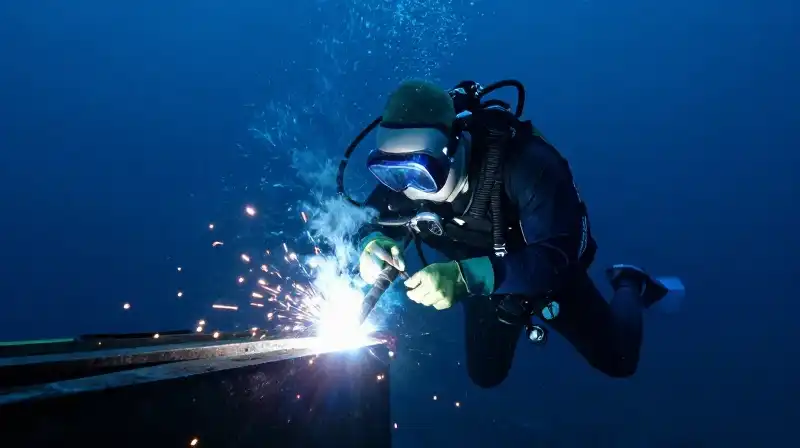
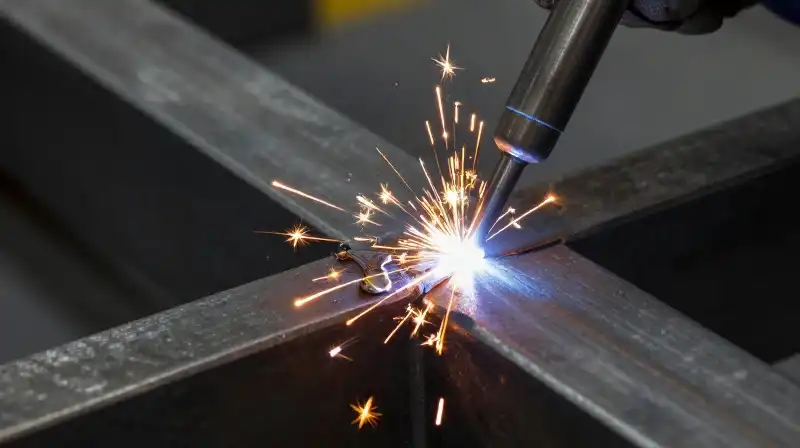
Welding requires immense heat, typically reaching temperatures around 6,500°F. The primary goal is to melt both the base metal components and the compatible filler material until they merge into a single, unified pool of liquid metal. As this metal cools, it forms a continuous metallurgical bond where the materials are fused at a molecular level. This “liquid to liquid” bond allows welding to produce joints that are inherently strong and often exceed the strength of the original base materials.
How Soldering Works (Liquid to Solid)
Soldering operates on a much lower temperature range, usually between 190°F and 840°F. In this process, the base metal does not melt. Instead, the solder—a specific alloy designed to melt easily—is applied to the prepared surface and allowed to melt. The molten solder adheres to the base metal, creating a “liquid to solid” bond upon cooling. This is essentially a high-strength, metal “glue” that creates a permanent physical and electrical connection.
Comparative Properties at a Glance
To help determine the correct technique, examining the physical properties of each process is critical.
| Feature | Welding | Soldering |
|---|---|---|
| Temperature Required | Extremely High (Up to 6,500°F) | Low (190°F to 840°F) |
| Materials Affected | Base metal and filler material | Filler metal (solder) only |
| Resulting Bond | Full metallurgical fusion (Liquid to Liquid) | Adhesion via molten filler (Liquid to Solid) |
| Typical Strength | High (Structural, Load-bearing) | Low to Moderate (Non-structural) |
| Ease of Use | Complex, requires specialized equipment | Simple, requires minimal equipment (e.g., soldering iron) |
When to Use Soldering vs. Welding: Decision Guide
Choosing between these two methods is rarely about which is “better” in an absolute sense; it is about matching the process to the specific requirements of the job.
Use Welding When…
You require absolute strength, load-bearing capacity, or when joining large, thick components. Welding is the standard for critical structural integrity.
- Building bridges, ships, and heavy machinery.
- Creating permanent joints in construction where weight distribution is key.
- Joining materials where the joint must be stronger than the original material.
- Utilizing specialized processes like MIG (GMAW) or TIG (GTAW) for high-power industrial fabrication.
Use Soldering When…
You need a connection for electrical continuity, fine assembly, or a joint that must remain undamaged by high heat.
- Repairing electronic circuit boards (PCB soldering).
- Connecting fine jewelry components.
- Plumbing applications (creating seals).
- Joining delicate or intricate metal parts where structural loads are minimal.
Addressing Related Confusion: Brazing and Spot Welding
The term “filler metal” is often used loosely, which leads to frequent confusion with brazing.
Soldering vs. Brazing
Brazing is a technique that falls structurally between the two. It uses a filler metal similar to solder, but the process requires significantly higher temperatures—exceeding 840°F—and the resulting joint is far more structurally robust than a soldered joint, though it still doesn’t melt the base metal. If structural integrity is required but temperatures cannot exceed soldering levels, brazing is the appropriate choice.
Spot Welding
This process is an exception to the general rules. Spot welding uses intense current and pressure to fuse two metal pieces together without the need for a continuous arc or a traditional filler material. It is a high-speed industrial method often used in automotive manufacturing.
Practical Considerations and Common Pitfalls
Because the conditions are so different, the preparation required for each process is drastically different.
Preparation is Paramount for Soldering
Successful soldering relies on the ability of the solder to “wet” the base metal. If the surface is contaminated with oils, oxides, or rust, the solder will ball up and fail to stick. Flux—a chemical agent—is often used in soldering to clean the surfaces and create an optimal bonding environment, which is rarely necessary in the high-heat environments of welding.
Technique and Versatility
Welding involves numerous methods (Stick, MIG, TIG), and the choice is dictated by the material’s thickness and properties. Soldering is highly versatile; its low melting point allows it to join almost any two metals, regardless of their base type, making it ideal for varied and delicate applications.
Summary of Decision Criteria
The ultimate choice between welding and soldering depends on three core factors: required strength, temperature limits, and desired application. If you are making a connection that will hold weight, use welding. If you are ensuring an electrical circuit or joining delicate components, use soldering. Never attempt to use solder to replace a weld if structural loads are anticipated, as the mechanical strength of the joint will fail under pressure.
Frequently Asked Questions
What is harder, welding or soldering?
Welding is described as a complex process that requires specialized equipment, while soldering is simple and requires minimal equipment.
Can solder act as weld?
Solder creates a bond through surface adhesion, whereas a weld relies on full metallurgical fusion of the base materials. Because of this difference in strength, never attempt to use solder to replace a weld if structural loads are anticipated, as the mechanical strength of the joint will fail under pressure.
When to use soldering vs welding?
Use welding when absolute strength, load-bearing capacity, or critical structural integrity is required. Conversely, use soldering for electrical continuity, fine assembly, or joining delicate components where high heat must be avoided.
Related Articles