
Fiber Optic Drones: How Physical Cables Ensure Stealth and Control

Introduction
Fiber optic drones represent a significant evolution in Unmanned Aerial Vehicle (UAV) technology, trading traditional radio frequency (RF) wireless links for a physical, high-strength data conduit. Unlike fully autonomous or radio-linked drones, fiber optic drones utilize a thin, trailing cable that serves as the sole connection for command and control (C2) and high-definition data transmission. This technology fundamentally shifts the paradigm for operations in contested environments, prioritizing absolute signal resilience and massive bandwidth over pure operational freedom. Essentially, the physical tether acts as an impervious communication pipeline, ensuring that the drone’s live camera feed and the operator’s real-time inputs remain uninterrupted by electronic interference.
How the Physical System Operates
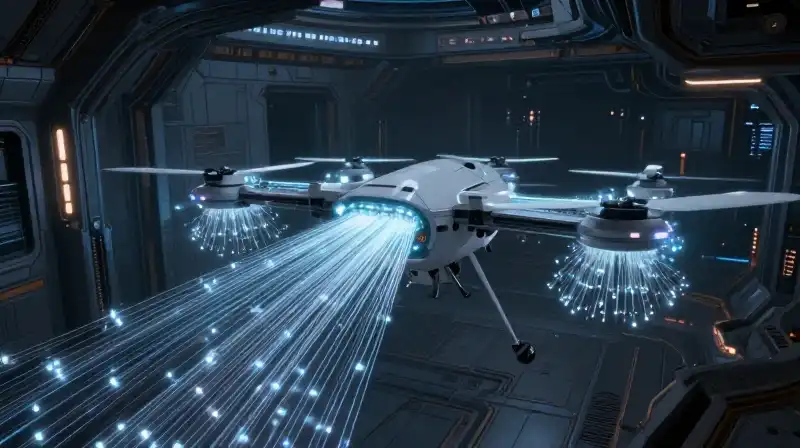
The core mechanism of a fiber optic drone relies on the synergy between the lightweight cable and the spool-fed deployment system. Instead of broadcasting signals into the air, the drone continuously unrolls a specialized, high-strength fiber optic cable from a spool mechanism, similar to a fishing reel. This cable is not just a data link; it is the drone’s operational lifeline. It transmits two distinct types of information simultaneously:
- Sensor Data (Downstream): This includes high-resolution video feeds, complex telemetry, and real-time surveillance data sent from the aerial platform to the operator’s ground station.
- Command and Control (Upstream): This is the operator’s input—directional commands, speed adjustments, and targeting instructions—sent back instantly to the drone.
The cable itself is extremely thin and light, engineered to minimize drag and allow the drone to maintain effective range even when unspooling. This design ensures that the drones can navigate complex terrain, such as forests or urban canyons, while maintaining a stable data connection.
Advantages Over Traditional Wireless Links
The primary driver behind the adoption of fiber optic drones is the profound superiority of wired data transmission over wireless methods, particularly in hostile environments. Fiber optic communication offers distinct advantages that address key weaknesses in conventional UAV operations:
Immunity to Electronic Warfare
Since the data travels through physical glass strands and not via electromagnetic waves, these drones are inherently resistant to signal jamming and interference. In “electromagnetically denied environments”—such as areas under heavy electronic warfare (EW) attack or within certain underground infrastructure—wireless systems fail quickly. Fiber optic systems maintain a robust data pathway, allowing missions to continue regardless of how sophisticated the electronic countermeasures are.
Ultra-Low Latency and High Bandwidth
Latency, or delay in data transmission, is a critical factor in precise military operations. Fiber optics provides near-instantaneous control. Unlike RF systems, where signal processing and atmospheric effects can introduce noticeable lag, the physical nature of the cable minimizes latency, enabling the operator to achieve immediate and accurate remote control and real-time target identification. Furthermore, fiber allows for massive amounts of data to be transmitted simultaneously, facilitating the high-definition surveillance required for modern Intelligence, Surveillance, and Reconnaissance (ISR).
Inherent Operational Limitations and Vulnerabilities
Despite the resilience provided by the cable, the physical connection introduces specific, critical limitations and vulnerabilities that wireless drones do not share. These factors represent the primary decision-making criteria when deploying this technology:
Physical Interception and Severing
The most significant vulnerability is the physical presence of the cable. If the trailing line is physically severed, intercepted, or destroyed by enemy assets, the drone immediately loses its C2 and data connection. This necessitates careful route planning to avoid likely areas of interception.
Visibility and Signature
While the fiber connection makes the drone hard to detect via electronic spectrum analysis, the physical cable itself presents new threats. If multiple drones operate from a single fixed position, a discernible “pattern of life” or multiple tether signatures can be visible to optical sensors. Furthermore, the operator’s position can be revealed through small, residual radio frequency emissions near the flight controller, requiring operational security (OPSEC) protocols.
Environmental Risks
The trailing wire presents a risk of entanglement, both with the drone’s own propulsion system and with obstacles (power lines, trees, wreckage) on the battlefield. For this reason, the physical design and the spool mechanism must be engineered for maximum flexibility and minimal drag.
Application Scenarios and Strategic Deployment
Fiber optic drones are best utilized in scenarios where mission security and data fidelity are non-negotiable priorities. They represent a force multiplier in specialized roles:
| Application | Requirement Met by Fiber Optics |
|---|---|
| ISR (Intelligence, Surveillance, Reconnaissance) | Massive bandwidth for 4K/8K sensor data and guaranteed uptime in hostile RF zones. |
| One-Way Attack (OWA) / Logistics | High-speed, stable C2 for precise delivery or attack initiation, even when RF links are denied. |
| Emergency Support | Transmission of real-time, high-fidelity medical or status data from hazardous zones to ground teams. |
| The technology serves as a robust bridge between a remote operator and a high-altitude platform, offering a level of operational stability that wireless signals cannot match under pressure. |
Strategic Considerations for Use
The choice to employ a fiber optic drone involves balancing technical resilience against operational security. Before deployment, several critical factors must be analyzed:
- Contestation Level: If the environment is known to have active jamming or electronic warfare capabilities, fiber optics are the optimal choice.
- Mobility Requirements: If the mission demands sudden, unpredictable shifts in location or rapid high-altitude changes, the tether may limit maneuvering space compared to a fully autonomous UAV.
- Logistical Planning: Operators must factor in the risk of cable loss. Strategic planning should include pre-existing contingency plans for drone recovery or replacement if the tether is compromised.
In summary, fiber optic drones do not merely offer an alternative data link; they offer a fundamentally more robust and secure connection in the most challenging operational theaters. Their success is not defined by their freedom from connection, but by the guaranteed integrity and speed of that connection.
Evaluating the Deployment of Fiber Optic Drones
Determine Environment Contestation
Assess whether the operational area is subject to active jamming or electronic warfare capabilities. Fiber optics is optimal when RF links are compromised.
Evaluate Mobility Requirements
Determine if the mission demands sudden, unpredictable shifts in location or rapid, high-altitude changes, as the tether may limit maneuvering space.
Establish Logistical Contingencies
Factor in the risk of cable loss and interception by developing pre-existing plans for drone recovery or replacement.
Confirm Data Requirements
Verify that the mission requires guaranteed data integrity and massive bandwidth, such as 4K/8K surveillance in hostile zones.
Related Articles