
Persian vs. Arab: Distinguishing Cultures, Languages, and Origins

Introduction
The terms “Persian” and “Arab” are often used interchangeably in Western discourse, largely because both groups are dominant populations in Western Asia and many share a common adherence to Islam. However, despite geographical proximity and historical interaction, Persians and Arabs are fundamentally distinct ethnic and cultural groups. To understand the Persian versus Arab difference, one must look beyond religion and geography to examine their deep-seated linguistic origins, historical trajectories, and specific cultural markers.
The distinction is not merely regional; it is rooted in the genetic and linguistic history of the two peoples. Persians are primarily associated with Indo-European traditions, originating from the Iranian plateau and its unique imperial history. Arabs, conversely, belong to the Central Semitic language family, with their traditions centered on the Arabian Peninsula and the Syrian desert. While both groups were profoundly shaped by the spread of Islam following the 7th-century conquests, their core identities remain separate.
Linguistic and Ethnic Origins: Semitic vs. Indo-European
The most immediate and tangible difference between these two groups is their language. This is where the distinction between Persian and Arab is solidified at the foundational level.
Persians speak Farsi (or Persian), which is part of the Indo-Iranian branch of the Indo-European language family. This language developed from older stages, including Old and Middle Persian, and has a complex grammatical structure unlike Arabic. While modern Persian uses the Arabic script—a result of the Arab influence—its grammar, pronunciation, and core vocabulary remain distinctively Indo-European.
Arabs speak Arabic, which belongs to the Semitic family, an Afro-asiatic branch. Arabic is structurally and morphologically different from Persian. Although both languages utilize the same script, the fundamental difference in grammar, word formation, and phonology ensures they are not mutually intelligible. The Persian language, therefore, cannot be classified as a dialect of Arabic, just as Arabic cannot be classified as Farsi.
The Historical Trajectories and Imperial Identity
The divergent historical paths of Persians and Arabs contribute significantly to their distinct national identities. While both groups experienced vast expansions, their origins and dominant political structures differ.
The Persian identity is deeply rooted in a history stretching back to powerful unified polities, most notably the Persian Empire. Before the Islamic era, Persia was home to traditions like Zoroastrianism, which formed a distinct cultural foundation separate from the Arabian Peninsula. This long history of centralized, sophisticated empire has fundamentally shaped the modern Iranian national identity. This “Iranian” identity is distinct from the political “Arab” identity.
Arabs trace their ethnolinguistic origins to the Arabian Peninsula and the surrounding desert regions. Their history, particularly in the medieval period, is inextricably linked to the Arabian expansion and the foundational narratives of the faith. While many Arabs lived under Persian rule or influence, their core ethnic and cultural identity remained tied to Semitic traditions.
Religious Affiliations: Shia vs. Sunni Nuances
A common point of confusion is the shared religion. While both Arabs and Persians are predominantly Muslim, their historical and contemporary affiliations within Islam often differ, particularly in the Iranian context.
The majority of Arabs adhere to Sunni Islam, which is the dominant branch across the Arabian Peninsula and the broader Arab world. However, the Iranian population is predominantly affiliated with Twelver Shiite Islam. This difference is not merely a matter of ritual; it reflects deep historical roots, including early influences from Nestorianism and the remnants of ancient Zoroastrianism.
The Iranian national identity is significantly tied to this Shiite affiliation and its unique historical development, which distinguishes it from the widespread Sunni variations found across the Arab world. These religious differences result in distinct cultural observances, including different forms of religious expression, jurisprudence, and ceremonies.
Cultural Markers and National Symbols: Farsi vs. Arabic Traditions
Beyond language and history, each group maintains unique cultural markers that clearly demarcate Persian and Arab heritage.
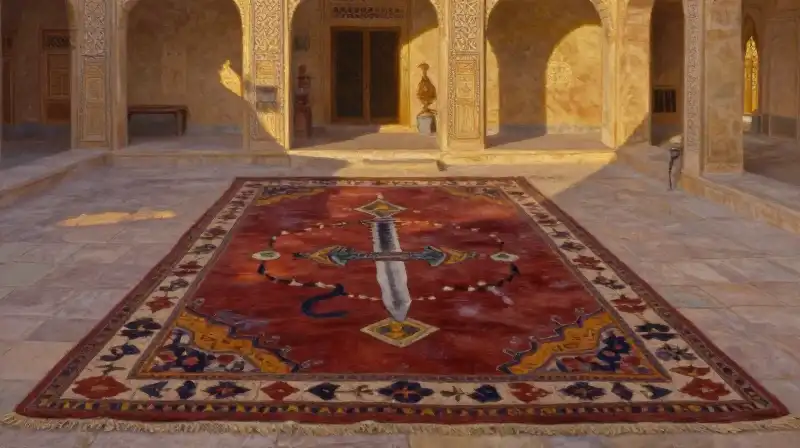
- Unique Persian Culture: Persian culture is rich in achievements like advancements in algebra, and artistic traditions such as the intricate weaving of carpets. National traditions like Nowruz (the Persian New Year) are integral to Iranian heritage and remain largely unique to Persian culture, even among those who observe religious holidays.
- National Symbols: While the “Arab world” encompasses a vast geographical and cultural area including North Africa, the term “Persian” specifically identifies the inhabitants of modern-day Iran, whose culture and identity are centered on the Iranian Plateau.
- Social Customs: While shared proximity has led to many overlaps, specific artistic expressions, social practices, and traditional ceremonies often reflect the unique cultural history of the Iranian Empire versus the nomadic and urban mercantile traditions often associated with the Arab world.
Geographical Definition: Beyond the Political Map
Understanding the physical scope of these identities is essential to clearing up geographical confusion. While the Arab world is a broad designation, the Persian identity is more specifically tied to a single geopolitical region.
The Arab world extends across Western Asia and North Africa, involving dozens of nations that share language, culture, and political connections, though internal variations are vast. In contrast, “Persian” or “Iranian” refers specifically to the ethnic and national identity of the people inhabiting Iran. Geographically, Iran is situated northeast of the Arabian Peninsula, separated by the Persian Gulf, reinforcing its distinct continental location.
Practical Synthesis: Key Differences to Remember
To navigate the complexities of this topic and avoid common cultural generalizations, it is useful to synthesize the core differences into clear criteria:
| Criteria | Persian (Iranian) | Arab |
|---|---|---|
| Language/Root Farsi (Indo-European/Indo-Iranian) | Arabic (Semitic/Afro-asiatic) | |
| Core Ethno-Origin Indo-European traditions; Iranian plateau | Semitic traditions; Arabian Peninsula | |
| National Identity Specific to Iran (Nationalism rooted in ancient empires) | Vast region (Pan-Arabism/Local identities) | |
| Dominant Faith Nuance Predominantly Shiite Islam | Predominantly Sunni Islam |
The frequent misunderstanding of the “Persian vs. Arab” query stems from their shared adherence to Islam and their geographic neighbors. However, when differentiating between the two, the linguistic structure of Farsi versus Arabic, the historical weight of Indo-European traditions versus Semitic ones, and the specifics of cultural markers like Nowruz versus traditional Arab celebrations, provide the most accurate distinctions.
Related Articles