

What Does MP Mean on a Check? Understanding Microprinted Security

Introduction
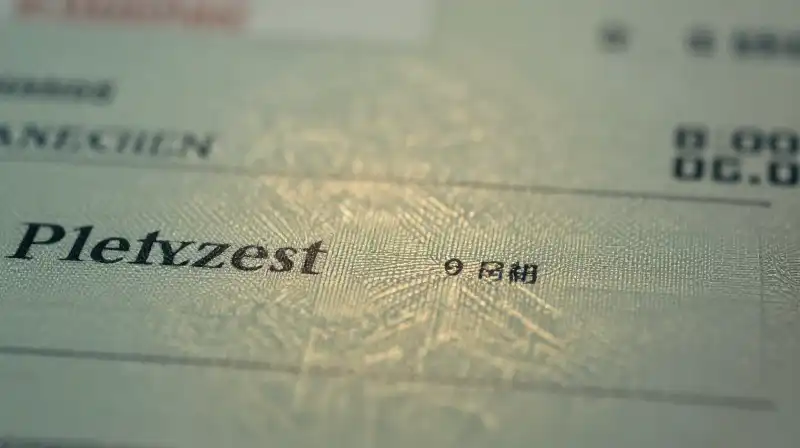
When you examine a personal check, the line provided for your signature is often not a solid continuous bar. Instead, it is composed of a dense, repeating row of exceedingly fine text. This small, detailed wording is known as Microprint, frequently abbreviated as MP. On a check, MP acts as a primary security measure. It is a critical anti-fraud technology designed to make the document highly resistant to unauthorized replication. Essentially, the fine density and scale of this microprinted text make it nearly impossible to duplicate using standard home scanners or photocopiers, serving as a robust layer of protection for your funds.
Understanding Microprint (MP) on Checks
The acronym MP stands for Microprint. This feature is a hallmark of high-security document design, used globally on currency and various forms of payment instruments. The “security” aspect of microprinting lies entirely in its technical difficulty to copy. Standard office equipment generally lacks the resolution to capture the tiny characters within the MP line accurately. When a machine attempts to scan or copy this line, the intricate text blurs, becomes illegible, or turns into a solid smudge, which is immediately identifiable as a sign of tampering or forgery.
It is important to understand that MP is a passive deterrent. It is a design element that prevents easy duplication. While it is a powerful safeguard, it does not guarantee the check is authentic if other security features, such as magnetic ink (E-13B) or watermarks, have been compromised.
Additional Security Features Beyond Microprint
MP is one part of a multifaceted defense strategy employed by banks and check printers. While microprint is located at the signature line and sometimes along borders, checks incorporate several other elements to provide comprehensive security. These specialized features make it harder for sophisticated fraudsters to replicate the entire document:
- Specialized Fonts: Some checks use specialized fonts, such as E-13B, which are designed to be read magnetically, providing a traceable authentication layer.
- Color-Changing Inks: Certain security documents utilize inks that change color when subjected to heat or chemical solvents.
- Smudge Tests: Specific documents may contain unique patterns designed to react to or smudge under certain conditions, indicating unauthorized alteration.
Do I Sign the MP Line on a Check?
Regarding the question of how to fill out a check’s MP line, you do not need to sign the microprinted text itself. The microprint is part of the background security feature and is merely part of the line structure. You are expected to sign clearly in the space provided adjacent to or within that signature line. The text “Authorized Signature” is printed in microprint as part of the design; your legally binding signature is what authenticates the payment. Trying to modify or attempt to write over the MP may damage the security feature and potentially invalidate the check.
Essential Components of a Complete Check
For a check to be legally valid and processable, it must contain several specific pieces of information in the correct locations. These parts are crucial for both processing and security tracking:
- Payer Information: Your registered name and address, usually found in the upper left corner.
- Date: The specific date the transaction is intended to occur.
- Payee Line: The space designated by “Pay to the order of” where the recipient’s name is written.
- The Amount: This is recorded in two places: a numerical box (using dollar signs) and in long-form words on the dollar line. The amount written in words is legally considered the authoritative total.
- Check Number: A unique identifier located in the upper or lower right corners, used by the bank for tracking and record-keeping.
- Memo/Transaction Description: The area allowing you to specify who the payment is for or what the payment is intended for.
Managing Checks with a Record and Caution
A critical aspect of check management is maintaining a meticulous record of every transaction. Using a check register—either physical or digital—is highly recommended to track personal spending and monitor financial outflow. Recording a payment prevents accidental double spending and provides a detailed record of where money is going, often more granular than bank statements.
Always cross-reference your check register with your monthly bank statements. This regular reconciliation helps balance your account and, more importantly, allows you to quickly identify discrepancies, errors, or potential identity theft before the damage is severe. Furthermore, once you write a check, you must assume the funds are committed. Even if the check is later converted to an electronic payment, the initial commitment remains until cleared.
Practical Warnings for Check Users
While microprint is a vital security feature, its effectiveness relies on the bank and its printing technology. It is important to remember that a check is a written order from your bank to pay a sum to a specific recipient. Therefore, adequate funds must always be available in your account at the time of deposit. If a check is presented for more than the available balance, it will “bounce” (NSF), incurring fees. Because writing checks is a comparatively slow method of moving funds, many financial institutions are increasingly encouraging the use of electronic payment methods for efficiency, even though the physical check remains a vital document for personal financial record-keeping.
Frequently Asked Questions
What does MP mean on check?
The acronym MP stands for Microprint, which is a dense, repeating row of exceedingly fine text designed to act as a primary security measure on checks. It is a critical anti-fraud technology meant to make the document resistant to unauthorized replication.
How to fill out a check MP?
You do not need to sign the microprinted text (MP) itself, as it is merely a background security feature. Instead, you are expected to sign clearly in the space provided adjacent to or within the signature line.
How to Manage Checks Effectively
Track Transactions
Using a check register (physical or digital) is recommended to track personal spending and monitor financial outflow. Recording a payment prevents accidental double spending and maintains a detailed record of money expenditure.
Reconcile Records
Regularly cross-reference your check register with your monthly bank statements to balance your account and identify discrepancies, errors, or potential identity theft.
Assume Commitment
Once you write a check, you must assume the funds are committed, even if the check is later converted to an electronic payment, until it is cleared.
Related Articles