Why Are Dragonflies Called Dragonfly? Unpacking the History and Science

Introduction
The name “dragonfly” is a fascinating convergence of ancient folklore, the perception of insect behavior, and precise biological classification. While the common image evokes the myth of the dragon, the term actually originates from two distinct lines of thought: the historical association of the insect with fearsome or sinister beings, and a literal Greek description of its unique anatomy. Understanding why dragonflies are called dragonflies requires looking at both the cultural perception of their aggressive nature and the specific morphological characteristics that define their scientific order.
Historical and Folk Origins of the Name
Before modern scientific taxonomy existed, ancient observers assigned names to insects based on their perceived temperament and appearance. Dragonflies, with their swift, erratic flight, formidable grasping mandibles, and imposing size, were viewed by many cultures as aggressive or even predatory. This reputation led to various nicknames rooted in fear and local legends, rather than accurate scientific description.
One popular historical theory suggests that the term “dragon” itself was historically linked to the devil or powerful, sinister creatures. Consequently, early observers who perceived dragonflies as frightening or “vicious” insects attributed the title to them. This perception was reinforced by their powerful hunting capabilities; they are highly efficient at capturing and consuming flying prey. The colloquial names that surfaced, such as “eye-poker” or “adder’s servant,” reflect the fear and awe ancient people held regarding their sharp, swift movements.
Another intriguing historical name, “Horse-stinger,” is possibly related to the way the dragonfly’s abdomen curls when it takes a resting posture or how its feeding patterns utilized the periphery of horses in certain historical environments.
The Scientific Definition: Odonata and Anisoptera
In contrast to the anecdotal historical theories, modern entomology offers a precise, literal explanation for the nomenclature. Dragonflies belong to the order Odonata. The name Odonata itself is derived from the Latin word meaning “toothed ones,” a reference to the specialized, serrated jaws and powerful grasping capabilities of the insect.
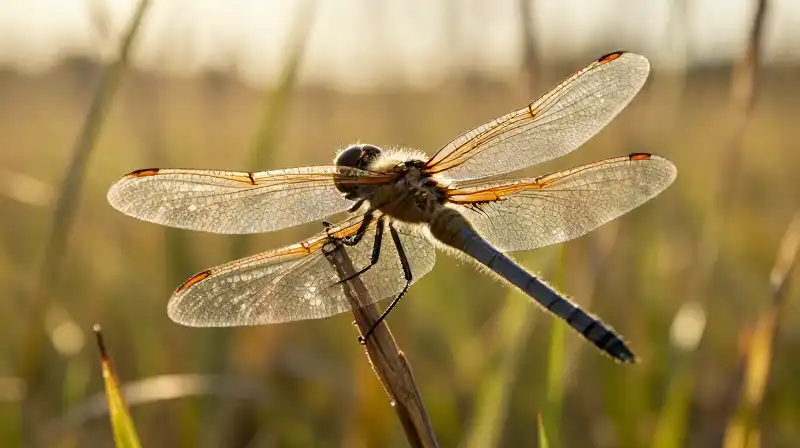
Within this order, true dragonflies are specifically classified in the sub-order Anisoptera. This scientific classification is far more specific than just calling them “toothed ones.” The term Anisoptera originates from the Greek language and translates literally as “unequal wing” or “uneven wing.” This refers to a distinct and measurable physical trait that differentiates true dragonflies from related insects, specifically damselflies.
Understanding Unequal Wings (Anisoptera)
The defining characteristic of an Anisoptera is the structure of their wings: the hindwings are measurably broader and heavier than the forewings. This morphological distinction is vital for identification and relates directly to their robust, powerful flight pattern. The broad hindwings support the insect’s large size and powerful aerial maneuvers. Because this “unequal” wing structure is a key identifying feature, the scientific name firmly places them within this specific group.
Distinguishing True Dragonflies from Damselflies
A frequent source of confusion is the relationship between true dragonflies and damselflies. While they look similar at times, their scientific classification is fundamentally different and helps solidify the meaning of “dragonfly.” Both belong to the order Odonata (toothed ones), but damselflies belong to the sub-order Zygoptera, which means they have essentially equal wings. This is a primary taxonomic differentiator used by biologists to separate the powerful, unequal-winged flyer from the smaller, often more slender Zygoptera.
Practical Information: Predator Role and Major Threats
Beyond their names, dragonflies play a crucial ecological role. As adults, they are highly efficient and essential predators within the ecosystem. They consume large numbers of flying pests, including mosquitoes and midges, helping to control populations of nuisance insects. Their predatory nature is undeniable, but it is directed at aerial threats rather than toward mammals.
Regarding “dragonflies’ biggest enemy,” the primary threats are rarely other insects or small creatures. For the dragonfly itself, the greatest adversaries are often habitat degradation, which destroys the healthy aquatic environments necessary for the larval stages to develop. In the wild, their main natural threats include larger predators (like birds) and changes to climate and water quality.
Lifespan and Biological Diversity Overview
The lifecycle of a dragonfly is unique and lengthy. It begins as an egg, progresses through an extended larval stage (aquatic), and finally emerges as an adult for its flying phase. While specific lifespans vary depending on the species and climate, their adult life can range significantly. The strong flying ability and specialized compound eyes grant them superior vision, making them masters of their aerial hunting domain.
The common term “Dragon-fly” first gained widespread popularity in the 17th century through the publication of works like Francis Bacon’s 1626 book, *Sylva Sylvarum*, showing how vernacular names often arise from local folk traditions and become codified by early chroniclers.
Summary of Naming Criteria and Practical Takeaways
The term “dragonfly” is therefore multifaceted, representing a layering of human perception and scientific precision. Whether you are considering the historical folklore or the biological reality, the name is descriptive of its nature.
If you want to remember the name, remember the distinction between the historical and scientific roots. Culturally, they evoke fears and mythological power; scientifically, they are classified by their “unequal” wings. Practically, these insects are vital parts of the ecosystem, functioning as powerful natural predators that require clean water and stable environments to thrive.
Frequently Asked Questions
What is dragonflies' biggest enemy?
The greatest adversaries for dragonflies are often habitat degradation, which destroys the healthy aquatic environments necessary for the larval stages to develop. In the wild, their main natural threats also include larger predators such as birds and changes to climate and water quality.
Related Articles