
How to Tell the Difference: Cheetah, Jaguar, and Leopard

Introduction
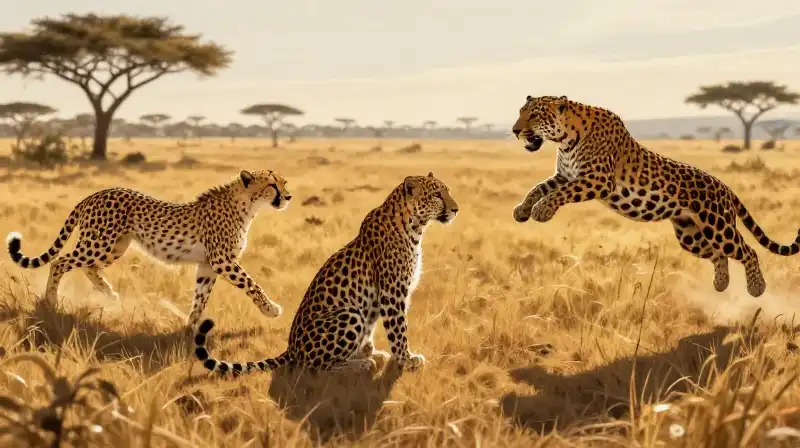
Identifying the subtle differences between a cheetah, a leopard, and a jaguar requires more than a quick glance. While they all belong to the broad category of big cats and share similar muscular builds, they are taxonomically distinct and possess unique physical traits that allow for clear differentiation. The most reliable ways to tell them apart involve examining their body structure, the specific pattern of their markings, and their geographical origins. This guide breaks down the key visual and biological markers to help you distinguish these magnificent predators.
Physical Anatomy and Body Build
The most immediate visual distinction among these three species lies in their physical stature. While all are apex predators, their body plans are highly specialized for different hunting styles.
Jaguar (Panthera onca)
Jaguars are defined by a stockier, heavier, and exceptionally powerful physique. Their body is built for brute strength and delivering a crushing bite. They have broad, powerful heads and extremely robust shoulders. This compact, muscular structure makes them ideal for ambushing large prey and navigating dense, often watery environments.
Leopard (Panthera pardus)
Leopards possess a more slender and elongated frame compared to the jaguar. They are known for their incredible muscular agility, which allows them to be highly arboreal—meaning they frequently climb and rest high in trees. While robust, their build emphasizes flexibility and climbing ability over the massive power of the jaguar.
Cheetah (Acinonyx jubatus)
The cheetah is the outlier. Its body is optimized purely for speed, making it visibly much lighter and more streamlined than both the jaguar and the leopard. It has a relatively delicate, athletic build designed for sustained, high-velocity pursuits of prey, rather than the short, explosive ambush of the other two.
Identifying Coat Patterns: Rosettes vs. Spots
Visual pattern is the definitive way to categorize these cats. While all three are spotted, the arrangement and structure of those spots are highly specific to their species.
- Jaguar Rosettes: These are large, complex markings. Crucially, jaguar rosettes are often larger and frequently contain smaller, internal spots, making the pattern look dense and elaborate. Many jaguars possess a characteristic central spot or dot within the rosette.
- Leopard Rosettes: Leopard rosettes are typically smaller, simpler, and lack the central dots found on the jaguar. They appear as clear, well-defined, asymmetrical rings, scattered across the body.
- Cheetah Spots: Cheetah spotting is entirely different. They are characterized by small, solid, round black markings rather than large, ring-like rosettes. This clear distinction separates them from the entire group of *Panthera* cats.
Geographic Range and Hunting Style
Where you see a big cat can help narrow down the possibilities. Furthermore, their preferred hunting techniques provide context to their morphology.
| Cat Species | Primary Geographic Range | Hunting Strategy |
|---|---|---|
| Jaguar | Latin America (South and Central America) | Powerful, close-range ambush, often near water sources. |
| Leopard | Africa, Asia, Middle East, and parts of Russia | Agile pursuit, climbing into trees to drag or rest with prey. |
| Cheetah | Africa | High-speed chase and pursuit across open ground. |
Clearing Common Confusions: Panther, Puma, and Beyond
The terms “panther” and “puma” are often misused, creating significant confusion. Understanding the nuances of these colloquial names is essential.
The Term “Panther” vs. Species
The term “panther” does not refer to a specific species. It is a colloquial term used to describe any large cat with a predominantly all-black coloration. This black coat is the result of a condition called melanism, and it can occur in either leopards or jaguars (a black jaguar or black leopard is still taxonomically a jaguar or a leopard).
Puma, Cougar, and *Panthera*
Pumas (*Puma concolor*) are not part of the *Panthera* genus, even though people often call them “panthers.” Pumas are typically a tawny or tan color and are unspotted. They are distinguished by their solid, smooth coat and generally less powerful build compared to the spotted cats.
Cheetah’s Unique Features
Beyond its speed and spots, the cheetah possesses unique anatomical features, such as prominent black ‘tear marks’ running from the corners of its eyes down its muzzle, which aid in reducing sun glare during a chase.
Which Cat is the Most Dangerous?
Determining which cat is “dangerous” depends heavily on context, but generally, physical capability translates to different levels of threat. * **Jaguar:** Possesses the most powerful bite force among the big cats listed, capable of delivering crippling, skull-shattering bites. It is widely regarded as having the most formidable raw physical power for defense or offense. * **Leopard:** Its strength and powerful grip allow it to hunt and defend itself effectively, but its agility and arboreal nature are key parts of its defense. * **Cheetah:** Despite its incredible speed, the cheetah is built for hunting small, fast prey and lacks the powerful killing bite of the jaguar or leopard. Its primary defense is flight and specialized intelligence.
Identification Summary and Decision Criteria
When confronted with an unknown spotted big cat, use this rapid identification checklist:
- Is it in North or South America and heavy? It is likely a Jaguar (Stockier, robust, large complex rosettes, central dots).
- Is it highly agile and found in Africa/Asia? It is likely a Leopard (Slender, muscular, simple rosettes, arboreal).
- Is it in Africa and extremely fast? It is a Cheetah (Light build, small solid spots, tear marks).
- Is it tan and unspotted? It is likely a Puma/Cougar (Not in *Panthera* genus).
The distinction between these predators lies not just in their appearance, but in how their biology dictates their life and hunt—one built for power, one for speed, and one for climbing agility.
Frequently Asked Questions
What is the difference between cheetah and leopard and jaguar panther?
The cheetah is built for speed with small solid spots, while leopards and jaguars both feature rosettes; the jaguar is characterized by a stockier physique and large, complex rosettes, whereas the leopard is slender and agile. The term panther itself is a colloquial term for any large cat, such as a leopard or jaguar, with an all-black coloration resulting from melanism.
How to Identify Different Big Cats
Assess Geographic Location and Build
Determine the cat's location and overall physique. If the cat is heavy and found in North or South America, it is likely a Jaguar.
Check for Arboreal and Agility Characteristics
If the cat is highly agile and found in Africa or Asia, it is likely a Leopard.
Observe Speed and Location
If the cat is found in Africa and is extremely fast, it is likely a Cheetah.
Look for Solid Color and Lack of Spots
If the cat is tan, unspotted, and lacks the jaguar or leopard characteristics, it is likely a Puma or Cougar.
Related Articles