
Where Does Our Garbage Go? A Guide to the Global Waste Lifecycle

Introduction
When garbage leaves your home or business, it doesn’t simply disappear; it enters a complex, highly regulated system that dictates its ultimate fate. The answer to the question of where all the trash goes is not a single location, but a series of specialized facilities ranging from local transfer stations to international processing plants. Depending on the type of material, geography, and local municipal rules, your waste will be sorted into one of several major pathways.
The current global model is often described as a “linear material economy”—a process where resources are rapidly extracted, products are made, used, and then thrown away. However, modern waste management aims to shift away from this toward a “circular material economy,” where waste is minimized and materials are kept in use for as long as possible. Understanding this lifecycle requires looking beyond the single trip to the curb to see how each material is processed at facilities near you and how global legislative efforts are attempting to change the system.
The Primary Destinations for Waste
Most solid waste is diverted to specialized sites based on its composition. These primary disposal methods serve vastly different functions:
- Landfills: The final destination for unrecyclable and uncompostable refuse.
- Incinerators/Waste-to-Energy Facilities: Where waste is burned to generate heat and electricity.
- Recycling Centers: Facilities where mixed materials are sorted and repurposed.
- Composting Facilities: Used specifically for organic materials like food scraps and yard waste.
- Designated Collection Points: Sites for “Hard to Recycle Materials” (like batteries and paint) that require special handling.
Understanding Landfills and Solid Waste Storage
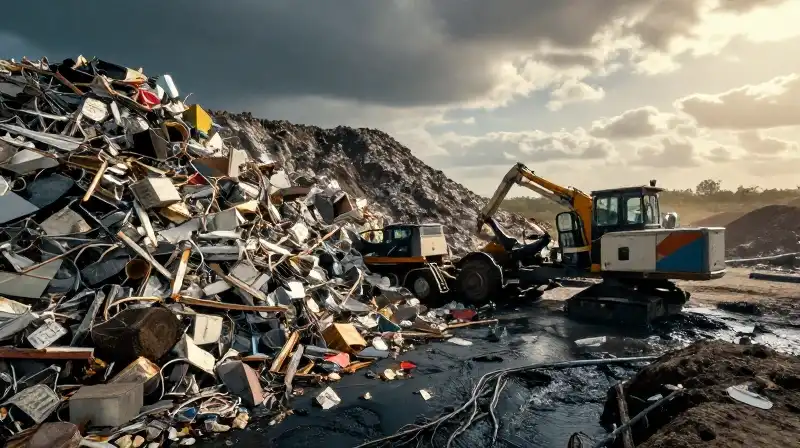
Landfills remain the largest single recipient of municipal waste globally. These are massive, out-of-the-way sites where garbage is buried. Modern landfills, such as the Cedar Hills Landfill, are not simply open pits; they are engineered systems. Refuse is compressed and deposited in “cells” layered with barriers—often compacted clay or reinforced plastic liners—to prevent toxic chemicals (leachate) from seeping into the groundwater.
The decomposition of waste in these anaerobic (oxygen-free) environments generates substantial amounts of methane, a potent greenhouse gas. While this gas can sometimes be collected and used to generate energy, the environmental management of landfills remains a critical area of focus globally. Transfer stations often act as the final holding point before waste is moved from collection trucks to these large storage sites.
The Recycling Process: From Curbside to New Product
Recycling is the process of recovering materials like paper, plastic, metal, and glass to reduce the demand for virgin resources and decrease the volume of materials headed to landfills. This process varies based on local infrastructure:
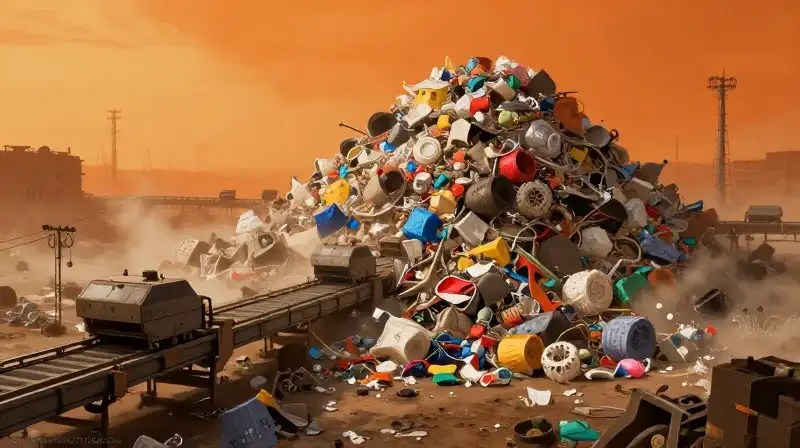
Some regions use single-stream recycling, where mixed materials (paper, bottles, cans, and plastic containers) can be placed together in one bin. These mixed items are then sorted by automated machinery and hand-sorting at a processing facility. Other facilities require items to be separated before collection. This sorting process is designed to categorize the items so they can be sold to various recyclers for manufacturing new goods.
It is important to distinguish between standard curbside recycling and Hard to Recycle Materials. Items such as old electronics, paint, batteries, and broken appliances cannot be processed at standard facilities and must be dropped off at specialized collection points due to the toxic components they contain.
Composting and Organic Waste Management
Organic waste—materials like fruit peels, food scraps, and yard clippings—is a massive component of the total waste stream and is diverted through composting. Composting facilities break down these materials through controlled biological decomposition into nutrient-rich soil amendments, often used in agriculture or sold to residents.
Some advanced facilities utilize anaerobic digestion, a biological process that converts organic matter into two valuable outputs: biogas (used for energy) and fertilizer. While composting addresses soil health, these dedicated processes also help mitigate methane production from general landfills.
The Global Shift: Moving Toward a Circular Economy
The current system is under immense pressure due to the environmental and logistical challenges posed by rapid waste growth, particularly the devastating impact of plastic pollution on marine life. The push toward a “circular material economy” is the core of the modern effort to solve this crisis. This approach demands a fundamental shift from “use and dispose” to continuous resource cycling.
This transition involves several key strategies:
- Design for Longevity: Requiring goods to be built for extended use, repair, and recyclability.
- Producer Responsibility: Shifting the financial and logistical responsibility for managing a product’s end-of-life back onto the manufacturers.
- Legislative Action: Governments are enacting bans on problematic single-use materials and mandating expanded composting programs at the municipal level.
Regional Differences: How Garbage Goes in the US and California
The precise path of garbage depends heavily on local jurisdiction. In the United States, waste management practices are highly decentralized, meaning what happens in one county may be very different from another. Major cities and counties have negotiated contracts for solid waste disposal that dictate the primary endpoints (like a specific landfill or waste-to-energy facility).
In states like California, the regulatory environment often pushes for more aggressive waste diversion. These areas tend to have stricter requirements for recycling purity and mandatory composting programs, placing greater emphasis on the circular economy principles. If you are wondering where your trash goes near you, the most accurate information is found in your specific municipal waste collection guidelines, as they dictate whether your waste goes to a local processing facility or a regional landfill.
Practical Synthesis: Navigating Your Waste Stream
Effective waste management starts at the source. Rather than treating all trash identically, recognize the category of the item you hold. If a material is metal, glass, or paper, the decision-making priority is recycling; if it is a food item, the priority is composting. Only when an item has no viable path for recovery or repurposing does it enter the landfill or incineration stream. By understanding this process, you are moving from simply watching your garbage disappear to becoming an informed participant in the global efforts to transition toward a zero-waste future.
Frequently Asked Questions
Where does American garbage go?
In the United States, waste management practices are highly decentralized, meaning the precise destination of garbage depends on local jurisdiction and the materials composition. Waste is diverted into various specialized facilities—such as landfills, recycling centers, composting sites, or incinerators—based on specific municipal rules.
Where does all the trash in the world go?
Trash does not go to a single location but is routed through a series of specialized facilities, which include landfills, incinerators, recycling centers, and composting facilities, depending on the material type. These primary disposal methods range from processing mixed materials to managing organic waste.
How to Navigate Your Waste Stream
Identify the Material Category
Recognize the category of the item you hold, such as metal, glass, paper, food item, or specialized material.
Prioritize Recycling
If the material is metal, glass, or paper, the decision-making priority is recycling.
Prioritize Composting
If the item is a food item, the decision-making priority is composting.
Determine Final Disposal
Only if an item has no viable path for recovery or repurposing does it enter the landfill or incineration stream.
Related Articles